In a youth soccer landscape that can feel crowded, expensive, and increasingly fragmented, the United Soccer Association (USA) has carved out a clear identity: local, organized, competitive soccer for clubs and families who want a strong environment without the overload.
“We are the longest running organized soccer league in the Tampa Bay area,” said Kai Velmer, Executive Director of USA. Founded in 1990, the league schedules competitive matches for boys and girls from U8 through U19 and currently serves a broad community of clubs across Florida’s Region C. “Last season we had 47 member clubs and around 400 teams competing in our league,” Velmer said, underscoring the scale of a league that remains open to clubs of all sizes.
A league with a lane
USA is not trying to be everything to everyone. Instead, it sits in a very specific and important part of the youth soccer ecosystem: a regional, team-vs-team league for clubs that want competitive games, organized scheduling, and a reasonable cost structure.
“We are an inclusive team vs team format league that welcomes all clubs; large, midsized to small clubs,” Velmer explains. That inclusivity is a defining feature of USA’s identity, and it helps explain why the league has lasted for more than three decades.
For families, that means a pathway that is more competitive than recreation, but not as travel-heavy or financially demanding as some of the elite national platforms. “We sit right in the middle somewhere,” Velmer said. “We are for those teams that want to play at a competitive level but do not want to travel across the state or out of state.”
Where United Soccer Association (USA) fits
Velmer sees USA as one of the best-run local and regional leagues in Florida, with a mission that is practical rather than aspirational. “We offer a great product and service for a very reasonable price,” he said. “Our goal is to provide the best experience and opportunities for our players and coaches that otherwise might not have those opportunities or experiences.”
That philosophy places United Soccer Association in an important niche within Florida soccer. The league is sanctioned and governed by FYSA, and Velmer notes that USA also sits under US Youth Soccer and U.S. Soccer, with FYSA as the organization’s primary direct relationship. That structure gives the league legitimacy and stability while keeping its day-to-day focus local.
Mission and values
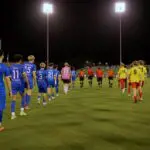

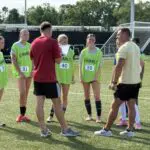
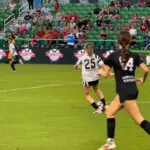
Velmer’s view of youth soccer is shaped by long experience and a deeply personal perspective. When asked to summarize USA’s mission, he put it plainly: “To provide a scheduling body for those clubs wishing to become affiliated, to promote the welfare of the youth and adults involved in youth soccer; to promote good sportsmanship for and from all involved in youth soccer.”
That mission is less about producing the next college or pro star and more about creating good human beings. “For me personally, our mission in youth sports is not to develop future college and/or professional athletes. It’s to develop good people that will have a positive impact on our local community and country as a whole,” Velmer said. “It’s about personal development first and athletes second.”
He added that the league’s real value is its consistency and accessibility. “We provide a professional structure focused on local/regional play at an affordable cost for teams and clubs,” he said.
Culture and coaching
USA does not try to impose a single coaching philosophy across its clubs. Instead, it trusts clubs to decide what is best for their players, while emphasizing the importance of positive leadership.
“That’s not for me or the league to decide,” Velmer said. “Each club has their own philosophy and has to do what is right for their players.” What the league does expect is basic professionalism: “We do want to see that the coaches who lead these teams lead by example and provide a positive and safe environment for all players.”
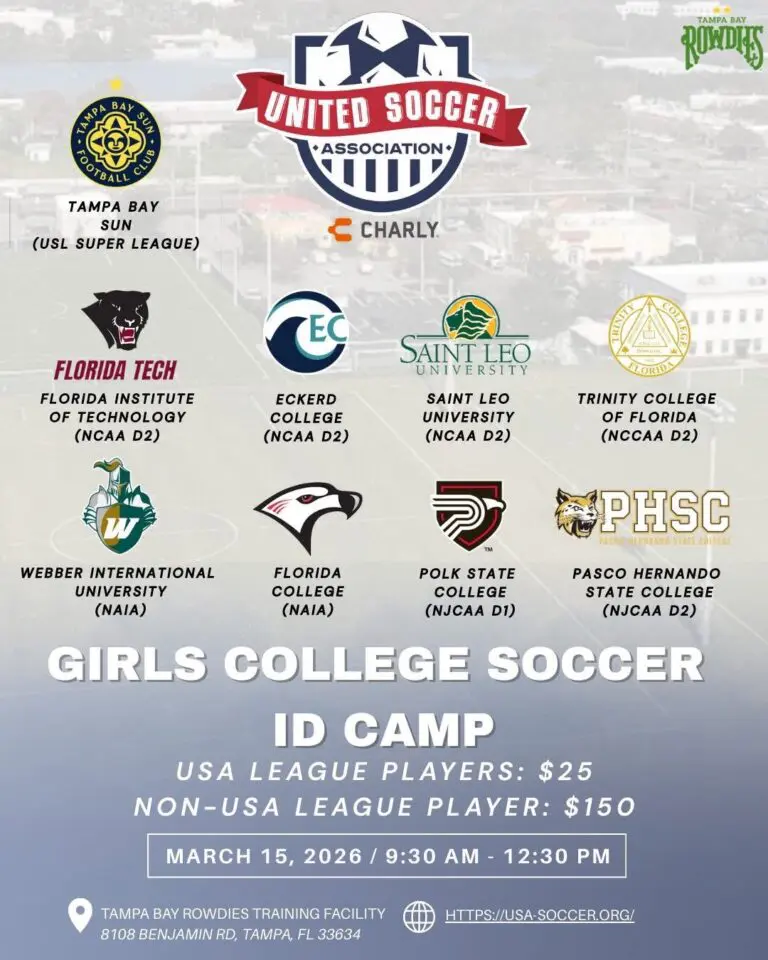
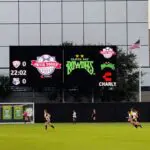
The league’s recent partnerships are helping expand what that support looks like in practical terms. Through its collaborations with the Tampa Bay Rowdies and title sponsor CHARLY, USA is creating coaching education opportunities and coaching education grants to help reduce the cost of licensing and continuing education. USA’s website also highlights a girls college and pro ID camp in partnership with the Rowdies, showing how these relationships are expanding access beyond regular season play.
A structure that stays open
One of USA’s biggest strengths is that it stays open to a wide range of clubs and players rather than narrowing access to a select few. “We are not a closed league, we are an open and inclusive league and that is what I love most about this league,” Velmer said.
That approach matters in a youth sports culture that often overvalues scarcity and exclusivity. USA does not try to control every club’s decisions about roster rotation, playing time, or internal development models. “Our role is not to tell clubs how to run their programs,” Velmer said. “Each club is different and unique in their own way serving their local community and they need to do what they think is best for their membership and community.”
At the same time he added, the league’s strength is communication and relationships with member clubs, most of whom are focused on doing right by kids and the game.
Growth and next steps
USA’s history matters because it shows the league has already survived the kind of changes that have knocked other organizations off course. “A LOT has changed over the years but the important thing is that the league is still standing,” Velmer said.
The biggest operational shift has been moving from a volunteer-only model to one with a volunteer board and paid staff handling day-to-day work. The league’s staff page now lists an executive director, operations manager, administrators, referee liaison, and webmaster, reflecting the more professionalized structure needed to stay competitive in today’s youth soccer environment.
Looking ahead, USA is preparing to launch a U7 developmental division and is exploring involvement with TOPSoccer, which would deepen its commitment to broader access. “We still have some work to do to work out the details,” Velmer said of the U7 initiative, but the direction is clear: more entry points, not fewer.
What the league stands for
At its core, USA is trying to protect something simple but increasingly rare in youth sports: a place where more kids can play meaningful soccer without feeling pressured into a system built only for the top few percent.
Velmer is candid about that. “In a social media world where we seem to celebrate only the top 2% of players playing at the MLSNext, ECNL or other so called higher level leagues, I love the fact that our league is there for ALL players. Our league impacts all age groups from U8 through U19 Boys & Girls from Division 3 to Premier from all walks of life.”
That is ultimately the league’s identity: not elite by branding, but essential by function. “It should always be about the players and putting them in the best environment that is the best fit for those players,” Velmer said.

Ron Stitt
Co-Founder, U.S. Soccer Parent