Youth soccer in the United States is exciting, but it can feel overwhelming when you first step into it as a parent. There are different organizations, leagues, age groups, and levels of competition, all using language that can be hard to decode.
This guide is designed to give you a clear, big‑picture overview so you understand how youth soccer is organized and where your player fits today. From here, you can explore more detailed guides, league breakdowns, and club‑finding resources across our site.
Here’s how the U.S. youth soccer system fits together – and how to use it to support your player.
At a high level, almost every young player is connected to a larger structure behind their local team. Understanding this structure makes the rest of the journey much simpler.
National organizations that set rules, safety standards, and competition formats
State associations and regional leagues that organize local play and tournaments
Local clubs that run teams, hire coaches, and manage your day‑to‑day experience
You don’t have to remember every name and acronym. What matters most is knowing that your child’s team sits inside this larger system, and that there are different options as they grow.
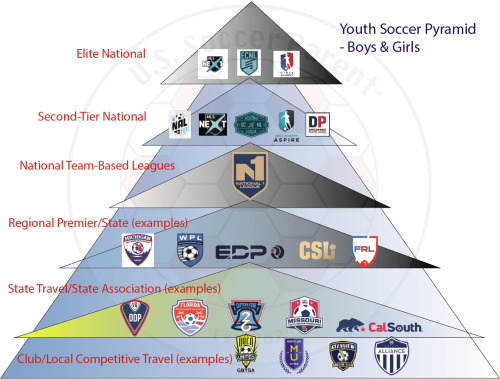
League and competition logos are used for educational and informational purposes only to help parents understand different levels of play. All trademarks are the property of their respective owners. U.S. Soccer Parent is an independent media platform and is not affiliated with or endorsed by the organizations shown.
As a parent, you will usually encounter three broad environments:
There is no single “right” level. The best fit is the one that matches your child’s interest, readiness, and your family’s reality.
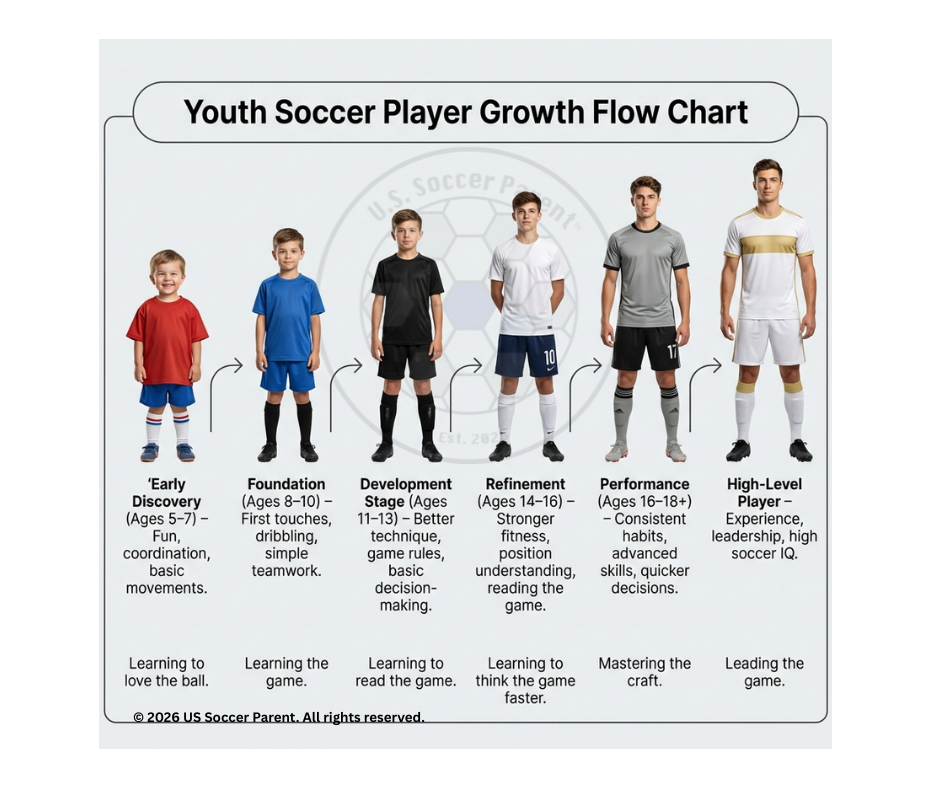
Youth soccer is not one straight line. It is a pathway with many possible routes, and players can move between levels over time.
Many start in recreational programs or local in‑house leagues.
As interest and ability grow, they may join travel or competitive club teams.
Some eventually reach regional and national leagues, showcases, and college‑recruiting events.
Along the way, development matters more than rushing to the “top” too early. The goal is to help your player build skills, confidence, and a lasting love for the game, season after season.
When you are just getting started, focus on a few practical questions:
Our other guides walk you through evaluating clubs, understanding tryouts, and comparing programs so you can make confident decisions- not rushed ones.
As you explore youth soccer, you may find yourself asking:
When is the right age for my child to start playing organized soccer?
How do age groups (like U8, U10, U12) actually work, and why do they change?
What is the difference between the major organizations and leagues we hear about?
How do tryouts work, and what should my child expect?
What does the pathway toward college soccer or a higher level really look like?
Throughout this site, you will find in‑depth answers to each of these questions, along with practical checklists, comparison guides, and real‑world examples from parents, coaches, and players.
Youth soccer is always evolving—league formats, age‑group rules, tryout timelines, and college‑recruiting trends all shift from year to year.
If you’d like simple, parent‑friendly updates (plus new guides and resources) sent straight to your inbox, you can join our free newsletter for soccer parents.
No spam, no sales blasts—just practical information to help you support your player and make confident decisions each season.
Stay up to date with the latest youth soccer news. Join our community today!