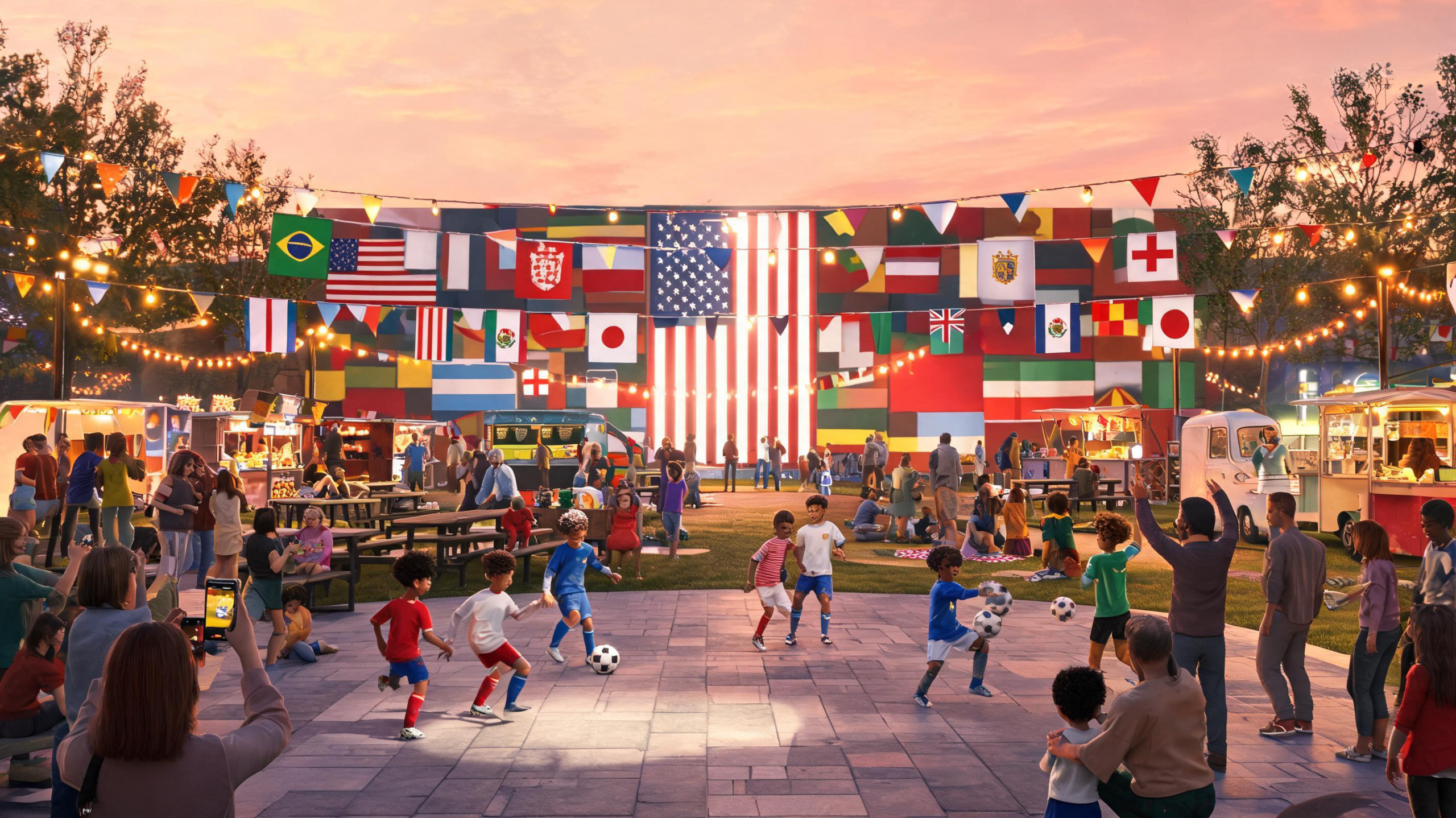
The World Cup is turning into a summer‑long block party across the U.S., with host cities rolling out fan zones, watch parties, youth tournaments, and hands‑on activities designed to hook young players and their families.
Across the 2026 host markets, civic organizers and local clubs are treating the World Cup less as 41 stand‑alone matchdays and more as a six‑week civic festival. Free fan zones with big screens, youth‑friendly activities, and heavy local programming are the backbone, often funded by city/host‑committee partnerships and brand sponsors.
In parallel, many markets are using the tournament as a catalyst to create “kids‑first” experiences: small‑sided fields in public plazas, youth tournaments that culminate during the World Cup, and school or community‑center curricula that blend soccer with geography, culture, and crafts. For parents, that means there are multiple on‑ramps beyond just buying match tickets: free watch parties, play opportunities for their kids, and low‑cost educational tie‑ins you can run at home or with your club.
Host city fan zones built for families
A core through‑line in 2026 planning is the idea that every host city should have at least one safe, central place where families can gather to watch games and let kids be active. While programming specifics vary, several themes are emerging that are particularly relevant for youth players and parents. Here is a sampling from around the USA:
Seattle & Pacific Northwest
Seattle’s World Cup organizers and the Sounders/Reign are anchoring their efforts around a downtown “soccer celebration” platform that includes a floating pitch on the waterfront, with youth‑focused sessions offered free to the public. Kids can register for supervised open play and invitation‑only clinics delivered in partnership with local nonprofits, with a focus on using soccer to support wellness, belonging, and leadership. Satellite fan zones around the region, such as Olympia‑Lacey’s Port Plaza fan zone, are layering in live match screenings, local vendors, and interactive activities to create a family‑friendly festival environment.
New York / New Jersey corridor
The NY/NJ host committee is building a multi‑site fan ecosystem stretching from Liberty State Park to Queens, Brooklyn, Staten Island, and the Bronx. The “Skyline to Shoreline Road Tour,” a mobile fan‑engagement truck, is already traveling to festivals and public parks with interactive soccer elements, music, giveaways, and local storytelling, and it’s slated to return in spring 2026 ahead of the tournament. Neighborhood fan zones are explicitly framed as community‑driven and family‑oriented, with Borough‑specific programming in the Bronx, Staten Island, and Brooklyn that mixes culturally relevant food, kids’ activities, and match‑viewing experiences.
Houston
Houston’s FIFA Fan Festival is planned for East Downtown and is free and open every match day, featuring a 7v7 synthetic turf pitch where youth teams and community groups can play in view of a 45‑foot‑wide screen. The “Road to the Cup” 7v7 tournament gives U11–U18 boys and girls a chance to play their own World Cup‑style competition inside a branded arena environment. Brand USA highlights that Houston will also feature kids’ activities, football clinics, and interactive experiences tied into local institutions like the Space Center and the Houston Livestock Show & Rodeo.
Los Angeles region
Los Angeles is leaning into a multi‑node model with fan events at iconic locations such as The Original Farmers Market, LA County’s Earvin “Magic” Johnson Park, Whittier Narrows, and Venice Beach. Programming across these sites includes “family fun soccer zones,” interactive games and crafts, youth‑oriented science‑of‑soccer exhibits, mascot appearances, and cultural performances alongside live match screenings. Late‑tournament events in Downtown Burbank will feature family‑friendly games, an international street fair, and VIP experiences around the semifinal and final matches.
Bay Area
The San Francisco Bay Area host committee is promoting free fan zones and watch parties across San Francisco, San Jose, and Oakland, positioned as accessible community events rather than just downtown activations.
Philadelphia
Philadelphia’s FIFA Fan Festival at Lemon Hill will be free and open for all 39 days of the tournament, with plans for live match broadcasts, cultural performances, kids’ activities, and football clinics. Both markets are framing their programming around inclusivity and family access, emphasizing no‑ticket, no‑barrier experiences for local youth who might never get to a stadium match.
Youth‑specific play: floating pitches, small‑sided fields, and tournaments
One of the most promising trends for US youth soccer is the explicit integration of real playing opportunities into World Cup fan infrastructure.
The Sounders/Reign/RAVE Foundation’s floating pitch in Seattle is programmed with youth open play windows and nonprofit‑partner events that emphasize wellness, belonging, and leadership. Parents can register their kids for supervised, small‑sided play on a showcase pitch literally anchored in the middle of the broader fan experience.
Houston’s FIFA Fan Festival will include a 7v7 field open to fans, youth teams, and community groups on non‑match windows, plus the “Road to the Cup” 7v7 tournament for U11–U19 boys and girls. The tournament is explicitly framed as giving young players their own “World Cup moment,” with games staged in a purpose‑built arena environment that mirrors the spectacle of the main event.
Brand USA’s national promotional efforts flag youth‑oriented elements like football clinics, kids’ activities, and a “Road to the Cup” youth tournament as key hooks to attract families traveling to host cities. These activations are designed so that your child’s first World Cup memory is as much about playing as it is about watching.
For clubs and DOCs, these models are powerful examples of how to rethink tournament‑adjacent experiences: small‑sided, high‑touch, and tightly integrated with the fan environment rather than siloed on distant fields.
At‑home and club‑level World Cup activities for kids
Not every family will make it to a host‑city fan zone, but there’s a rich menu of World Cup‑themed activities that parents, teachers, and clubs can run locally. Many of these ideas blend soccer, crafts, and learning in a way that aligns with how younger players experience the game.
Crafts and creative projects
Family‑oriented craft resources are offering templates for DIY team flags, paper‑plate soccer balls, “design your own kit” activities, and homemade World Cup trophies built from cardboard and foil. Kids can also make football‑themed bookmarks, bracelets, lanterns, and ornaments, or create upcycled tin‑can “stadium lights” and felt pitch decorations that double as sensory toys.
Classroom and homeschool tie‑ins
Education‑focused organizations are publishing lesson ideas that use the World Cup as a gateway to geography, history, and cultural studies, such as letting each child adopt a country, research its landmarks and football history, and present it to the group. Many sites bundle printable worksheets, coloring pages, puzzles, and quizzes that explore flags, host cities, and basic tournament structure in age‑appropriate ways.
Games and challenges away from the screen
Suggested activities include mini indoor football games with shoebox goals, DIY penalties, and small‑sided “hallway futsal,” along with crosswords and word searches built around simple football vocabulary. Other ideas range from World Cup prediction games to role‑play commentating on famous goals, all of which help kids connect emotionally with the event and practice communication skills.
These are plug‑and‑play concepts US clubs can adapt as low‑cost “World Cup night” stations at their own facilities or incorporate into summer camp programming.
How clubs and parents can plug in
For US youth soccer parents, the 2026 World Cup opens a unique window to connect your kids’ everyday club experience to the global game. Research on American World Cup fans shows growing engagement and a strong appetite for shared viewing and local experiences rather than purely passive, at‑home consumption.
- Local clubs can piggyback on host‑city programming by organizing caravans to family‑friendly fan zones, especially those offering youth play opportunities like Seattle’s floating pitch or Houston’s 7v7 field. Non‑host‑market clubs can still run their own free watch parties with team‑flag crafts, mini‑tournaments, and prediction games, using open online resources to keep costs low.
- Parents can treat the World Cup as both an entertainment event and a developmental opportunity by mixing match‑viewing with simple questions about tactics, culture, and role models. When kids then step onto a local pop‑up pitch or participate in a “Road to the Cup”‑style tournament, the connection between what they see on TV and what they do on the weekend becomes tangible.