
Blog
From World Cup Buzz To Better Youth Soccer
July 3, 20268 min read
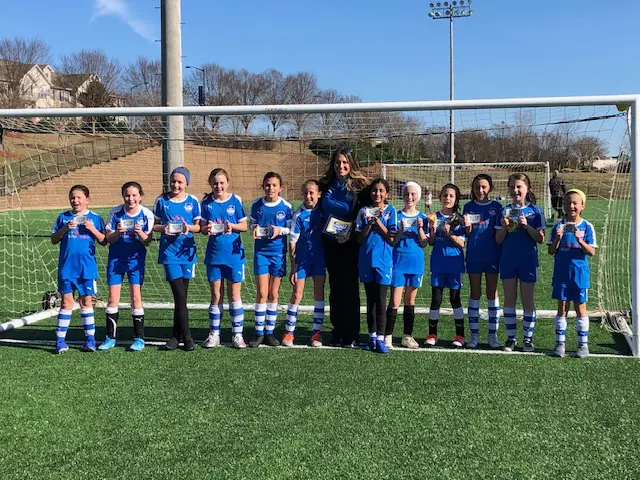
Image: Charlotte Soccer Academy, Madison Gates Coach. U10 Spring Tournament Champion
Every four years, we’re told that a big tournament will finally be the moment America falls in love with soccer. This time, it feels different. The World Cup is here in North America, the USMNT is making a real run, and the games don’t feel like niche programming anymore; they feel like mainstream, must‑see events. Kids are staying up late, mimicking saves in the hallway, arguing over who gets to be which player in the backyard.
The question that matters for youth soccer isn’t whether this World Cup breaks TV ratings records. It’s whether the wave of excitement can be harnessed to grow and improve the environments kids find when they decide, “I want to try that.” That’s not an abstract question; it’s playing out right now at local fields, recreation programs, and startup leagues around the country.
To explore how this moment can become something more than a highlight reel, I spoke with Madison Gates, an executive at i9 Sports, whose own soccer journey runs from rec fields in upstate New York to the University of Michigan and the professional draft.
The Demonstration Effect — And Its Conditions
Sports psychologists have a term for what we’re seeing right now: the “demonstration effect”. When young people watch elite athletes perform in a high‑profile event—especially one hosted close to home—they’re more likely to want to participate in that sport or become more active. Studies summarized by Wake Forest University’s Abbie Wrights show that young people who identify elite athletes as role models are twice as likely to participate in sports, and that “fun” is the single biggest motivator kids name when asked what would make them join a team.
The same research points out the limits of spectacle. Around 80 percent of young people worldwide still don’t achieve recommended daily activity levels, despite constant exposure to professional sports. Past mega‑events show a similar pattern. In the wake of London 2012, the UK invested heavily in facilities and community sport through initiatives like “Places People Play,” which upgraded local clubs, protected playing fields, and trained tens of thousands of grassroots leaders. In some demographics, participation rose; in others, it plateaued or fell back toward previous levels once the Olympic flame went out.
The lesson is that big events can open a door, but they don’t push anyone through it. The demonstration effect becomes real only when communities, clubs, and families create accessible, enjoyable, and sustainable opportunities right behind that door.
Madison’s Path: One Story, Many Paths
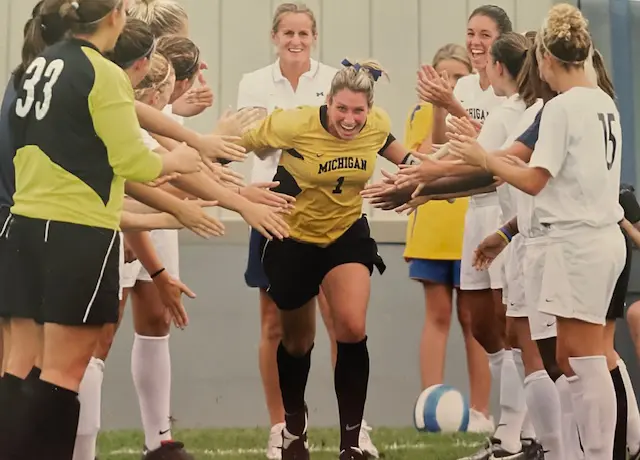

Madison’s own pathway is a useful lens for thinking about this moment. She grew up in Baldwinsville, outside Syracuse, playing rec soccer at three and four while juggling lacrosse, volleyball, piano, violin and “the whole nine,” as she puts it. For years, soccer was just one thread in a multi‑sport childhood. The shift toward a more serious pathway began almost by accident, when a new club in the area needed a goalkeeper and she volunteered.
From there, her trajectory followed the familiar elite arc: club soccer, state cups and regionals, the Olympic Development Program, regional and national teams, and eventually four years as a goalkeeper at the University of Michigan. She was drafted by the Boston Breakers in the professional league, but made the deliberate decision not to pursue a long pro career, choosing instead to coach club and college teams and, later, to move into franchise marketing.
Looking back, she sees the goalkeeper experience as formative well beyond the field. “You have to have a little different mindset than a player on the field because you are a part of a team, but you really are an individual on that team,” she told me. Being the last line of defense, and the first point of attack after a save, demanded communication, resilience, and what she calls a “perfectionist mindset” that she’s carried into leadership roles in marketing. Her story underlines an important point: even for those who climb to national‑team and Division I levels, the most durable returns from youth sport are often the life skills, not the trophies.
At the same time, she’s quick to emphasize that her path is not the only, or even the typical, one. “My pathway is a lot different than a lot of other kids who just want to go out and have fun,” she said. “There’s a place for everybody to play.” That’s the space she’s working in now at i9.
Join U.S. Soccer Parent
Free for every soccer parent.
Save articles, get the free newsletter, and find guidance tuned to your state, your kids' ages, and the pathway your family is on.
What Kids Find When They Show Up
Right now, US youth soccer has plenty of places where a World Cup‑inspired child might land. In some communities, the first stop is a local recreation department or YMCA. In others, it’s a fully professionalized club structure that expects year‑round commitment from the outset. In many places, there’s a gap: families who are World Cup‑curious are left with few realistic options between “casual park pickup” and “elite travel team with a four‑figure annual price tag.”
Organizations like i9 operate in that middle space. They’ve grown over the past two decades into almost 300 locations, offering flag football, soccer, baseball/t‑ball, basketball and volleyball, often in a “one day a week” format aimed squarely at families trying to keep sports manageable. The emphasis is on rec‑level play, no tryouts, and every kid getting onto the field. While they’re a for‑profit franchise system, they also operate internal grants and partnerships to make sure under‑served and under‑resourced families can participate.
Madison summed up their focus this way: “The World Cup really sparked that inspiration, and then it’s the experience that we talked about that creates that retention.” Inspiration gets kids to sign up. The way they are treated by coaches, the structure of the league, and the social experience with teammates determines whether they come back next season.
Internal and external surveys tend to back this up. Parents consistently say they want positive coaching, confidence, and character development for their kids, while winning ranks much lower than many adults assume. Kids remember the high‑fives, the moments when a new move finally works, and the sense of belonging. If a World Cup‑inspired child lands in a setting that is joyless, hyper‑pressurized, or confusing, the demonstration effect dies quickly. If they land in a place that is fun, welcoming, and well‑organized, the odds of long‑term engagement rise substantially.
Multi‑Sport, Burnout, And The Arms Race
Another tension sharpened by World Cup buzz is the question of specialization. When kids see elite players on screen, especially if they’re having success in US colors, it can push parents toward a familiar conclusion: “We should double down on soccer now.” That instinct is understandable, but it’s also where evidence and marketing hype often diverge.
Medical and sport‑science communities have raised consistent concerns about early, single‑sport specialization as a risk factor for overuse injuries and burnout, while multi‑sport participation in childhood is associated with broader athletic skill development and longer‑term engagement. Madison sees this in her own story. “Back in our day, we were playing everything,” she said. Her later specialization as goalkeeper did not require giving up other sports overnight; instead, it layered more focused soccer training on top of a broad base.
Today, many families feel they are being told the opposite: that serious commitment must start early, that the only path to college or pro runs through a small set of expensive leagues, and that if they don’t keep up, their child will be left behind. The World Cup can amplify that pressure, especially when media narratives emphasize pathways and “next generation” storylines without grappling with the systemic costs.
Using this moment well means sending a different message. It means making clear that there are multiple legitimate paths through youth soccer; that it is not a developmental crime for a 10‑year‑old to play basketball in winter and baseball in spring; and that keeping options open does not require sacrificing joy in the present. Organizations can help by designing calendars that leave space for other activities, resisting the urge to demand 12‑month exclusivity from young players, and explicitly affirming that multi‑sport participation is not a sign of lack of commitment.
Turning A Tournament Into A Legacy
All of this points to a simple but demanding challenge. The World Cup, especially one co‑hosted in our own backyards, is a powerful marketing campaign for soccer and for youth sport more broadly. Research suggests that communities that invest in organizations, facilities, and coaching around such events are the ones most likely to see lasting participation gains. Those that treat the tournament as a one‑off show tend to experience a short‑term bump and then a slide back to the mean.
For youth soccer in the United States, “using” this World Cup well might look like:
- Strengthening rec and introductory programs so that every World Cup‑inspired child can find an affordable, nearby, age‑appropriate place to play.
- Training coaches to prioritize positive environments, clear communication, and long‑term development over short‑term results.
- Being honest with families about probabilities at the elite end, so that decisions are grounded in their child’s experience, not just in distant dreams.
- Celebrating diverse pathways, from rec‑only lifers who carry the game into their adult social lives, to late‑bloomers who find the college game, to the rare few who reach professional levels.
When I asked Madison whether she’s optimistic about where youth soccer is heading, she answered carefully. She doesn’t see data yet showing an exodus from high‑pressure club pathways, but she does sense a shift in conversation. “I do feel like the conversations that are being had… the pendulum is starting to swing, or at least the conversations are being had,” she said. “I’m hopeful that it’s going to start swinging more to mediate in between.”
Hope is not a strategy, but it can be a starting point. This World Cup has already done its part by putting the game in front of millions of children in an unusually vivid way. The rest is up to us: coaches, organizers, and yes, parents, deciding what kind of soccer environment those kids discover when they step off the couch and onto the field.
If you’re running a program or influencing one, the next few months are an invitation. The demonstration effect doesn’t last forever. But with the right structures, the kids it touches might.