Guest Blog: By Michelle Marbley, Certified Stretch Therapist & Owner, Stretch Zen with Michelle
If your child plays competitive soccer, you already know the drill: early morning practices, back-to-back weekend games, year-round training. Young athletes are putting in the kind of work that would wear down most adults — and their bodies are still developing while they do it.
As a certified stretch therapist who works with athletes of all ages, one of the most common things I hear from parents is: “My kid is always sore, always tight, but they never want to stop playing.” Sound familiar?
The good news is that one of the most effective tools for keeping young athletes healthy, mobile, and on the field isn’t complicated — it’s assisted stretching. Here’s what every soccer parent should know.
1. Young Athletes Are More Vulnerable to Overuse Injuries Than You Think
Growth plates – the areas of developing cartilage near the ends of bones – don’t fully close until the late teens. During periods of rapid growth, muscles and tendons can actually tighten because bones are growing faster than soft tissue can keep up.
Add a full season of sprinting, cutting, and kicking, and you have a recipe for overuse injuries like Osgood-Schlatter disease (knee pain), Sever’s disease (heel pain), and hamstring strains. Regular assisted stretching helps maintain healthy muscle length and reduces the tension that makes young athletes vulnerable to these common conditions.
2. Assisted Stretching Is Not the Same as Stretching Alone
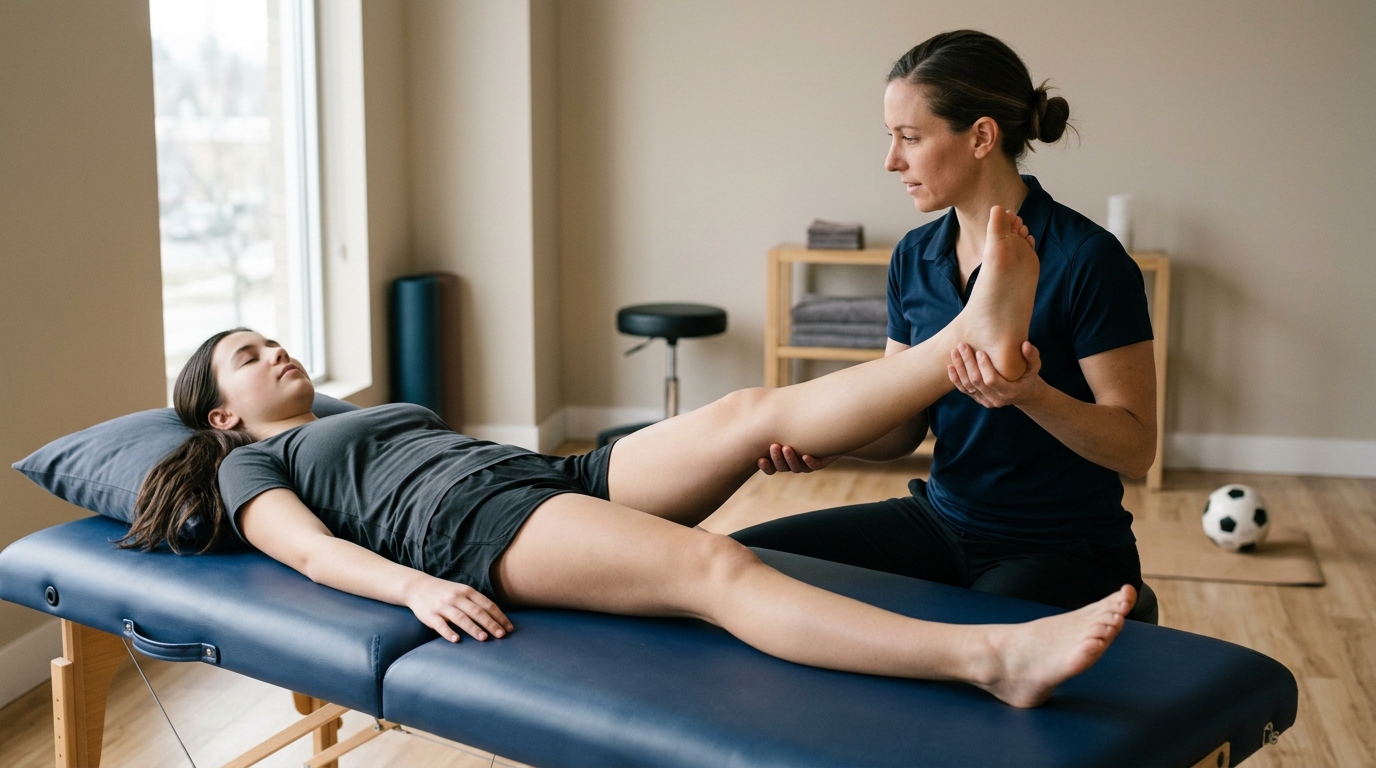
Most young athletes do a quick static stretch before practice and call it a day. But static stretching – holding a position on your own – only takes a muscle so far. Assisted stretching is a hands-on technique where a trained therapist takes the muscle through a fuller, controlled range of motion using methods like PNF (proprioceptive neuromuscular facilitation) and active isolated stretching.
The difference is significant. Assisted stretching can reach deeper muscle fibers, address muscular imbalances, and provide a level of release that self-stretching simply cannot achieve. Think of it like the difference between brushing your own hair and getting a professional blowout — one gets the job done, the other gets it right.
3. Timing Your Athlete’s Stretching Makes a Real Difference
When your player stretches matters just as much as how they stretch. Here’s a simple framework:
Before games and practice: Dynamic stretching — movement-based warm-ups that activate muscles without reducing power output. Save the deep stretching for after.
After games and practice: This is the ideal time for assisted stretching. Muscles are warm, circulation is elevated, and the body is primed to release tension.
Rest days: A mid-week assisted stretching session is one of the most underrated recovery tools available. It keeps muscles from stiffening between training sessions and helps the body reset.
Building stretching into your athlete’s weekly routine, not just as an afterthought, is what separates athletes who stay healthy from those who spend seasons on the bench.
4. Know the Warning Signs That Your Player Needs More Recovery Support
Parents are often the first to notice when something is off. Watch for these signals that your athlete’s body may need more intentional recovery:
- Consistently complaining of tightness in the hamstrings, hip flexors, or calves
- Favoring one side during play or practice
- Reduced range of motion, difficulty touching toes, stiffness when getting up
- Lingering soreness that doesn’t resolve within 48 hours
- Decreased performance or motivation that seems physical rather than mental
These are not normal parts of playing sports. They are signs that the body is accumulating stress faster than it can recover. Addressing them early with proper stretching and recovery care can prevent minor tightness from becoming a serious injury.
5. Professional Recovery Technology Isn’t Just for the Pros
One of the most exciting developments in athlete recovery is that the tools once reserved for professional teams are now accessible to everyday athletes. Normatec compression therapy — sequential pneumatic compression sleeves worn on the legs, hips, or arms — was developed for elite performance and is now widely used by NFL, NBA, and professional soccer players to flush out metabolic waste, reduce inflammation, and speed recovery between competitions.
For young athletes competing in multi-game tournaments or heavy training weeks, adding Normatec sessions to their recovery routine can meaningfully reduce soreness and improve readiness for the next game.
A Final Word for Soccer Parents
You invest in your athlete’s training, their equipment, and their coaching. Recovery deserves the same investment. A body that is properly cared for performs better, stays healthier, and lasts longer in the sport your child loves.
Assisted stretching is not a luxury, it’s maintenance. And starting those habits early builds a foundation that will serve your athlete for years to come.

Michelle Marbley
Certified Stretch Therapist & Owner, Stretch Zen with Michelle
Michelle Marbley is a Certified Stretch Therapist and the Owner of Stretch Zen with Michelle, a boutique assisted stretching and flexibility studio located in Atlanta, GA. She holds certifications from NASM and Kika Stretch, completed advanced training through The Stretch Loft Masterclass, and has worked with a wide range of clients from everyday adults to competitive athletes. Stretch Zen with Michelle is also an official wellness partner of PAL Atlanta, providing recovery services to Atlanta’s first responders and city workers. To learn more or book a session, visit Stretch Zen With Michelle or follow @StretchZenWithMichelle on Instagram.