
Blog
Be Afraid? Private Equity Is Coming for Youth Sports.
May 9, 20266 min read
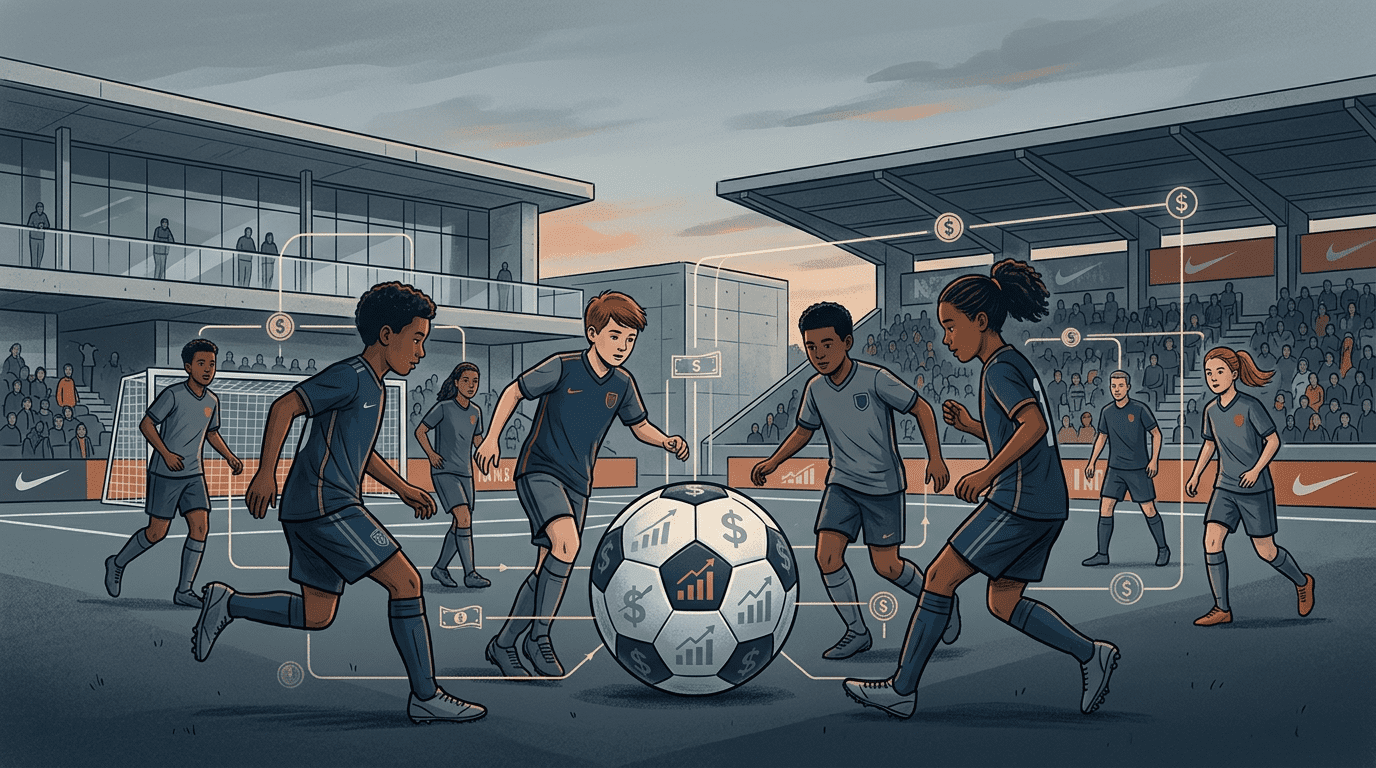
Youth sports are becoming too important, too expensive, and too structurally fragmented to stay outside the reach of serious capital. That may sound alarming, but the real issue is not whether private money enters the space. It is whether that money builds a better system for families and athletes, or simply turns childhood sports into another market to be optimized for recurring revenue.
USA Today just published a major expose that seems to confirm a youth athlete parent’s worst fears about what can go wrong when private equity comes in (reinforcing concerns I raised in a blog late last year).
This latest attention on Black Bear and youth hockey is a reminder that this shift is no longer theoretical. The conversation is not just about one company, one sport, or one investigative report. It is about what happens when a parent-funded, emotionally charged ecosystem becomes attractive to investors looking for scale, pricing power, and predictable cash flow.
As New Jersey hockey parent Stephanie Kurzweil told USA Today, “They are in it for the money. There is no thought for the kids.” That line lands because it captures the fear at the center of this debate: that the business logic of consolidation can swallow the developmental logic of youth sports.
And yet, the answer is not simply to declare that business has no place here. I do not think big money or serious operators are bad by definition. In fact, youth sports probably needs more capital, more professionalism, and more imaginative business thinking than it has historically received. The question is what kind of capital, and what it is expected to do.
Why investors are interested
Youth sports is appealing to investors for obvious reasons. The market is fragmented, the customer base is emotionally invested, and many expenses are recurring. Families do not just pay for one season. They pay for registration, uniforms, travel, coaching, training, tournaments, camps, facility fees, equipment, and sometimes private lessons or select-team premiums.
That creates a powerful revenue stack if you can consolidate enough of it. It also creates a powerful temptation to own more of the ecosystem. Facilities, leagues, tournaments, teams, and training all become pieces of the same monetization puzzle. In that sense, youth sports starts to look less like a community activity and more like a platform business.
That is where the issues raised by the Black Bear story become bigger than hockey. The issue is not only that one firm bought a lot of rinks and teams. It is that the structure of the business can justifiably make families feel like they are being pushed into a closed loop, where every path leads back to the same operator and every improvement comes with another fee.
Join U.S. Soccer Parent
Free for every soccer parent.
Save articles, get the free newsletter, and find guidance tuned to your state, your kids' ages, and the pathway your family is on.
The risk is extraction
The danger is easy to describe because it is so familiar. If the business model depends on owning more of the ecosystem, the natural temptation is to capture more of the wallet. The sport starts with participation and ends with monetization. Families become less like members of a community and more like subscribers in a system designed to maximize lifetime value.
That is where consolidation becomes more than a finance story. When one operator controls rinks, teams, leagues, tournaments, and affiliated programming, it can become harder for parents to vote with their feet. Prices can rise, alternatives can shrink, and access can become more conditional. The company may call that efficiency. Families experience it as pressure.
Black Bear founder Murry Gunty tried to frame the company’s intentions in more generous terms, saying: “I just hope everybody knows that I come from a really good place in trying to deliver a great experience for our families.” That may well be true on a personal level. But intentions do not erase incentives, and incentives are what matter most when a sport becomes a business model.
The critique here is not that consolidation automatically becomes abusive. The critique is that consolidation can easily become self-reinforcing, especially in a market where parents are willing to absorb pain in the short term if they think it helps their child’s long-term development. That is a very strong customer relationship — and also a very vulnerable one.
Why this matters beyond hockey
This is where I think youth hockey is useful as a leading indicator rather than an isolated case. The same pressures can show up in soccer, baseball, lacrosse, gymnastics, basketball, volleyball, and any other sport where access is shaped by income, geography, and time. Once a sport becomes a status ladder, business models naturally drift toward extracting value from the next rung.
As I wrote in a blog at U.S. Soccer Parent about Black Bear in early December last year, “At U.S. Soccer Parent, the story reads less like a hockey-only controversy and more like an early preview of pressures that could easily migrate into youth soccer.” That remains the key point. The specific sport may change, but the underlying pattern does not.
Youth soccer already lives with many of these tensions: pay-to-play economics, travel escalation, club consolidation, private training, and the steady conversion of development into a premium product. The hockey story is not a foreign object; it is a preview of what happens when the broader youth sports ecosystem keeps moving toward scale, exclusivity, and monetization.
What healthy investment would look like
My view is not that outside capital is inherently bad. The stronger case is that youth sports needs capital, but it needs a different kind of deal with that capital. I’m not sure how to ensure this is effectively advocated, but it would seem if players want to avoid political and regulatory intervention, a self-regulated approach is needed – and perhaps could be driven by proactive engagement by U.S. Soccer.
On a deal by deal basis, if parental and player needs were part of the calculus, the right test is not simply whether a company can grow revenue. It is whether the company can grow value without making parents the default funding source for every improvement. That means new revenue streams matter. So do new ownership models, better facility economics, and partnerships that widen access instead of narrowing it.
A healthier model would do several things at once:
- Invest in facilities that serve more kids, not just higher-paying ones.
- Improve coaching and administration in ways that lower friction for families.
- Build shared services that reduce waste without turning every touchpoint into a fee.
- Create cross-subsidy models so elite services do not crowd out broad access.
- Develop revenue streams from sponsorship, employer-backed benefits, municipal partnerships, digital products, and community underwriting.
That is the version of private investment in youth sports worth defending, not blindly resisting. It treats youth sports as a public-facing service with a business structure, not a toll road for parents.
The real stakes
The deeper issue here is not whether private equity is good or bad. It is whether the people designing the economics of youth sports understand what they are handling. These are not ordinary consumers. They are children, families, and communities making sacrifices for development, belonging, and opportunity.
That is why the conversation has to be more precise than a simple pro-business versus anti-business argument. Youth sports needs investment. It also needs guardrails, imagination, and business models that do not rely on squeezing the same households harder every year.
The Black Bear story matters because if we are not careful, it will prove to be an early glimpse of a bigger transition. Not may, will, IMO. If youth sports is becoming an asset class, then the most important question is not who owns it. It is what ownership is expected to produce.
The best version of that future is not one where parents pay more so investors can win more. It is one where capital helps build a more durable ecosystem for kids to play, improve, and belong.