
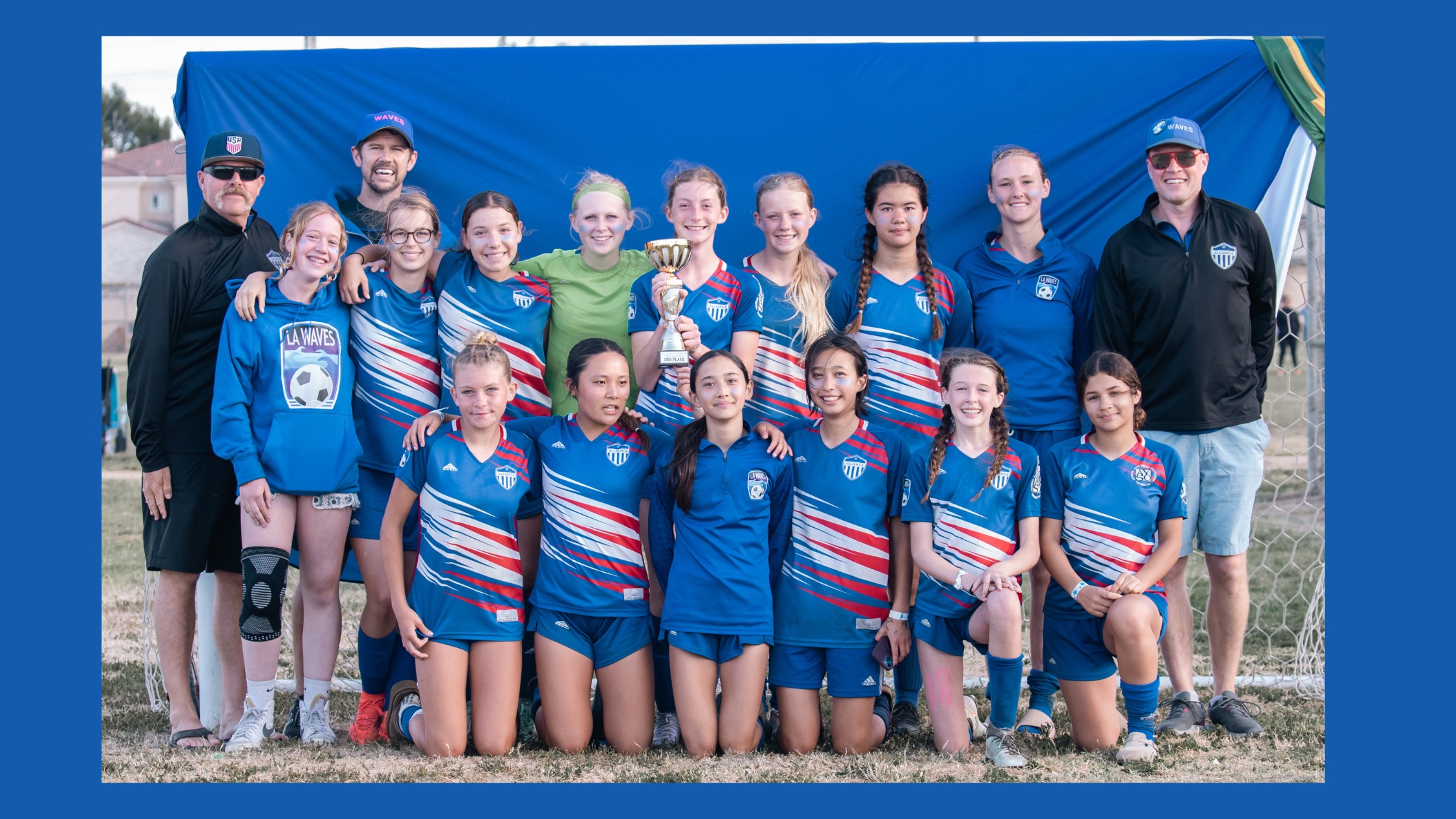
AYSO Section 1 Alliance is forcing a rethink of what “rec” soccer can be—and offering a real alternative to parents turned off by pay-to-play.
A few months after our original profile, the Southern California-based AYSO Alliance project is not just hanging with traditional elite clubs—it is beating them, qualifying multiple teams for top competitions, and sending a U15 girls side to a national championship while staying rooted in AYSO’s founding values: Everyone Plays, Balanced Teams, Open Registration, Positive Coaching, Good Sportsmanship, and Player Development.
Results that don’t look “rec”
This season, Alliance teams have pushed deep into cups and qualifying pathways usually dominated by high-fee legacy clubs. A U15 girls team (LA Waves) has qualified for the USYS National Championships in Tennessee—reportedly the first time an AYSO team has reached that level of competition. Across the club, Alliance sides have made Sweet 16 and quarterfinal runs in League Cup, produced semifinalists and finalists, and crowned champions in multiple age groups, while also punching tickets to National League Cup and Far West Regionals.
Director Nick Pisca resists reducing that success to a single lever but draws a direct line between these outcomes and Alliance’s developmental priorities. Rather than riding a “best 11” all season to maximize short-term results, the club insists that every rostered player gets meaningful minutes, even in the toughest parts of the schedule. By the time playoffs arrive and opposing clubs are scrambling with injuries and underprepared substitutes, Alliance sides are running out deep, seasoned benches that can compete through long, intense tournaments.







Images: Will Frazer
Everyone plays—and that’s the advantage
The heart of the model is an unambiguous commitment to AYSO’s core philosophies at true club level. “Everyone Plays” is not a marketing slogan; it is enforced. “Benching players doesn’t motivate players to be better,” Pisca explains. “Subbing players for mistakes extinguishes creativity on the pitch.” Parents are encouraged to report if their child is not playing at least half of every match, and the club actively follows up with coaches to understand context and correct course when needed. That transparency sends a message: development and inclusion are non-negotiable, even when trophies are on the line.
Pisca argues that this is not a competitive constraint but their edge. “If you want players to get better and smarter, they need to play, make mistakes, and learn from the game.” Over a full season, that approach compounds: more kids touching the ball under pressure, more players reading the game, more teammates capable of stepping into key roles. When other clubs hit the late-season wall, Alliance teams are still accelerating.
Balanced Teams and Open Registration extend that same logic to access. Tryouts are set up to be genuinely fair, with families placed where they fit best—including hubs closer to a parent’s workplace instead of strictly by geography. That flexibility lets Alliance attract talent other programs either overlook or price out, while preserving the AYSO DNA that long-time families recognize.
Coaching as culture, not just tactics
Alliance’s coaching pipeline may be its most underappreciated competitive asset. The club does not simply hire outside “name” coaches and drop them into teams; instead, it promotes from within the AYSO ecosystem. Prospective Alliance coaches earn their shot by proving themselves in the sprawling AYSO internal circuit—from preschool programs through U19, All-Star, EXTRA, and tournament play—demonstrating positive communication, sound soccer pedagogy, and the ability to manage both teams and paperwork.
Once coaches step into Alliance roles, the support ramps up. The club is building a dedicated online training repository tailored to its game model and values. Hub Directors of Coaching help implement training plans day-to-day, while executive DOCs oversee curriculum and benchmarks. Coach mentors within each hub reinforce positive coaching standards, helping younger or newer coaches translate philosophy into actual practice design and sideline behavior.
The results show up not just in wins but in how the teams are perceived. Pisca notes that the club’s referee and opponent ratings are exceptionally high for an organization of its size, with several coaches sitting near a perfect five-star score and at least one coach, Steve Lewis, reportedly receiving perfect marks across an entire fall season. League officials who oversee misconduct have remarked that, for such a large club, Alliance teams are remarkably well-behaved. For a youth landscape increasingly weary of sideline chaos, that reputation matters.
A parent’s view from inside LA Waves
From the parent side, the LA Waves’ story confirms that this is not just a smartly packaged rec-plus product; it feels different on the ground. Tina Howell, whose daughter plays on the GU15 Waves, describes an environment that blends serious commitment with perspective. Her daughter trains three days a week—Monday, Tuesday, and Thursday—with meaningful minutes in games and tournaments, not just token appearances.
What stands out most to her is culture. She contrasts the shouting, negativity, and sometimes aggressive behavior she has seen from other clubs with the tone inside the Waves: no “star system,” mutual respect among players, and a focus on each girl’s contribution. The team doesn’t obsess over results, yet has climbed from a season marked by heavy losses to champions the following year, reinforcing her belief that positive coaching is not just kinder—it is effective.
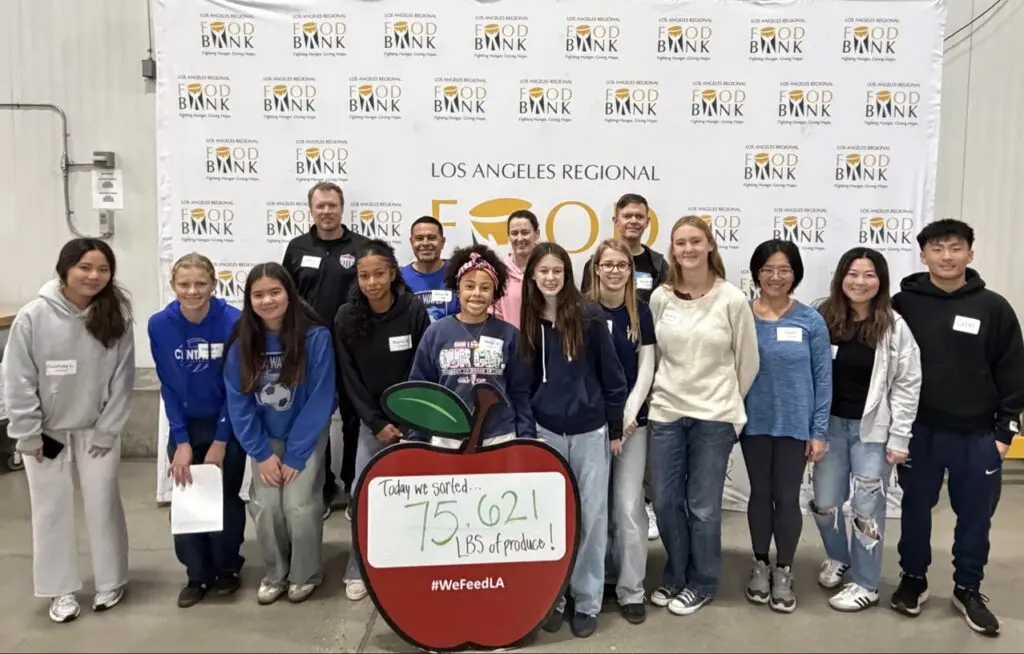
Parents, she says, are woven into the fabric of the team. Many coaches are also full-time parents, bringing resourcefulness and humility while modeling the service-oriented ethos they want kids to absorb. Families volunteer together—sorting 75,000 pounds of produce at the LA Food Bank over winter break—and the girls mentor younger AYSO players, like the Wild Cats U11 team (coached by Lewis), translating their own growth into guidance for the next generation. The message is clear: this is about development and community, not just the next college scout.
Redefining the “rec” label
Ask Pisca what people misunderstand most about rec soccer, and he answers bluntly: “That ‘rec rules’ are constraints.” In his mind, the AYSO philosophies that some in the club world dismiss as soft are precisely what’s driving Alliance’s competitive rise.
Nothing, he insists, outranks Player Development. Other clubs often chase weekend wins with guest players or “club pass” call-ins to protect their win-loss records. Alliance does the opposite, prioritizing rostered players even when it would be easier to grab short-term help. That patience builds complete players—technically sound, tactically aware, and mentally resilient—who can hold their own against the best.
Informally, the feedback loop is encouraging. Players who left for legacy clubs have returned, telling Alliance staff that training was better, smarter, and more effective in the AYSO environment. At tryouts, Pisca is struck by how many long-time outside-club players struggle to match his Alliance kids in ball handling, first touch, passing accuracy, striking technique, and game reading. Meanwhile, Alliance players are being selected into programs like ODP-PRO, undercutting the assumption that only high-dollar “letter league” pathways open scouting doors.
“For me, anytime a player chooses to stay or return to your team, it’s a vindication of your efficacy as a coach,” Pisca says. For parents who feel trapped in pay-to-play, that kind of loyalty speaks louder than any sales pitch.
Growth, strain, and the cost of doing this the right way
Success brings pressure. Demand is rising, but Alliance is wary of scaling in ways that dilute standards. Some coaches and teams remain in the core recreational program not as an afterthought, but as a deliberate step to ensure that only the most prepared coaches represent the Alliance badge. The club steadily reviews training sessions and matches, grows its board, builds middle management, and even uses custom Google Workspace tools to keep communication flowing. Leadership remains accessible to families and team staff, trying to preserve an open-door feel inside a growing organization.
The biggest strain, though, is financial—and it hits hardest precisely where the club is most successful. Alliance’s low fees, and its philosophical opposition to traditional pay-to-play norms, are central to its identity and appeal. Most teams can compete at a high level within manageable local travel, but as some squads move into Regionals, National League Cup, and now a USYS National Championship, the cost curve spikes.
For LA Waves families, Howell estimates that national-level travel runs around 1,000–1,200 dollars per person, before adding the cumulative impact of in-state doubleheader weekends, hotel stays to avoid grueling commutes, and the general cost of living in greater Los Angeles. For some families, affordability is a manageable concern; for others, it is the determining factor in whether their child can stay on this journey.
A GoFundMe for Travel
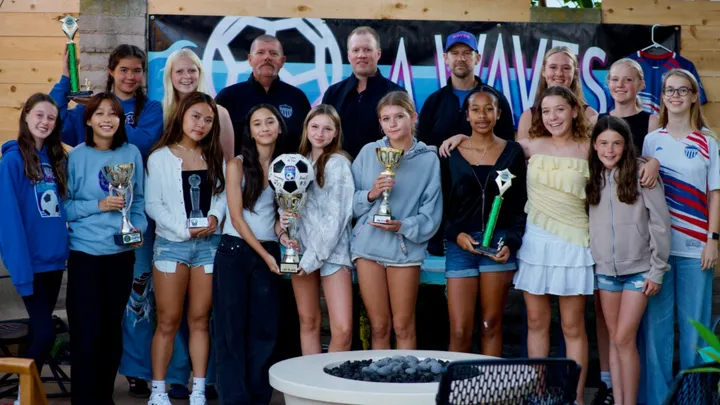
To keep the LA Waves’ historic trip to USYS Nationals accessible, Alliance has launched a fundraising push aimed at covering lodging, flights, and meals. The goal is not luxury—it is basic viability. In a youth sports economy where travel has become an industry in itself, the risk is clear: the higher a team climbs, the more likely it is that finances, not talent, determine who gets to keep going.
Link: GoFundMe to Support LA Waves’ USYS Nationals
Pisca frames it as part of fixing a broken pathway. If only families who can absorb thousands in travel costs can reach national stages, then high-level youth soccer will continue to miss players with the ability but not the means. By asking the broader community to help underwrite this trip, Alliance is trying to prove that another model is possible—one where rec principles and national-level achievement are not mutually exclusive, and where a girl from an AYSO field can compete on the same stage as anyone from a big-brand badge.
For parents who are disillusioned with traditional club soccer but still want serious, ambitious, high-level development, AYSO Section 1 Alliance is more than an underdog story. It could be a working blueprint for a different path for their young soccer players.

Ron Stitt
Co-Founder, U.S. Soccer Parent
One Response