
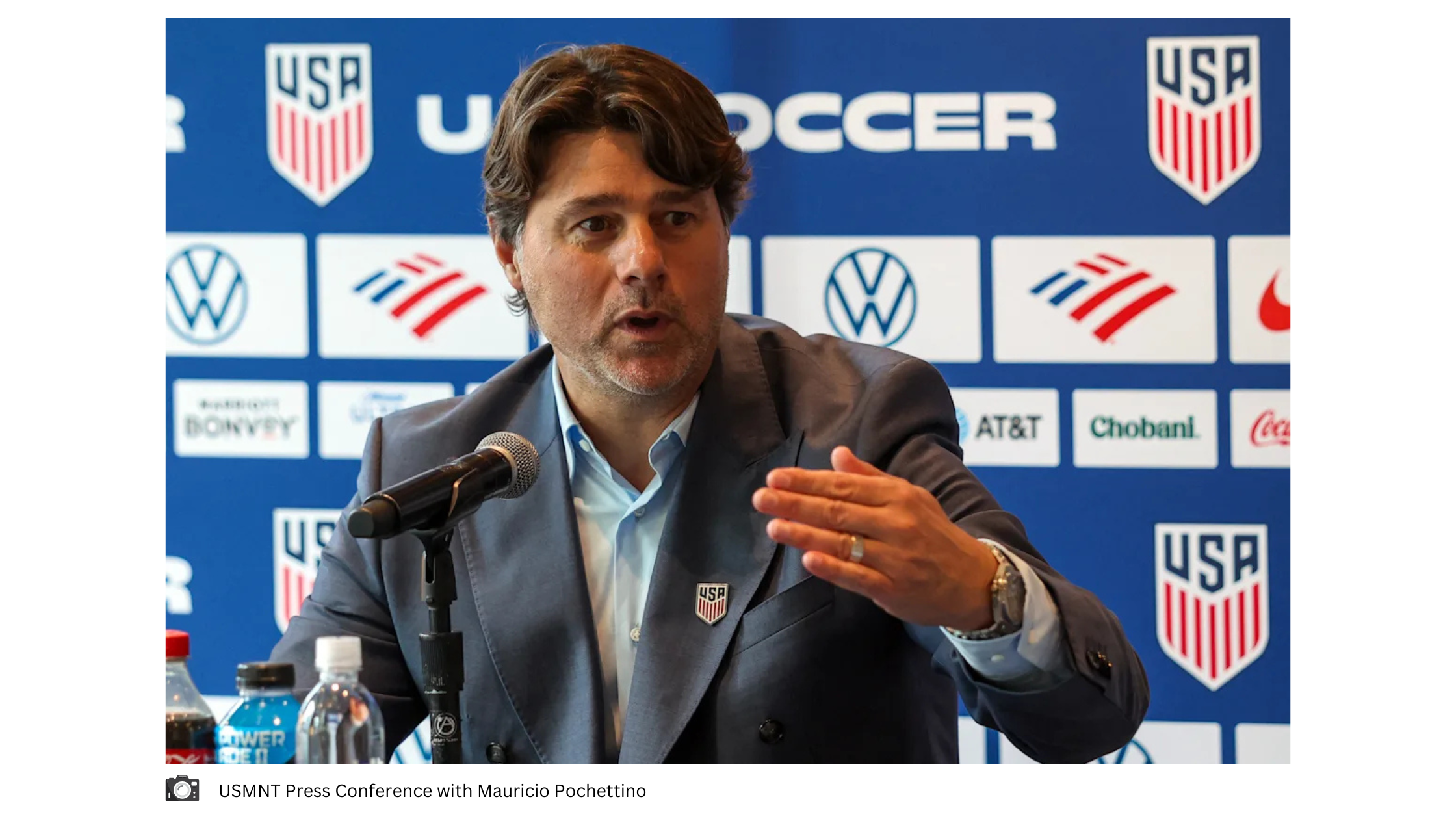
In the last few weeks, the U.S. soccer world has been arguing about something that seems, on the surface, procedural: the way the U.S. men’s national team handled informing players about who did and did not make the World Cup squad. The controversy isn’t really about tactics, or even selection choices. It’s about how human beings were treated in a moment that could shape the rest of their careers and lives.
Depending on which accounts you read, some players learned their fate in ways that felt abrupt, impersonal, or even disrespectful. For them, this wasn’t just a decision; it was the culmination—or derailment—of a lifetime of work. When you strip away human courtesy in a moment like that, you don’t just make a communications error. You make a moral one.
Mauricio Pochettino, the head coach, has pushed back on criticism by leaning on familiar rationales: that high‑performance environments are tough; that difficult decisions can’t always be sugar‑coated; that the primary obligation is to the team, not individual feelings. The implication is that as long as the coach is honest and decisive, the manner of delivery is a secondary concern.
I think that view is fundamentally wrong. Not just from a “PR” perspective, but from a human, ethical, and even performance standpoint. Of course the team comes first. And, players need to be treated with respect. The two concepts are not mutually exclusive.
Selection Decisions Are Human Moments
If you’ve spent any time around elite sport, you know there’s no painless way to tell a player he didn’t make a roster. The hurt is inevitable. But that is precisely why how you do it matters so much.
There’s a world of difference between a direct, private conversation where a coach explains the decision, acknowledges the player’s sacrifice, and offers a path forward, as opposed to a curt email or text message, or worse, the player piecing it together from a list or a leak. The outcome is the same on paper—one player is in, another is out—but the human impact is not remotely the same. When a coach chooses the second route, he is effectively saying: “Your humanity is less important than my convenience and the optics of decisiveness.”
Ethically, IMO that’s a failure of basic respect. Or a sign of cowardice – these conversations are difficult and it might be tempting to try to avoid them. Practically, it’s a failure of leadership. Players who feel blindsided and dehumanized don’t suddenly become more loyal, more committed, or more trusting. They carry that scar into every future interaction with that staff, and it spreads through the locker room.
The Myth That “Toughness” Requires Emotional Carelessness
One of the laziest assumptions in elite sport is that empathy equals softness. That if you take time to talk to a player face‑to‑face, explain a decision, and show that you understand their disappointment, you’re somehow weakening the competitive edge of the environment.
In reality, the research on high‑performance teams points in the opposite direction. Studies on “psychological safety” in teams—popularized by Amy Edmondson’s work at Harvard—show that environments where people feel respected and able to speak up without humiliation are actually more productive and more innovative. Those findings have been replicated in corporate settings, in medical teams, and in sports environments.
Psychological safety doesn’t mean “no standards” or “no consequences.” It means people trust that they will be treated fairly and with dignity, even when they fail or fall short. That’s exactly what is at stake in how selection decisions are communicated.
When a coach defends brusque or distant communication as necessary “toughness,” he’s confusing cruelty—or indifference—with strength. True strength is being able to look a player in the eye, deliver devastating news, and still make that player feel seen and respected.
Feedback, Growth, and the Long Tail of These Moments
Another missed point in this debate is how formative these moments are in a player’s – and team’s – development. Being cut from a squad can be a defining turning point, one way or another. With the right conversation, it can become a clear data point about where the player stands and a roadmap for what needs to improve. It can lay a foundation of trust that the coach will judge them honestly in the future.
Without the conversation, it becomes a story the player tells himself in the dark: “I was discarded”. That becomes a breeding ground for resentment and conspiracy theories, and a wedge between the player and the staff, and often between the player and their team mates and the crest.
We’ve all seen examples of coaches who handle this well. Managers who call players in early, speak plainly, and say some version of: “This is the hardest part of my job. You deserve to hear this from me, directly.” Those players might still be crushed in the moment, but years later they will tell you that they respected the coach for doing it the right way.
When a coach dismisses all of that as unimportant—or secondary to “business decisions”—he is not just wrong ethically. He is actively undermining player development and long‑term team culture.
This Isn’t Just About Sport: It’s about Business and Life
As soccer parents, we know the odds of college or pro careers are long – but a youth soccer career can and should be foundational for life, social and work skills and ethics. The pattern we’re talking about isn’t unique to soccer. It shows up in boardrooms, startups, media companies, and classrooms. Picture the boss who lays off people via email instead of a conversation. The executive who skips feedback and just stops inviting someone to key meetings, and the leader who makes decisions about people without ever talking to them.
In every case, the same story plays out: leaders rationalize their behavior as “just business,” when what they’re really doing is avoiding discomfort at the expense of someone else’s dignity.
Leadership research bears this out. Teams with leaders who demonstrate empathy—actually listening, explaining decisions, and acknowledging emotions—show higher engagement, lower turnover, and better performance over time. You don’t have to agree with every study to recognize the pattern: treating people like people correlates with better outcomes.
In sport, we’re oddly willing to suspend that common sense. We wrap harmful practices in the language of “elite standards” or “the brutal reality of high‑performance environments.” But players aren’t less human because they wear a crest. If anything, the stakes make humanity more necessary, not less.
Etiquette, Humanity, and the Culture You Create
Etiquette might sound like a small word next to “World Cup selection,” but it’s not. Etiquette at its core is about recognizing that other people have inner lives, and adjusting your behavior to honor that.
Basic etiquette in this context looks like:
- Telling players directly, before the decision becomes public.
- Choosing a medium that allows for dialogue (in person or at least a real conversation).
- Giving enough context that the player understands it’s not arbitrary.
- Leaving the door open to future growth rather than slamming it shut.
None of this prevents a coach from making ruthless competitive decisions. It just means those decisions are delivered in a way that doesn’t deny someone’s humanity. That should not be controversial.
When a national team coach is publicly indifferent to those norms—when he effectively says “The results justify the way we treat people”—he’s sending a message to everyone watching: assistants, youth coaches, academy directors, parents, and players. He’s normalizing a culture where convenience and ego trump empathy and respect.
That’s why this isn’t a minor communications controversy. It’s a moral one.
The Standard We Should Demand
At every level of soccer—from grassroots to the World Cup—we tell players that character matters. We talk about respect, integrity, and being a good teammate. If we’re serious about that, then we have to hold coaches and leaders to the same standard.
This is just my opinion, but I believe you can demand excellence and still be kind. You can cut a player and still honor their effort and identity. You can lead a national team – or a youth rec or even elite one – and still obey the basic rules of human decency when you deliver news that will break someone’s heart.
If anything, that is exactly where your character as a leader is revealed.
So when we look at the way the USMNT handled these communications, and at how the head coach defends that process, we shouldn’t shrug and say, “That’s elite sport.” We should say, “If this is elite, it’s not good enough.” Because the game is bigger than one tournament, and the culture we shape with these decisions will outlast every roster announcement.
In soccer, in business, and in life, the real measure of leadership is not just the decisions you make, but how you treat the people those decisions affect. Humanity isn’t an add‑on. It’s the job.

Ron Stitt
Co-Founder, U.S.Soccer Parent