
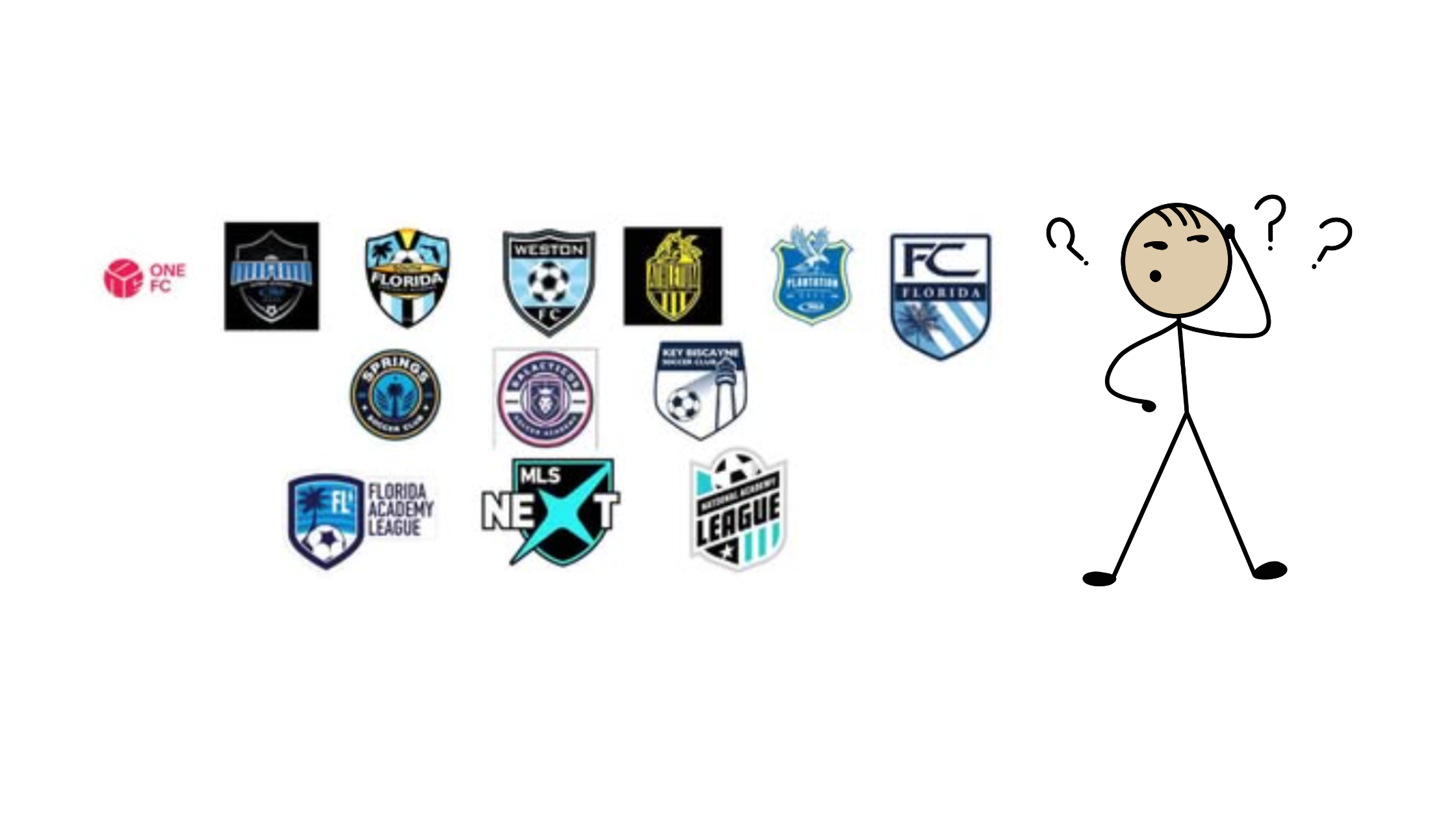
As most of American youth soccer prepares to move back to school‑year age groups in 2026–27, at least one big South Florida club is openly swimming against the tide. Weston FC has announced it intends to keep using calendar‑year birth dates to group its teams, even as national bodies push the system toward August–July “school‑year” brackets. And based on recent social media posts, it appears at least a couple of other Florida clubs are now signaling they’ll follow Weston’s lead.
On paper, the direction from the top is clear. Beginning in 2026–27, the major national organizations are shifting their competitions to school‑year age bands. Leagues and tournaments under those umbrellas are expected to form U‑age divisions using August 1–July 31 windows, with eligibility based on each player’s date of birth fitting that range. The stated goal is to align more closely with school grades, simplify the high‑school transition, and reduce some of the age‑group confusion that has lingered since the switch to strict birth‑year.
Weston’s messaging lands as a direct challenge to that new “consensus.” In late March, the club told families it would “continue to use birthdates to determine age” and framed that decision as part of a partnership with other top South Florida clubs. The graphics that accompanied that announcement made it clear this wasn’t just one club freelancing; Weston is trying to present itself as the public face of a small regional bloc that wants to stick with FIFA‑style calendar‑year groupings rather than move back toward school‑year.
The problem is that one club — or even a handful of clubs — doesn’t control the rulebook. A club can call its teams whatever it wants internally, but league and tournament eligibility is always set by the competition itself. If a U15 division is defined by a school‑year date range, a player is either inside that range or not, regardless of how the club built its roster. A “pure” birth‑year team will almost never line up perfectly with those school‑year windows, which means some players on that roster would be ineligible for that division.
That’s where Weston’s stance runs into practical questions. If the leagues they play in adopt school‑year age groups, how do you send a true birth‑year team into a school‑year bracket without dropping players or reshuffling rosters? If you do adjust the roster so that every kid fits the league’s school‑year window, you’re effectively following the school‑year model for competition purposes, whatever you call it in your marketing. And if you refuse to adjust, the hard reality is simple: some teams won’t be allowed to play in those divisions at all.
The complications only get sharper when you zoom out to regional and national events. Those competitions will also be seeded and enforced on school‑year age bands. Even if a cluster of South Florida leagues were persuaded to keep or recreate birth‑year divisions locally, any team that wants to go into a state, regional, or national tournament still has to obey the school‑year eligibility windows for that event. That forces clubs into awkward choices: do you rebuild a tournament roster to fit school‑year, breaking up the birth‑year team you’ve been promising families, or do you accept that some of your marquee age‑group teams can’t go?
That’s why the most interesting question here isn’t simply “Who’s right, school‑year or birth‑year?” It’s whether this South Florida bloc can convert a philosophical stance into a sustainable competition model. If Weston and its allies can convince key leagues and event operators to maintain or reintroduce calendar‑year brackets for older competitive ages, they might carve out a genuine alternative pathway in one of the country’s deepest talent markets. If they can’t, the logic of eligibility is likely to pull them back toward school‑year over the next couple of seasons, no matter what the social posts say.
Right now, it looks less like proof of a fully formed trend and more like the first visible friction in a messy transition. On one side, national organizations and most multi‑league clubs are clearly moving toward school‑year as the new normal. On the other, you now have a small, vocal group in a major market trying to hold the line on calendar‑year, with all the practical tensions that creates once you move from Instagram graphics to actual rosters and game sheets.

Ron Stitt
Co-Founder, U.S. Soccer Parent
One Response
The players born in Aug – Dec will just be “playing up a year”. It’s not that big a deal for Tournaments/Leagues/State Comps/etc. as instead of Aug – Dec playing U13, they’ll play U14.