
Blog
When to Consider a True Summer Soccer Break
March 15, 20264 min read
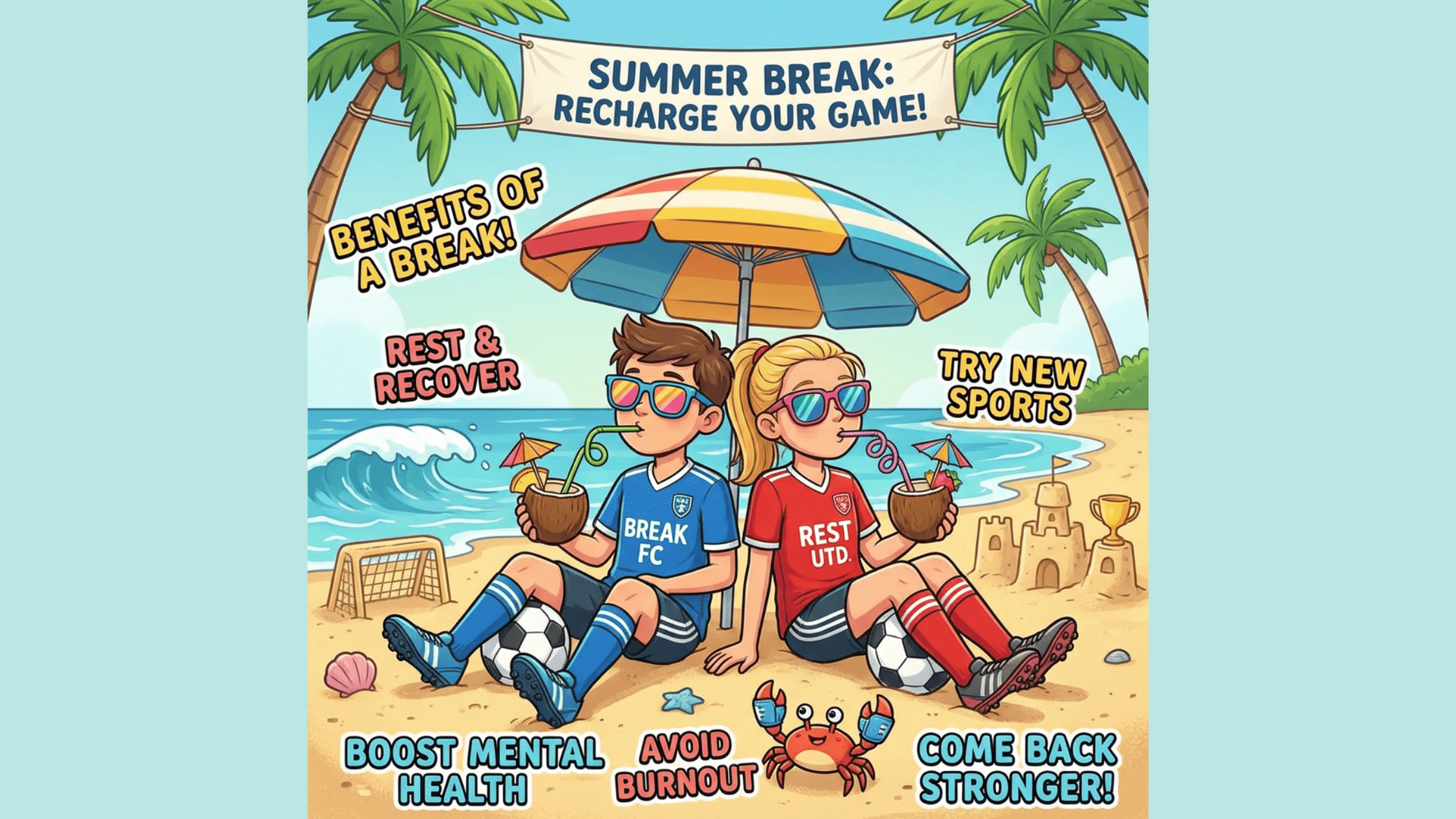
It’s mid-July, and you’re probably in the thick of it: camp schedules, fall tryout emails, and that nagging question of whether your kid should be doing more soccer right now — or a lot less.
Here’s the honest answer most parents don’t hear: for a lot of kids, the best thing you can do this summer is nothing. No camps, no clinics, no organized training — just a few real weeks off. Not because your child will fall behind, but because rest is what actually protects their body, their joy, and their long-term future in the game.
If you’ve been feeling guilty about a quieter summer, this one’s for you.
Youth sports and pediatric experts increasingly warn that year‑round, single‑sport participation raises the risk of overuse injuries and burnout. Regular time away from organized training gives growing bodies a chance to recover and gives kids room to miss the game a little, which can be just as important as the training itself. A summer without formal soccer can be a reset button that helps many players come back fresher, more excited, and better able to handle the demands of the next season.
Pros of taking a summer break
- Physical recovery
- Time off reduces cumulative stress on growing bodies and helps prevent overuse injuries like shin splints, knee pain, and hip flexor strains.
- Rest periods are linked with lower injury risk compared with continuous, high‑volume play.
- Mental reset and burnout prevention
- Constant competition and pressure to “keep up” can erode a child’s joy in the game; breaks provide emotional breathing room.
- Time away can improve overall stress levels, sleep, and emotional resilience.
- Long‑term development and love of the game
- Regular time off supports longer careers in sport by reducing dropout linked to burnout.
- Variety (different sports, free play, non‑soccer activities) can build broader athleticism, coordination, and creativity that ultimately helps soccer performance.
- Family life and schedule balance
- A break opens space for travel, extended family visits, or simply unstructured days that are hard to fit in during the school year.
- Parents also get relief from the constant logistics and financial commitments of year‑round programming.
Join U.S. Soccer Parent
Free for every soccer parent.
Save articles, get the free newsletter, and find guidance tuned to your state, your kids' ages, and the pathway your family is on.
Cons and trade‑offs of skipping summer soccer
- Short‑term fitness and sharpness
- Long stretches of complete inactivity can reduce aerobic fitness and sharpness, especially for older or more competitive players.
- Without a basic plan for casual activity, some kids may slide into very sedentary habits that make the fall season feel harder at the start.
- Social and team connections
- Some kids view camps and summer training as a fun way to stay connected with teammates and friends.
- A full summer off might feel isolating to a child who really loves the social side of soccer.
- Perception of “falling behind”
- In competitive environments, parents may worry that other players are training all summer and their child will lose ground technically or tactically.
- For most players, an appropriately planned break does not derail development, but the fear of lost opportunity can feel very real.
- Missed specific opportunities
- ID camps, college‑run programs, or selective training blocks sometimes only happen in summer, so skipping everything can mean passing on genuine exposure or learning chances for older teens.
When a summer break makes sense
A summer break from organized soccer is especially worth considering when your child shows signs of burnout or dread—talking about quitting, dragging themselves to practice, or looking emotionally flat even when things go well. That shift in body language and energy often appears before a true injury shows up. If coaches are quietly telling you your player seems mentally checked out, that is another strong signal that a reset might help more than another camp.
Time off is also important when there are nagging aches and pains that never quite go away. Recurring knee, heel, hip, or shin pain, or a diagnosis like “overuse injury,” usually means the body needs more than a weekend off. A solid break, followed by a gradual return to activity, is often more effective than bouncing from spring to summer to fall on the same schedule. The more a child plays on multiple teams or trains more hours per week than their age in years, the more valuable that summer window becomes.
Age and context matter as well. For many players in the roughly 7–12 range, a summer away from formal soccer can be a gift: time to try different sports, day camps, or pure free play without uniforms or whistles. Those years shape how kids see themselves, and being “more than a soccer player” can actually make them more resilient within soccer later on. For older teens in more competitive environments, you might choose a hybrid: a few targeted opportunities (for example, one ID camp or a short training block) wrapped inside a larger period of rest and lighter activity.