
Costs of Youth Soccer
The Cost of Youth Soccer
Youth Soccer Costs — At a Glance
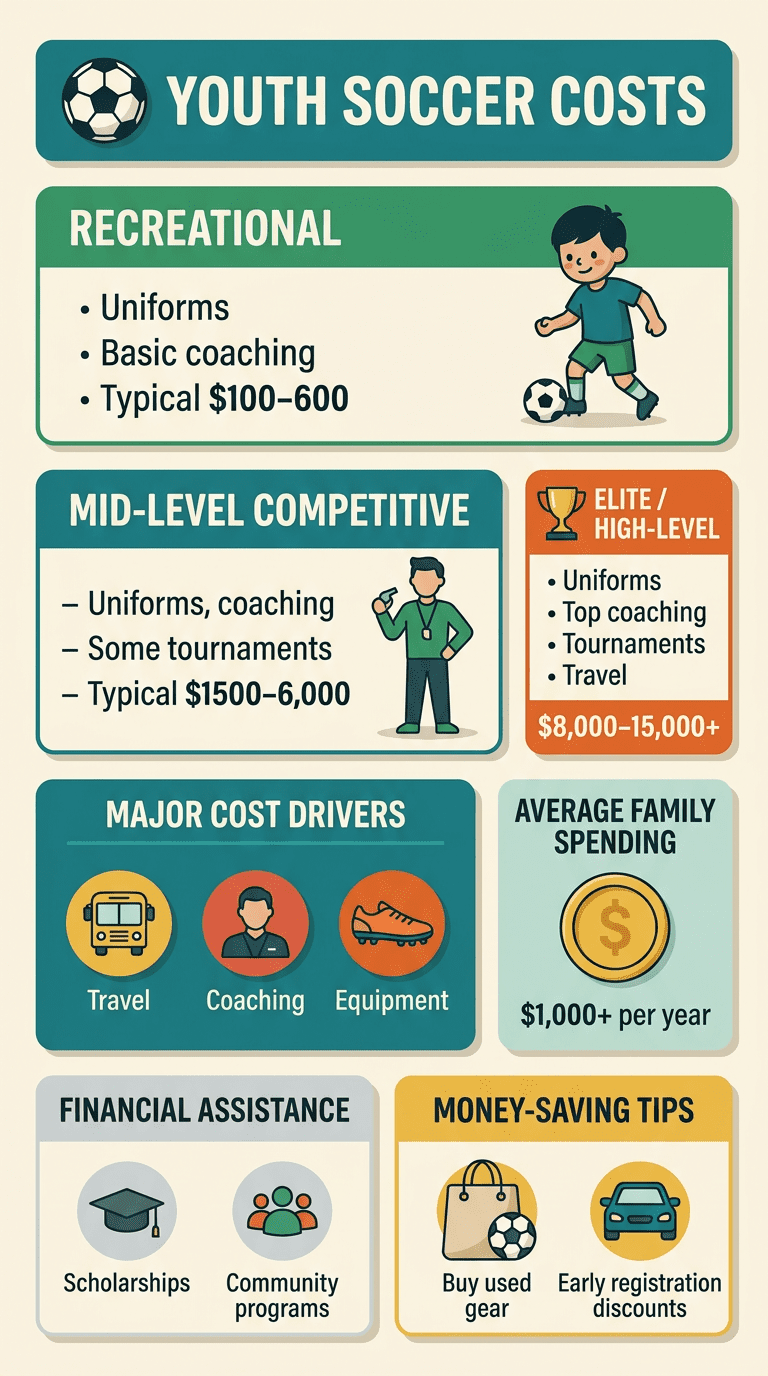
Youth soccer costs vary widely by level, club, and location. Recreational programs can stay relatively affordable, while competitive travel and elite pathways can rise into the thousands once fees, uniforms, tournaments, and travel are included.
What Drives Youth Soccer Costs
Regional Differences
Costs often depend on where you live. Large metro areas and competitive soccer markets usually have higher club fees, more travel-heavy schedules, and more access to premium training options that increase total yearly spending.
Travel and Tournament Expenses
For travel teams and elite leagues such as ECNL, MLS NEXT, and other national-level platforms, airfare or long drives, hotels, meals, and tournament costs can become one of the biggest budget items for families.
Professional Coaching & Specialized Training
Higher-level clubs often charge more because of licensed coaches, specialized staff, and year-round programming. Optional private or small-group training can add significantly to a family’s total annual cost.
Extra Camps and Clinics
Camps, clinics, and supplemental training are often optional, but many competitive players participate in them throughout the year. Those add-ons can meaningfully raise the total cost beyond base club dues.
Hidden & Add-On Fees
Families should always ask about uniforms, warm-ups, tournament surcharges, coach travel, team fees, and governing-body registration charges before committing. Smaller line items can make a lower advertised fee look much different by the end of the season.

Financial Aid and Payment Options
Many soccer clubs and leagues offer some form of financial assistance, but availability and coverage vary widely. Help may include need-based scholarships, installment payment plans, or support from local nonprofits and community grant programs, and families usually have the best chance when they apply early.
- Need-based aid may reduce part of the club fee, but it does not always cover travel, uniforms, or extra training costs.
- Payment plans can spread seasonal fees across several months, which can make higher-cost programs more manageable.
- Some outside organizations and local community programs offer one-time sports grants or equipment support, often with limited funding and early deadlines.
Tip: Ask about financial aid, payment plans, and deadlines before tryouts or registration closes, since many programs allocate limited assistance early.
Join U.S. Soccer Parent
Free for every soccer parent.
Save articles, get the free newsletter, and find guidance tuned to your state, your kids' ages, and the pathway your family is on.
How Much Families Spend on Youth Sports
The cost gap in youth soccer is significant. Nationally, the average U.S. family spent $1,016 on a child’s primary sport in 2024, but soccer families at the higher competitive levels can spend many times that amount once travel, hotels, uniforms, tournament fees, and optional training are added.
The soccer ranges below are broad budgeting estimates, not fixed league prices. Actual spending varies by location, age group, club, financial assistance, and travel schedule. Compare what each program includes before estimating your family’s total annual cost.
- National youth sports average: $1,016 per child for a primary sport in 2024.
- Typical recreational soccer: often about $100 to $600 per year, depending on the local program.
- Competitive travel soccer: often about $1,500 to $6,000 per year before major travel costs.
- Elite soccer pathways such as ECNL or MLS NEXT: often $8,000 to $15,000+ annually.
- In the most expensive cases, total youth sports spending reported by parents reached nearly $25,000 per year.
Most families will fall somewhere in the middle of these ranges, but it is helpful to understand the full spectrum before committing to a team or pathway.
Youth Soccer Costs: Frequently Asked Questions
Practical answers about soccer fees, additional expenses, financial assistance, and choosing a program your family can sustain.
How much does youth soccer cost per year?
There is no single annual price for youth soccer. The Aspen Institute’s national parent survey reported average spending of about $910 in 2024 for a child whose primary sport was soccer. That figure is not a current club quote or an estimate specifically for travel or elite soccer. Ask each program for its season length, required fees, and expected additional expenses before building your annual budget.
What expenses should parents budget for beyond club fees?
Ask whether the quoted fee includes uniforms, player registration, league and tournament entries, referee fees, coach travel, and team assessments. Then budget separately for any family transportation, hotels, meals, equipment, and optional camps or private training. Request a written breakdown of required and optional costs so you do not overlook expenses or count items already included in the club fee twice.
Why does travel soccer cost more than recreational soccer?
Travel soccer can cost more because programs may use paid coaches, train over a longer season, rent additional facilities, and enter more competitions. Away games and tournaments can also add transportation and lodging expenses. However, program costs overlap, and a league label alone does not establish the price. Compare the actual schedule, staffing, included services, and expected travel rather than assuming every competitive team has the same budget.
Can families get financial assistance for youth soccer?
Some clubs and community organizations offer need-based assistance, reduced fees, equipment support, or other help. Availability, eligibility, and deadlines vary. Ask what an award covers, since assistance with club dues may not cover uniforms, travel, or team expenses. Payment plans can spread payments over time but do not necessarily reduce the total cost. Start with our financial aid and grants guide and confirm the current terms directly with the provider.
Does a more expensive soccer club mean better development?
Price alone is not a reliable way to judge whether a program fits your child. Look at the assigned coach, quality of training, meaningful playing opportunities, team culture, and how the club communicates about development. Ask what additional fees actually provide and whether those services support your player’s needs. Choose an environment your child can enjoy and your family can sustain rather than treating the highest price as proof of the best opportunity.
What financial questions should parents ask before accepting a roster spot?
Ask for the full required cost, payment dates, expected travel schedule, and any expenses that are not yet fixed. Clarify which deposits are non-refundable, what happens after an injury or withdrawal, and whether leaving the team changes your obligation to pay remaining fees. Request financial-aid decisions and important terms in writing before committing. Our registration guide explains the commitments to review before signing.
Keep Going
Additional Resources
Explore affordable options, financial assistance, and practical questions to ask before committing to a soccer program.
- Accessible & Affordable Soccer Explore what accessibility and affordability mean when comparing youth soccer opportunities.
- Financial Aid Programs & Grants Find guidance on financial assistance and questions to ask about eligibility, coverage, and application deadlines.
- Soccer Programs Making a Difference Explore programs working to make soccer more accessible to children and families.
- Coaching Licenses & Their Costs Understand coaching qualifications, education costs, and what credentials can tell parents about a coach.
- AYSO: A Parent’s Guide Learn about AYSO’s approach, programs, and registration process when researching local soccer options.
- What to Know Before You Sign Review financial commitments, registration rules, and questions to ask before accepting a club offer.