Blog
Was There a “Golden Age” of American Youth Soccer?
May 7, 20267 min read
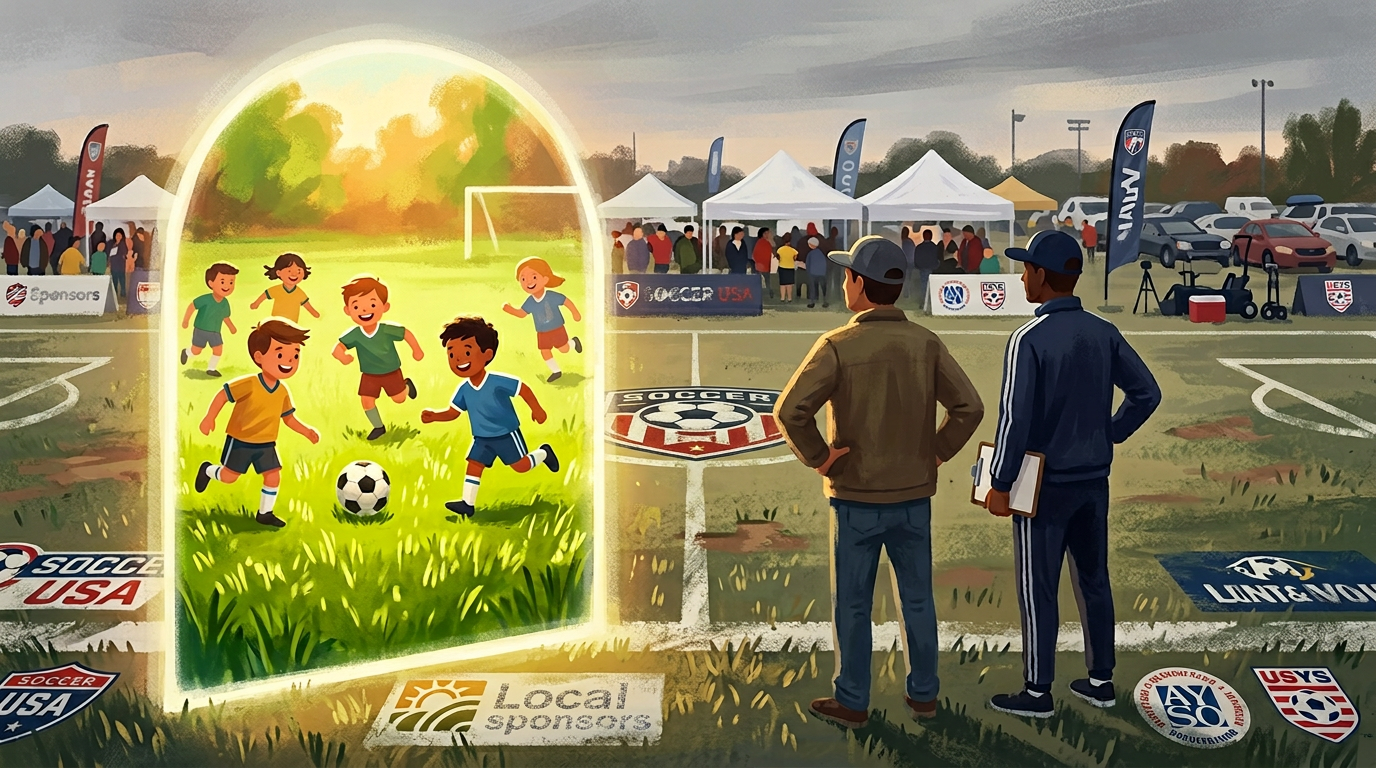
It’s become a familiar refrain around American youth soccer: “It used to be better.”
We hear this a lot from long‑time coaches, DOCs, referees who’ve been on the fields for 30 years, and parents who’ve shepherded multiple kids through the system. They’ll tell you the game was simpler, more community‑oriented, less expensive, less exhausting. And they’re not entirely wrong.
But nostalgia is a powerful editor. It tends to cut out the bad fields, the untrained coaches, the lack of opportunity for whole swaths of kids, and leave us with the warm, fuzzy parts. So if we’re going to talk honestly about whether youth soccer “used to be better,” we need to do two things at once:
- Take the emotion seriously.
- Look at the facts clearly.
When someone tells you youth soccer was better 10–20 years ago, if you listen closely, they’re usually talking less about the soccer per se and more about the experience around it.
They remember:
- One or two leagues in their area, not eight.
- A clear ladder: rec → travel → high school → maybe college.
- Teams built around one town or school district, where kids went to class together and parents saw each other at the grocery store.
- Lower fees, fewer plane trips, fewer weekends eaten alive by tournaments three states away.
In other words, they remember a version of youth soccer that felt more local, more human, and less like a sprawling industry. Even if the coaching wasn’t as advanced or the player pool as deep, there was a sense of belonging: “our town’s team,” “our club,” “our field.”
There’s also a personal layer we don’t talk about much. When veteran coaches and parents think back on “the old days,” they’re often remembering their own energy and optimism. They were younger, everything in the sport felt new, the stakes felt lower. It’s easy to project that feeling onto the system itself and decide that the system must have been better too.
What actually is better now
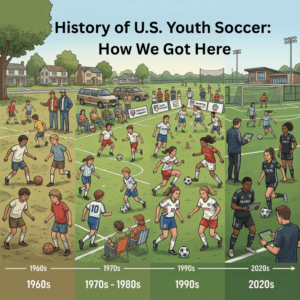
If you zoom out from the emotions and look at the arc of the last few decades, youth soccer in the U.S. has made real, tangible progress.
The player pool is larger and more technically capable. Kids are exposed to high‑level soccer on TV and streaming from the time they’re tiny; they copy what they see, and you can feel the difference in the average U‑12 game compared to the 1990s or early 2000s. The “floor” is higher.
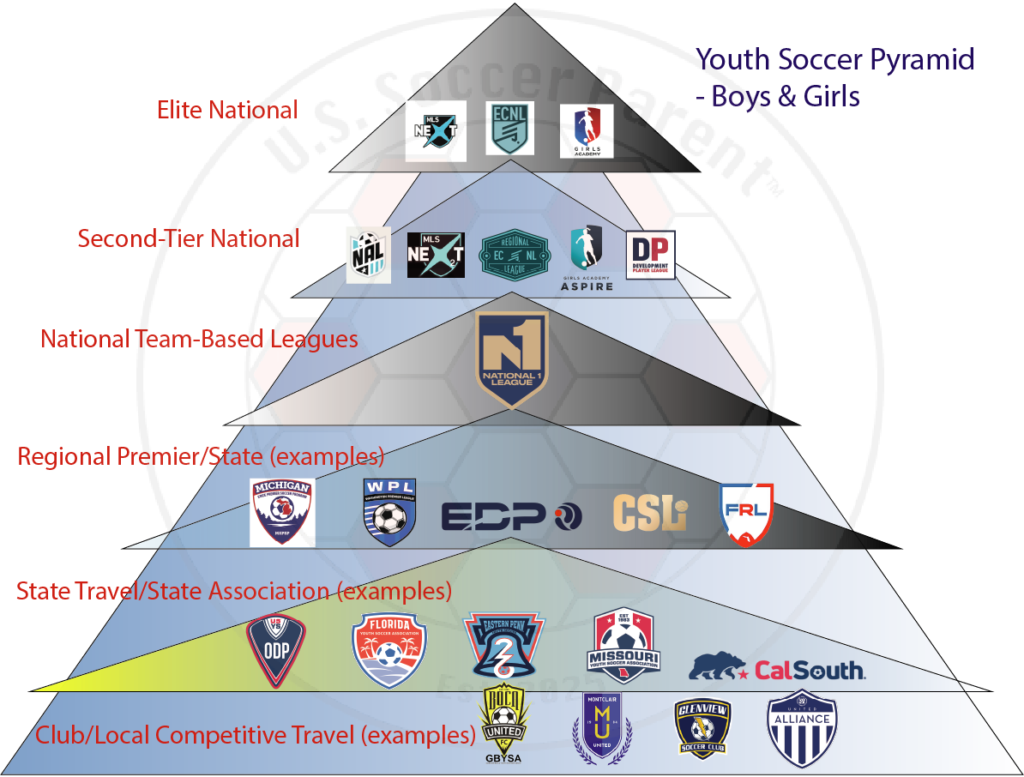
Opportunities have expanded dramatically. There are more structured pathways into college and professional soccer than ever. MLS academies, MLS NEXT, ECNL, NPL, and other platforms – for all the issues and complaints around them – create real connective tissue between youth clubs and the higher levels of the game. Girls and women have far more access to serious, competitive environments than they did a generation ago, fueled by the success of the USWNT and college soccer.
Coaching, for all the gaps that still exist, is generally better educated. Licenses are more available, online learning is accessible, and there’s a global library of training content that simply didn’t exist even 15 years ago.
All of that matters. If your only metric is “are we better at developing players than we used to be?” the answer has to be “yes”. The problem is that this improvement has been layered on top of a system that has also become more fragmented, more expensive, and more confusing.
Join U.S. Soccer Parent
Free for every soccer parent.
Save articles, get the free newsletter, and find guidance tuned to your state, your kids' ages, and the pathway your family is on.
What probably was better 10–20 years ago
So why does that nagging sense of loss persist? Because there are some things that, frankly, were better.
The map was simpler. Instead of a thicket of overlapping national leagues and branded “pathways,” you had a smaller number of structures that most people understood. State associations and ODP were flawed, but you didn’t need a flow chart to explain how your kid might get from U‑10 travel to a college opportunity.
Community identity was stronger. When most teams pulled from a single town or cluster of schools, the crest on the jersey meant something specific. Kids wore their club gear in the hallways. Parents were part of the same broader life, not just strangers united by a logo and a payment plan.
The financial burden was lower. Costs have been creeping up for years, driven by more tournaments, more travel, more “elite” showcases. The pay‑to‑play model isn’t new, but its intensity is. For many families, soccer has moved from “we pay some fees and buy some cleats” to “this is our biggest discretionary expense.”
And there was less early professionalization. The expectation that a serious player has to specialize early, play year‑round, and hop on the “correct” branded pathway is much stronger now. Twenty years ago, more kids still played multiple sports, more seasons were distinct, and the idea that you needed to “optimize your U‑11 experience” for future college coaches would have sounded ridiculous.
If you value simplicity, community, and low‑pressure participation, you’re not imagining things: those aspects have eroded in many places.
Why the past isn’t a place we can (or should) go back to
The trap, though, is to confuse “those aspects were better” with “the system as a whole was better” or to assume that going backwards would solve today’s problems.
We can’t rewind to a time when:
- There was no realistic professional pathway for most American kids.
- Girls’ opportunities were narrower.
- Coaching education was sparse and uneven.
- Entire communities were under‑served or excluded.
And we shouldn’t want to. The things we rightly celebrate today—more pathways, more visibility, more serious development environments—came in part from the same forces that created today’s frustrations. Professionalization is a double‑edged sword.
If we’re honest, “make it like it used to be” isn’t a plan. It’s a feeling.
The path forward: keep the gains, fix the design
So where does that leave parents, coaches, and clubs who are genuinely unhappy with the current state of things?
First, we have to separate values from structures.
The values that people miss—community, affordability, clarity, joy—are not inherently tied to the old formats. We don’t need to kill academies or elite leagues to reclaim them. We need to redesign around them.
That looks like:
- Re‑centering local play. Making sure every community has low‑cost, low‑pressure options where kids can play with their friends, in their neighborhood, with reasonable travel and fees. Not as an afterthought, but as a core priority.
- Simplifying the menu. The current alphabet soup of leagues, platforms, and pathways is a design problem. Governing bodies and clubs can make different choices about how many layers they create, how they communicate them, and how hard they push families to “upgrade.”
- Being honest about trade‑offs. If a club is going to push early specialization or heavy travel, it should be crystal clear about the benefits and costs—not just in dollars, but in family time, burnout risk, and opportunity cost.
- Re‑building community on purpose. Even in wider‑draw elite teams, clubs can intentionally build culture: shared events, local outreach, integrated rec‑to‑travel relationships, and real connection between coaches and families beyond invoices and game schedules.
Second, we should stop treating parents’ and coaches’ frustration as mere nostalgia. Buried in that “it used to be better” complaint is a legitimate critique of how we’ve allowed youth sports to drift toward an arms race. The challenge is to channel that energy into something constructive. It’s easier to complain about the past than it is to design the future. But the future is the only direction we actually get to move.
Choosing what we carry forward
The truth is, youth soccer has never existed in a perfect state. Every era has had its winners and losers, its blind spots and breakthroughs. The same will be true 20 years from now when another generation looks back and insists that this moment was the golden age.
The useful question isn’t “was it better then or now?” It’s:
- What was worth preserving from back then?
- What is worth preserving from today?
- What are we willing to change so that the next version is better for more kids, more families, and more communities?
We can’t go back to the past, but we can steal the best parts of it. We can insist on local identity and affordability even as pathways modernize. We can demand sanity in scheduling and travel even as we push the technical bar higher. We can design systems where a kid can both dream big and still love Wednesday night practice with their friends.
The next phase of American youth soccer will be defined less by nostalgia and more by choices. The people reading and shaping conversations like this—parents, coaches, club leaders—are the ones who will make those choices.

Ron Stitt
Co-Founder, U.S. Soccer Parent
Additional Content You My Like