
Positions Explained: Forwards

Forwards are the players closest to the opponent’s goal, with a primary responsibility to score and create chances, but the modern game demands far more than just finishing.
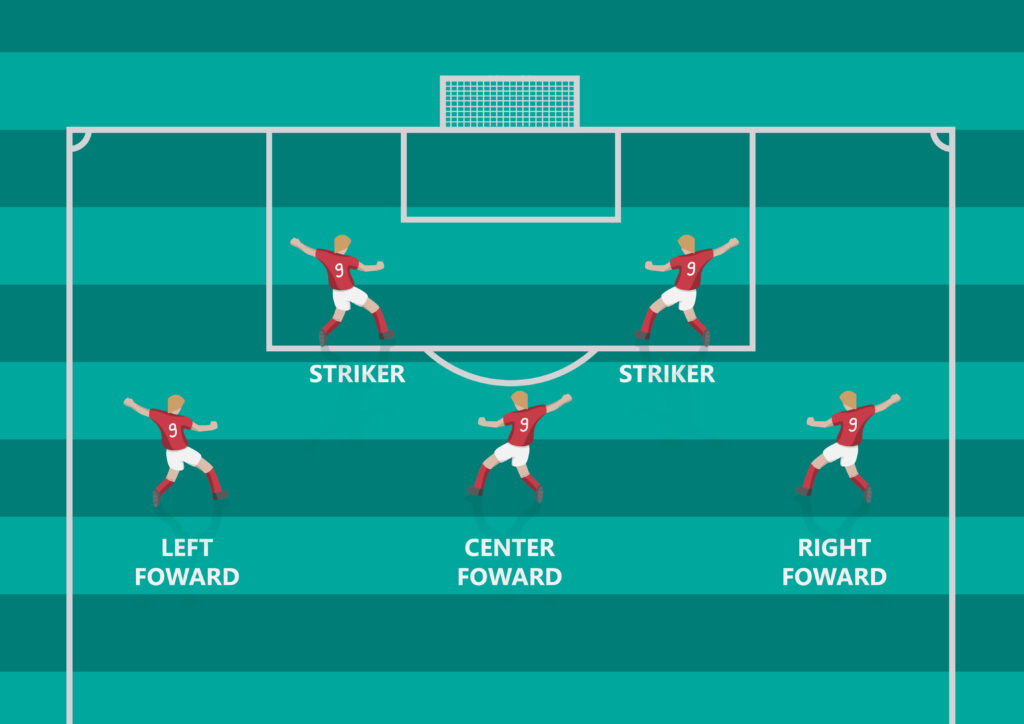
The main forward roles

  1. Center forward / striker: Plays through the middle as the team’s main goalscorer, often the focal point of attacks and one of the most well-rounded players on the team.
  2. Traditional “number 9”: Stays high, battles center backs, makes vertical runs in behind, and is often the final link in the attacking chain.
  3. Wingers / wide forwards: Start wide, stretch the defense, attack fullbacks 1v1, cut inside to shoot or cross, and provide service into the box.
  4. Second striker / center forward (deeper): Plays just behind the main striker, linking midfield to attack, drifting into pockets and creating as many chances as they finish.
  5. False nine: Wears the “9” but drops into midfield instead of staying high, linking play, dragging defenders out of position, and letting wingers attack the spaces created.
Forward Roles and skills

Physical attributes that define forwards

  • Acceleration and top speed: Forwards must separate from defenders over short bursts and win races in behind, especially wingers and vertical number 9s.
  • Agility and change of direction: Quick cuts, body feints, and sharp turns let them create shooting lanes in tight spaces and escape pressure when dropping deep.
  • Strength and balance: Target forwards need upper‑body strength to hold off defenders, while all forwards need strong cores and balance to shoot under contact.
  • Jumping and aerial ability: Many teams rely on forwards to attack crosses and set pieces, so timing, leap, and heading technique are critical.
  • High‑intensity repeat efforts: Forwards frequently sprint, stop, press, and sprint again; they need the aerobic and anaerobic base to do this all game.


Cristiano Ronaldo’s famous gravity‑defying header for Juventus, where he seemed to hang in the air before powering the ball in, is a textbook example of elite jumping ability and timing from a forward.

Core skills and game intelligence

  • Finishing variety: Forwards need to finish with both feet and the head, from close range to the edge of the box, under pressure and with minimal backlift.
  • First touch and ball control: A clean first touch sets up shots, protects the ball with back to goal, and allows quick lay‑offs in tight areas.
  • Dribbling and 1v1 ability: Wingers and mobile forwards beat defenders off the dribble to open shooting angles or draw multiple opponents.
  • Passing and combination play: False nines and second strikers need vision and passing range to link with midfield and release runners.
  • Movement off the ball: Intelligent forwards time runs across and behind defenders, find pockets between lines, and adjust their position to stay “one pass away” as teammates attack.
  • Tactical understanding: They must read defensive lines, understand when to stay high, when to drop, and how to coordinate movements with other attackers.


Lionel Messi’s solo goal vs Getafe in 2007, slaloming past almost an entire team before scoring, is often cited as a showcase of an attacker’s dribbling, balance, and finishing at the highest level.

Position‑specific training focuses

  • Finishing sessions: Repetition of different shot types (first‑time, on the turn, volleys, headers, 1v1 with the keeper) from realistic service and angles.
  • Movement and timing drills: Pattern plays that rehearse runs across the line, checking to feet then spinning in behind, and attacking specific zones in the box.
  • Back‑to‑goal play: Target forwards work on holding the ball under pressure, shielding, and laying off to runners, then spinning into the box.
  • Crossing and finishing for wingers: Drills that pair wide service with box runs, plus 1v1 attacking work on the flanks to practice beating fullbacks.
  • Pressing and defensive triggers: Modern forwards train when and how to press defenders and goalkeepers, cutting off passing lanes and initiating the team’s defensive shape.
dribbling in a tight space winger vs defenders
  • Small‑sided games: Tight‑space games force quick decisions, sharp combination play, and constant movement, mirroring the demands of the penalty area.

Modern demands beyond scoring

  • Link‑up play: Center forwards today are expected not just to finish, but also to drop in, connect passes, and help their team progress up the pitch.
  • Creating as well as scoring: False nines and second strikers share playmaking duties, providing assists and through balls in addition to goals.
  • Set‑piece responsibility: Forwards often take penalties and some free kicks, and they are primary targets on attacking corners and wide free kicks.
  • Defensive workrate: They track back into midfield lines, help compress space, and lead the press from the front, even if they rarely defend deep in their own box.
  • Mental resilience: Forwards miss chances and face scrutiny; they need confidence to keep taking risks and composure for big moments, like last‑minute chances.


Here is a quick at‑a‑glance view of the different forward profiles:

                                                                                                                                                                                                                                               
RolePrimary jobTypical traitsExtra demands
Traditional 9Finish attacks and scoreStrong, good in the box, vertical runsHold-up play, aerial threat
Center forwardScore and link playWell-rounded, tactically smartCombines with midfield
Winger / wide FStretch field, create, scoreFast, skillful 1v1, crosserTrack fullbacks, press wide
Second strikerCreate chances, support 9Creative, mobile, good visionFinds pockets, late runs
False nineLink midfield, destabilize defenseTechnically gifted, high IQPress in midfield, assist a lot

Additional Reads