Choosing the right cleats is one of the most practical ways parents can protect their kids and help them play better, especially as they rotate between grass and turf. This condensed guide focuses on what actually matters—and how to steer kids away from pure marketing.
Get the surface match roughly right before worrying about brand or color.
Firm Ground (FG)
Artificial Grass (AG)
Multi‑Ground / Hybrid (MG, FG/AG)
Soft Ground (SG)
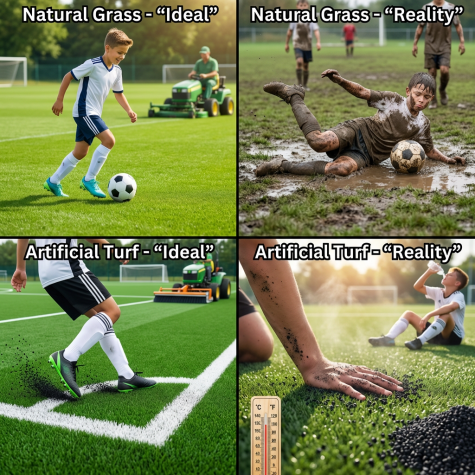
Think in terms of hours per week on each surface and what those surfaces are like in reality.
Natural grass: firm vs loose/soft
Key idea: “Firm ground” is not meant for truly boggy or spongy fields.
Artificial turf: quality and age
Not all turf is the same, and stud choice interacts with that.
Indoor turf / carpet‑style surfaces (short pile, minimal infill)
Mixed environments
The “right” stud pattern won’t help if the shoe hurts or doesn’t hold the foot securely.
(We wrote about the various surfaces (pros & cons); you can read it at the link below.)
No stud pattern can guarantee injury prevention, but you can avoid avoidable risks. Players with a history of ACL injury, strong family history of knee injuries, or known risk factors (for example, some female athletes) may want to be particularly cautious about using long, aggressive FG studs on hard turf. For these athletes, using AG or MG on artificial turf is a reasonable, low‑cost way to avoid adding extra “stickiness” at the shoe–surface interface on an already high‑friction surface.
This does not replace strength training, neuromuscular control work, good landing mechanics, and sensible workload, but it’s one controllable part of the overall risk picture. Wearing AG or MG patterns on turf is a best‑practice recommendation—especially for players with prior knee issues—but remember this is about risk‑management, not a guarantee.
This is where parents feel pressure and kids get pulled toward what their heroes wear.
What the marketing doesn’t tell you
You can acknowledge the appeal while still guiding the decision:
The lesson you’re reinforcing: smart players choose equipment that fits their body, field, and game—not just what’s in the latest ad.

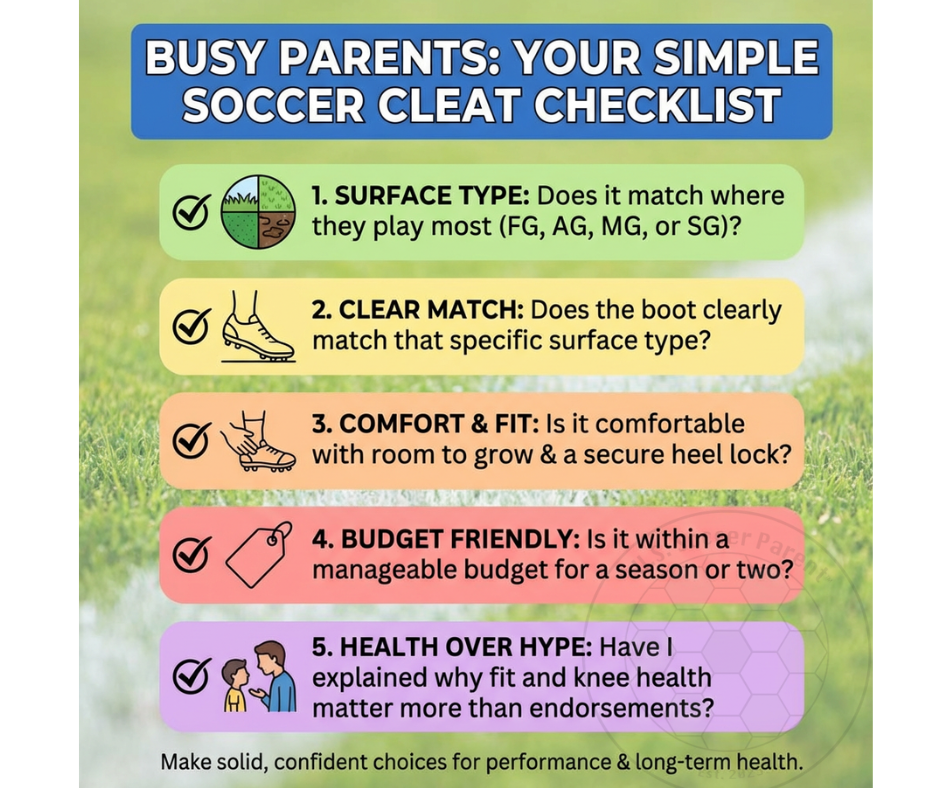
When you’re staring at the options, run through this:
If you can say “yes” to those, you’ve made a solid, repeatable cleat choice that respects both performance and long‑term health.
Stay up to date with the latest youth soccer news. Join our community today!