
NewsNews
U.S. Soccer Stresses Improving Player Development at the Club Level
February 12, 20263 min read
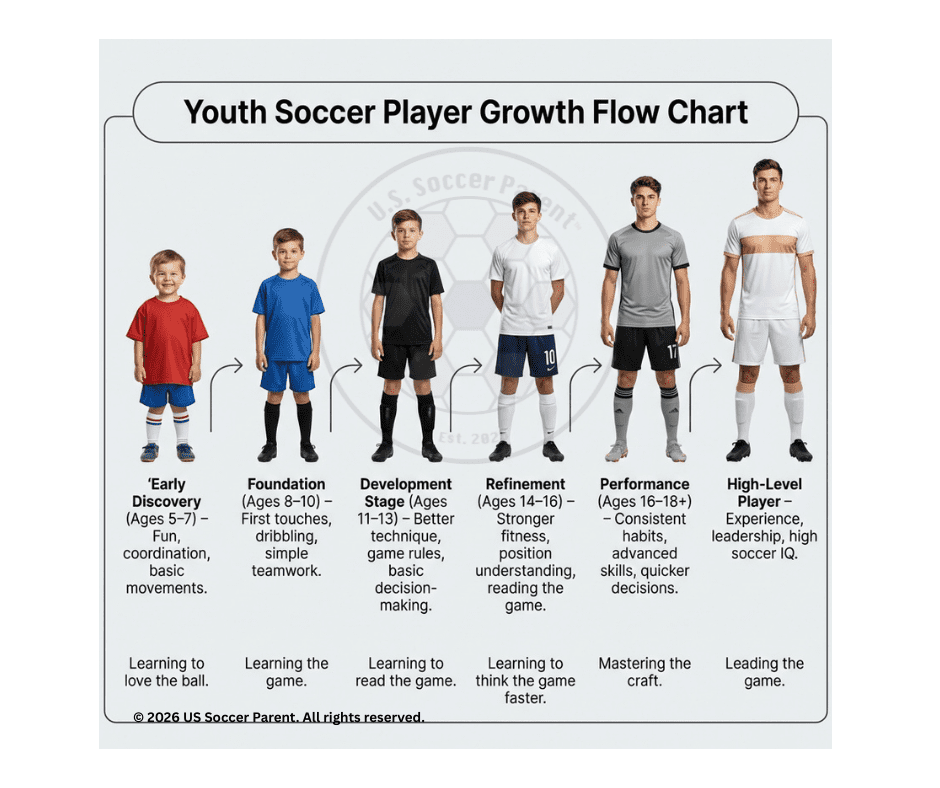
U.S. Soccer’s sporting director Matt Crocker is asking something big of America’s youth clubs: care less about weekend wins and more about what happens to players years down the road. It is an ambitious idea that fits into his broader “U.S. Way” vision—but it is also very much a work in progress, not a switch that flips overnight.
In a recent interview, Crocker described U.S. Soccer’s job as defining clear guidance for what youth development should look like and “finally putting the stake in the ground” about what the federation believes in. His message is that national teams should be the “cherry on top,” while 95% of development happens at local clubs.
That means the real levers are things families see every week: coaching quality, training environments, and whether clubs put long‑term development ahead of short‑term results. Crocker’s comments signal intent, but he has also acknowledged that turning any plan into reality—across thousands of independent clubs and competing organizations—is “an astronomical task.”
The “U.S. Way” and why clubs matter
Behind the soundbite is a simple idea: a more consistent, player‑centric “U.S. Way” that can apply from entry‑level rec teams to elite academies. The goal is not one rigid playing style, but a shared set of standards and best practices so kids in very different clubs still get age‑appropriate training, a healthy environment, and a clear path if they want to advance.
For top prospects, that might look like individual development plans that are shared between youth national team staff and club coaches, supported by a digital platform with video, data, and training guidance. For everyone else, it could mean better‑trained local coaches, more sensible calendars, and fewer situations where families feel pressured into chasing another badge or league just to stay “on the pathway.”
Add Your Heading Early steps, not a finished product Here
Crocker is not the first U.S. Soccer leader to talk about reforming youth development, but there are some concrete early moves around this vision. Federation officials and partners have been working on a more unified national calendar with top leagues such as MLS NEXT, while also investing in coaching education and member outreach. Leaders in U.S. Youth Soccer and the USL have publicly described this group as more proactive and more willing to collaborate than past regimes.
At the same time, Crocker himself has been clear about the scale of the challenge. He has compared coordinating American youth soccer to aligning all of UEFA under a single philosophy, given that U.S. Youth Soccer alone includes 54 state associations with their own calendars and politics. He has also talked about long‑term goals like a coaching‑education hub in every state—projects that would take years and significant funding to fully realize.
What this means (and doesn’t mean) for families
For parents, the immediate takeaway is not that U.S. Soccer has “fixed” youth development, but that there is growing pressure on clubs to modernize. Over time, families should expect more emphasis on qualified coaches, consistent standards, and development plans that follow a player as they move between teams and environments.
In the short term, though, the system will still feel uneven. Some clubs and leagues will lean into Crocker’s vision quickly, investing in coach education and player‑centered training, while others will continue to prioritize wins, tournament resumes, and constant travel. The “U.S. Way” is better understood as a direction of travel than a destination that has already been reached.
A cautious optimism
Crocker’s call for youth clubs to help power future U.S. national teams reflects a broader shift: top‑down plans only work if they change what happens at the neighborhood field from Monday to Friday. There are real signs of momentum in how U.S. Soccer is engaging big stakeholders, experimenting with shared platforms, and talking more openly about standards.
For now, parents can treat Crocker’s remarks as an early marker: the federation is willing to take a clearer stance on what good youth development looks like, and families will be able to judge, over the next several years, which clubs truly follow through. Parents should be aware of this background and do everything possible locally to support it – and demand it be applied.