
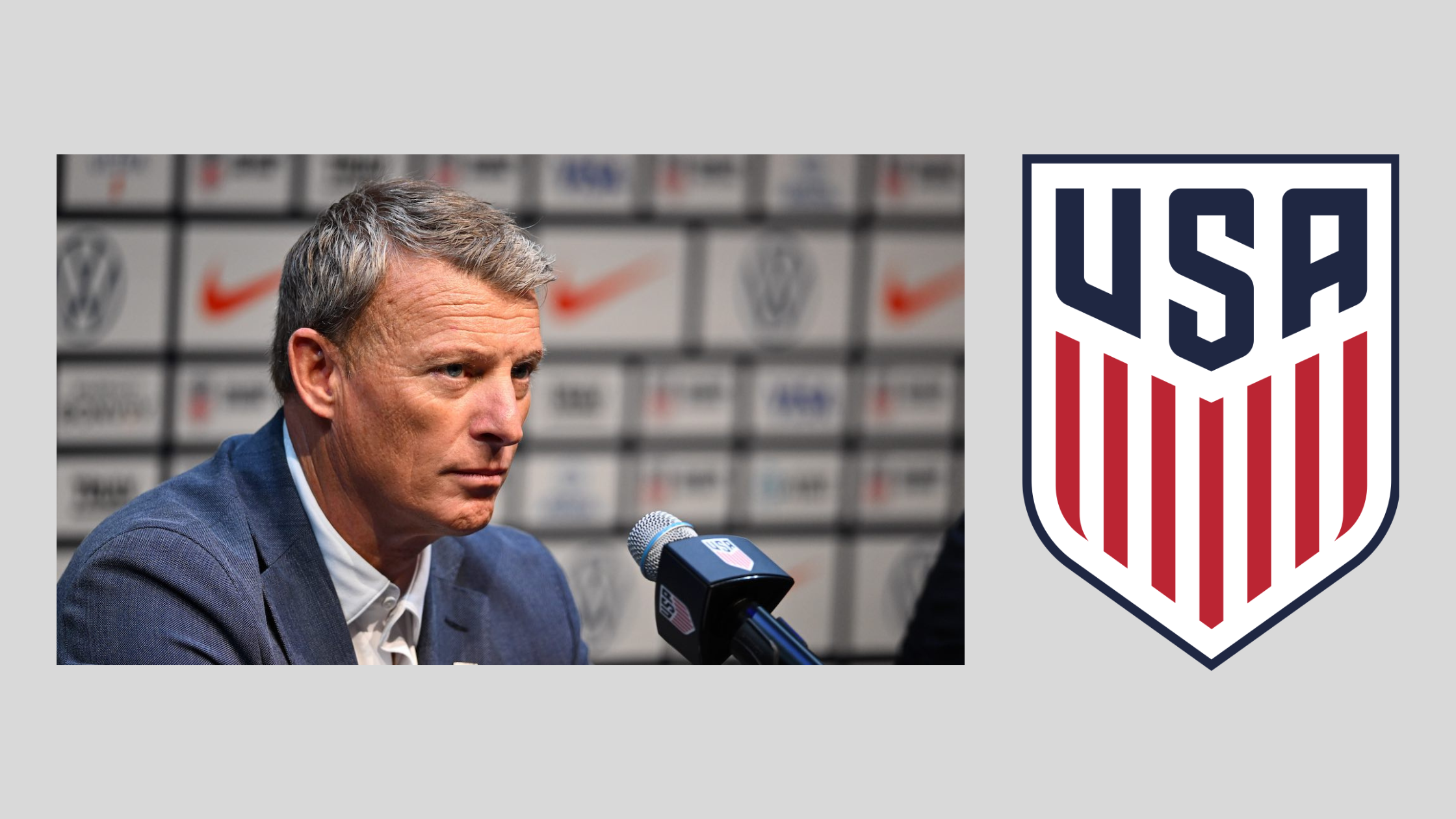
U.S. Soccer sporting director Matt Crocker has resigned from the U.S. Soccer Federation (USSF), stepping down just two months before the United States co‑hosts the 2026 FIFA World Cup. USSF announced that Crocker is leaving to pursue an “international soccer opportunity” with multiple reports confirming he will take a similar role with the Saudi Arabian federation.
The timing is stark: the U.S. men’s national team begins a home World Cup on June 11, and head coach Mauricio Pochettino’s contract runs only through the tournament, leaving both the short‑term campaign and long‑term technical vision in flux.
In its announcement, U.S. Soccer framed Crocker’s exit as a move for a new international challenge, emphasizing continuity of the broader sporting plan. Federation officials have privately stressed that Crocker’s “U.S. Way” and Pathway workstreams are documented and “all systems go” even after his departure.
Publicly, USSF executives have reiterated that the federation will not change course on its long‑term strategy, even as it scrambles to manage the leadership gap ahead of 2026. New COO Dan Helfrich has already been tasked with assuming expanded oversight of sporting operations as the organization restructures in response to Crocker’s exit.
Crocker, for his part, has consistently framed his work in the U.S. as part of a long‑term transformation. In recent interviews he described 2026 as a “transformational year for U.S. Soccer,” stressing that the real measure of success would be how the federation leverages the World Cup to change the youth and professional landscape rather than just the tournament results themselves.
The Architect of the “U.S. Way” and the Pathway Strategy
Since arriving from Southampton in April 2023, Crocker has been the central architect of U.S. Soccer’s “U.S. Way” technical vision and the federation’s Pathway Strategy. The Pathway Strategy is a multi‑year project aimed at simplifying and connecting the fractured youth ecosystem, reducing unnecessary travel and costs, and creating a clear, merit‑based route from grassroots to elite levels.
In a recent detailed interview, Crocker described the Pathways Project as “a key one—how do we create a really simple, clear pathway where every club recognises where they are in the ecosystem?” The goals he outlined were direct:
- Simplify the cluttered landscape of leagues and competitions and reduce “crazy travel” and cost burdens on families.
- Align local clubs, regional programs, and professional academies under a shared, player‑first development philosophy.
- Get the game into every community, so soccer becomes part of everyday school and community sport, **not just something “kids who can afford to pay” can access.
USSF leadership repeatedly credited Crocker with importing lessons from his time with the English FA and Premier League, and with pushing U.S. Soccer to use data and external partners—such as performance consultancy Twenty First Group—to support strategic decisions across all levels of play.
While Crocker championed a collaborative “influence, not dictate” approach, his own public comments over the past year have underscored how difficult and political the U.S. system is to change. In a widely discussed profile on U.S. youth development, Crocker described the American landscape as “chaotic,” “disjointed,” and driven by financial motives. He compared the task of unifying U.S. youth soccer to trying to bring all 55 UEFA nations under a single philosophy, a metaphor that captured both the scale and the political complexity of the job.
Looking ahead to the implementation of the Pathway Strategy, Crocker openly acknowledged the enormity of the assignment. He called turning the “U.S. Way” vision into reality “an astronomical ask,” noting that no previous U.S. Soccer executive had successfully imposed coherence on thousands of independent amateur clubs and overlapping sanctioning bodies that the federation does not directly control.
Rather than the top‑down, rules‑driven model associated with the old U.S. Soccer Development Academy, Crocker repeatedly said that he was trying to influence and inspire clubs, not dictate to them—using education, communication, and collaboration instead of hard mandates. That stance implicitly recognized both the political pushback that comes with centralized control and the limited formal authority USSF has over many youth organizations.
A Legacy Still Being Written
Crocker’s record at USSF is already intertwined with some of the federation’s most consequential recent decisions. He oversaw the re‑hiring of Gregg Berhalter in 2023, Berhalter’s dismissal after the 2024 Copa América exit, and the subsequent appointment of Mauricio Pochettino later that year. His tenure also coincided with the launch of the Pathway Strategy, the build‑out of the “U.S. Way” framework, and the near‑completion of the new 200‑acre national training center in Fayetteville, Georgia, which opens next month.
Inside the federation, there is a belief that the technical blueprint is in place and can outlast a single sporting director. One USSF source described the situation around Crocker’s departure as “all systems go” on implementation of the “U.S. Way,” emphasizing that the real challenge has always been execution at scale, not a lack of plans.
Yet from a youth‑soccer and parent perspective, Crocker’s exit raises pressing questions:
- Who will be empowered to continue pushing through a Pathway Strategy that directly challenges entrenched financial interests and long‑standing structures?
- Will the next sporting leader at USSF maintain Crocker’s player‑centric, access‑driven priorities, or will the focus tilt back toward short‑term national‑team performance?
- And, perhaps most critically for families, will the promised reductions in cost, travel burden, and confusion ever materialize on the ground?
Crocker has consistently argued that the World Cup on home soil is a once‑in‑a‑generation chance to reset the sport’s culture and structures in the U.S.—but he also warned that the scale, fragmentation, and politics of the system make that transformation extraordinarily difficult. His sudden departure to Saudi Arabia means he will now watch that battle unfold from afar, leaving U.S. Soccer—and millions of American soccer families—to see whether his “astronomical ask” can still be met without him.