NewsNews
A New MLS GO Hub In Fayetteville
January 5, 20263 min read
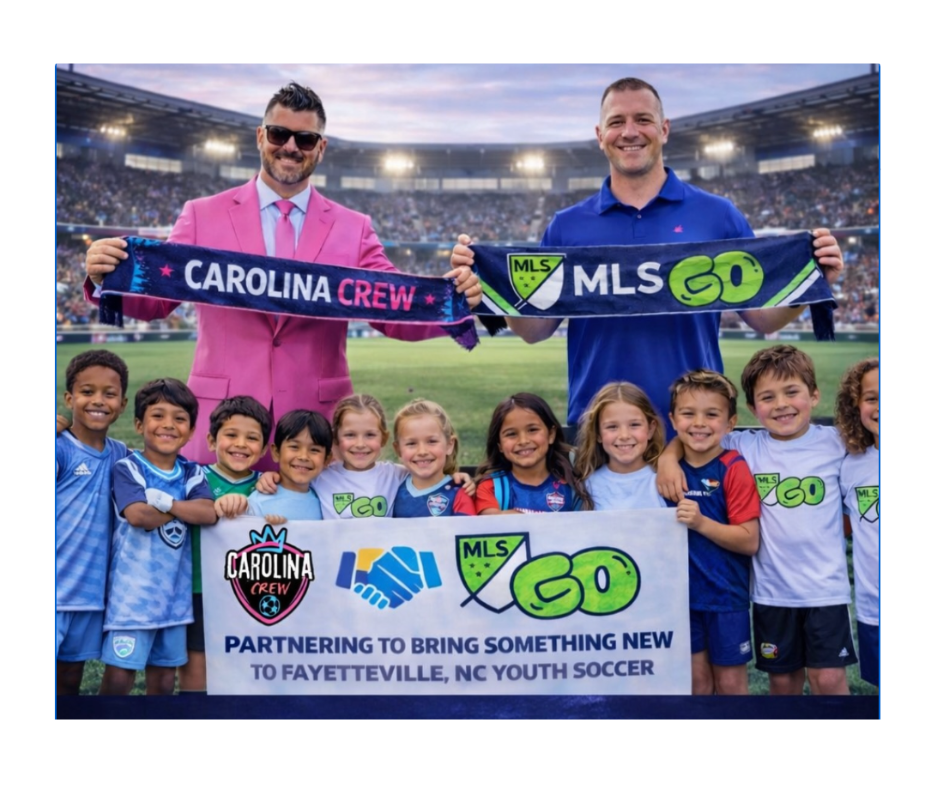
A new grassroots partnership between MLS GO and Carolina Crew FC in Fayetteville, North Carolina, offers a concrete glimpse of where youth soccer may be headed: more local, more affordable, and more accessible for families who have historically been on the outside looking in. For youth soccer parents, this kind of neighborhood‑centered programming signals a broader shift away from a system built primarily around elite travel teams and toward one that treats community access as the starting point, not the afterthought.
MLS GO and Carolina Crew FC
Beginning in March 2026, Carolina Crew FC will launch MLS GO programming in Fayetteville, bringing a national grassroots initiative directly into local parks and school‑adjacent fields. The partnership is built around an intentionally low barrier to entry—shorter seasons, modest fees, and minimal travel—so that more children can join a team without families having to navigate tryouts, long‑distance tournaments, or high equipment costs.
Rather than replicating the pressures of performance‑oriented club environments, MLS GO emphasizes small‑sided play, age‑appropriate training, and a welcoming atmosphere for brand‑new players and multi‑sport athletes alike. Parents can expect experiences that feel more like neighborhood sports—short commutes, familiar faces, and coaches rooted in the community—while still benefiting from the branding, curriculum support, and visibility that come with an MLS‑backed platform.
Why This Matters For Accessible Soccer
The arrival of MLS GO in Fayetteville aligns with a growing national emphasis on “community‑rooted program design,” where organizers start with local realities—cost, transportation, and family schedules—before building the soccer experience. Grassroots leaders and coach‑educators have consistently framed accessibility not just as a financial question, but as a structural one: if playing requires long drives, opaque tryouts, or a full‑time commitment, many families will never enter the system in the first place.
By placing an MLS‑branded opportunity within reach of families who may not be ready—or able—to step into traditional club pathways, partnerships like Carolina Crew FC–MLS GO help bridge the gap between recreational play and the broader American soccer ecosystem. For some players, these programs will be a joyful destination; for others, they may serve as a first touchpoint that eventually leads into higher‑level leagues once a love for the game and basic skills are firmly in place.
Connection To The Bigger Youth Soccer Picture
Nationally, U.S. Soccer’s long‑term strategy and the work of major youth organizations have centered on simplifying pathways, expanding coaching education, and raising the floor of quality in community environments. Efforts such as integrated postseason structures between major competitive platforms and expanded access to coaching licenses are all part of the same underlying idea: when the grassroots are stronger, clearer, and more inclusive, the entire pyramid benefits.
In that context, MLS GO’s continued expansion into communities like Fayetteville represents another piece of a broader alignment effort—connecting the professional game’s reach with local fields where most children first fall in love with soccer. For parents, the message is increasingly consistent: you should not have to choose between an accessible neighborhood experience and a pathway that respects your child’s potential; the emerging model aims to offer both.
What This Could Mean For Families Nationwide
As programs like MLS GO take root in more markets, families around the country may begin to see a new tier of play that fills the space between traditional recreation and full‑time competitive club soccer. Shorter seasons, local fields, and clear, family‑friendly communication about cost and commitment have the potential to normalize a more sustainable model of participation—especially in communities where travel demands and fees have become a barrier.
If early examples are any indication, this wave of community‑anchored initiatives could signal a broader evolution in American youth soccer: one where professional leagues, national bodies, and local organizers actively collaborate to prioritize access while still preserving aspirational pathways for players who want to go further. U.S. Soccer Parent will continue to follow how these models develop, and what they mean for the day‑to‑day decisions youth soccer parents are making on behalf of their players.
Official press release on IG https://www.instagram.com/carolina_crewfc/
Looking for more accessible programs? Click the link below.