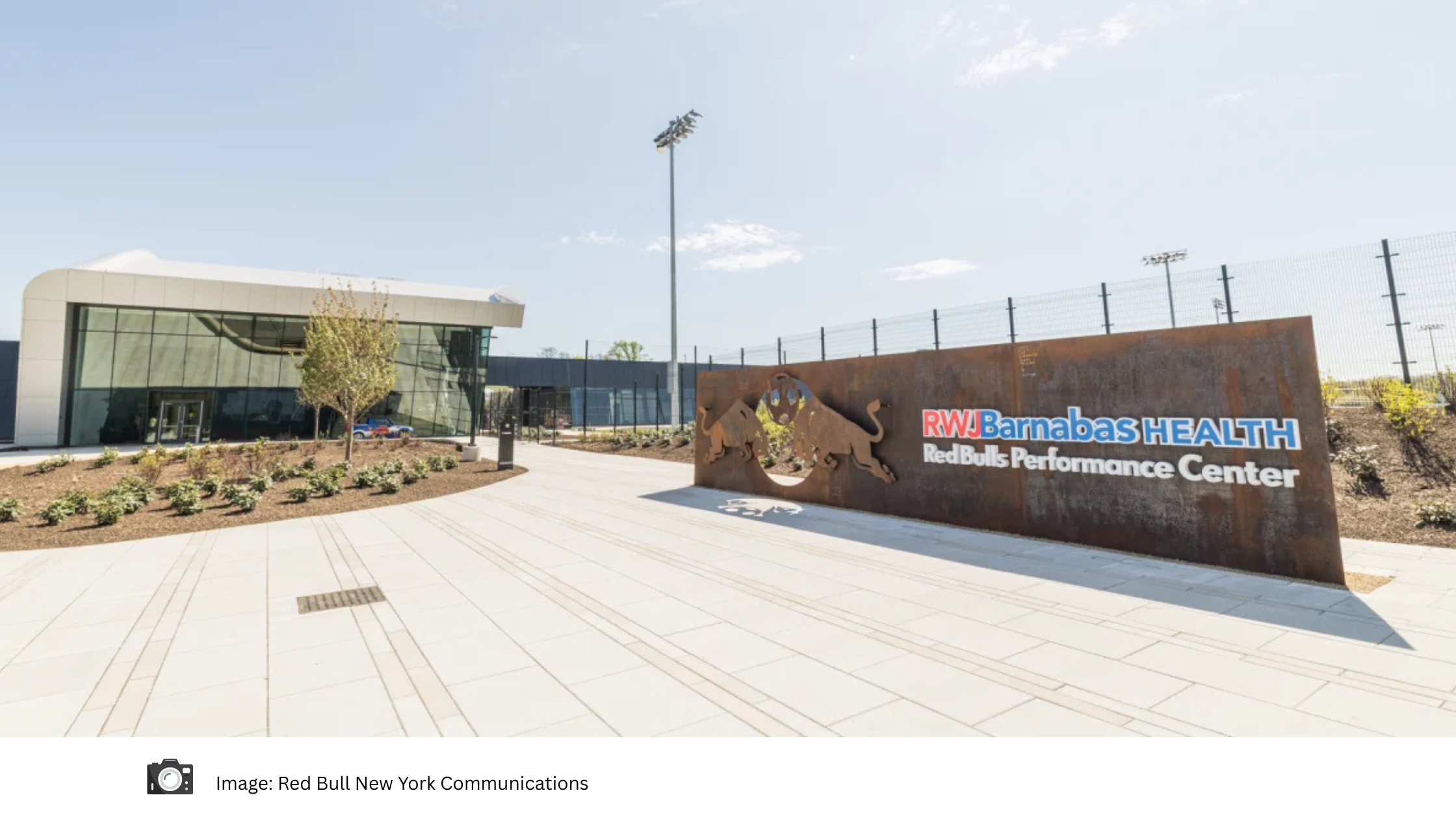
Red Bull New York unveiled the RWJBarnabas Health Red Bulls Performance Center in Morris Township, New Jersey, on April 21, marking the latest significant investment in MLS academy infrastructure. The $100 million, 80-acre complex features eight full-size outdoor pitches, an 88,400-square-foot main building, and integrated facilities for the first team, Red Bull New York II, and the club’s academy programs. The opening arrives as the region prepares to host the 2026 FIFA World Cup final at nearby MetLife Stadium.
The facility represents a growing trend of MLS clubs making substantial infrastructure investments to support youth development pathways. According to MLS Commissioner Don Garber, league clubs have invested more than $1.5 billion in training infrastructure since the league’s inception. Recent major projects include Philadelphia Union’s $100 million campus expansion announced in July 2025, San Diego FC’s Right to Dream residential academy that opened in September 2025, and Atlanta United’s $25 million training ground expansion.
From Academy to Pro: The Development Pipeline Delivers
These infrastructure investments coincide with measurable results from the MLS Next development pathway. MLS Next Pro, launched in March 2022 as a bridge between youth academies and first teams, reached a milestone of 200 players signing MLS first-team contracts in October 2025. Of those 200 signings, 55% were academy products, with 65% born in the United States and 10.5% from Canada.
The pathway creates roster flexibility that benefits player development: since 2022, more than 1,000 MLS-contracted players have been loaned to MLS Next Pro teams, while 1,100+ MLS Next Pro players have signed short-term MLS contracts and 1,300+ MLS Next Academy players have competed in MLS Next Pro matches. MLS Next Pro alumni have contributed to three consecutive Leagues Cup championships and compete regularly in competitions including the U.S. Open Cup and Concacaf Gold Cup.
Integrated Development Under One Roof
The Red Bulls facility exemplifies the “pathway under one roof” model that MLS clubs are increasingly adopting. Red Bull New York president Marc de Grandpré stated that the complex “brings our entire pathway together, from academy to first team, and creates an environment where players can train, develop, and compete at the highest level every day”. The facility includes dedicated academy spaces with change rooms, full locker rooms, classrooms, study spaces, and a demonstration kitchen where chefs and nutritionists provide meal preparation education.
Advanced training technology is integrated throughout the campus, with multi-angle camera tracking systems for analytics, high-speed Wi-Fi covering all 80 acres to collect player performance data, and systems including Kinexon for player performance tracking and GameOn for video analysis. The outdoor areas feature a mix of heated, irrigated natural grass and turf surfaces, plus a 350-seat match field designated for academy games.
World Cup Timing and Strategic Positioning
The facility’s opening positions Red Bull New York strategically as the 2026 FIFA World Cup approaches. Several MLS clubs, including Atlanta United, are positioning their expanded training facilities to host international federations during the tournament. The timing reflects broader momentum in North American soccer development as the sport approaches a watershed moment with the World Cup coming to the region.
San Diego FC’s Right to Dream Academy, which opened in September 2025 on a 28-acre site featuring a 50,000-square-foot performance center and residential facilities, represents another model of academy investment. The program provides full five-year scholarships to all residential student-athletes regardless of soccer performance, a first for North America and MLS. San Diego FC is also creating a non-residential girls pathway, making it the first MLS club to develop emerging female talent within this academy model.