
Midfielders are the “engine” of a team, linking defense and attack, controlling space, and often deciding the rhythm of a match.
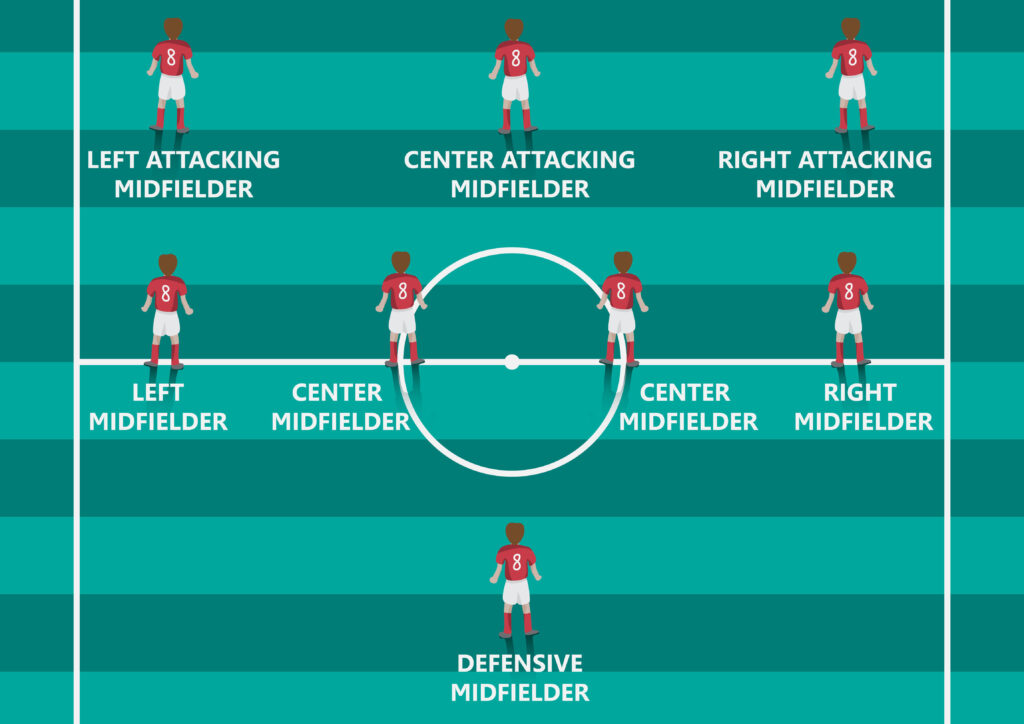
Think about Luka Modrić in Croatia and Real Madrid’s midfield: one moment he is helping his defenders escape pressure, the next he is threading a pass to launch a counter—classic 8/6 hybrid work.
Yaya Touré’s 2013–14 season for Manchester City, when he powered through midfields and arrived late to score 20 league goals, shows how devastating a physically dominant central midfielder can be.
Xavi’s control of Barcelona’s midfield under Guardiola—constantly receiving, turning, and finding the free man—remains the textbook example of how a midfielder can dictate an entire game’s tempo.
Defensive midfielder (6):
Central / box‑to‑box midfielder (8):
Attacking midfielder / 10:
Unit work (6‑8‑10 together):
Kevin De Bruyne’s whipped assists from the right half‑space for Manchester City—often delivered on the run after timing a late burst from midfield—show how an attacking midfielder/8 can be as deadly a creator as any winger.
| Role | Primary job | Typical traits | Extra demands |
|---|---|---|---|
| Defensive mid (6) | Protect back line, start build-up | Strong positioning, tackling, simple passing | Constant scanning, cover fullbacks |
| Central / box-to-box 8 | Link defense and attack | High stamina, balanced skill set | Late runs, support press and build |
| Attacking mid (10) | Create chances, score from midfield | Creative, quick feet, vision | Press from front, handle tight spaces |
| Wide mid (7/11) | Support inside and wide, both ways | Work rate, crossing, combination play | Track runners, help fullbacks |