
Positions Explained: Defenders (Backline)

Defenders are the last outfield line of protection for the goal and the starting point of many attacks, responsible for winning the ball, protecting key spaces, and helping the team play out of pressure.  
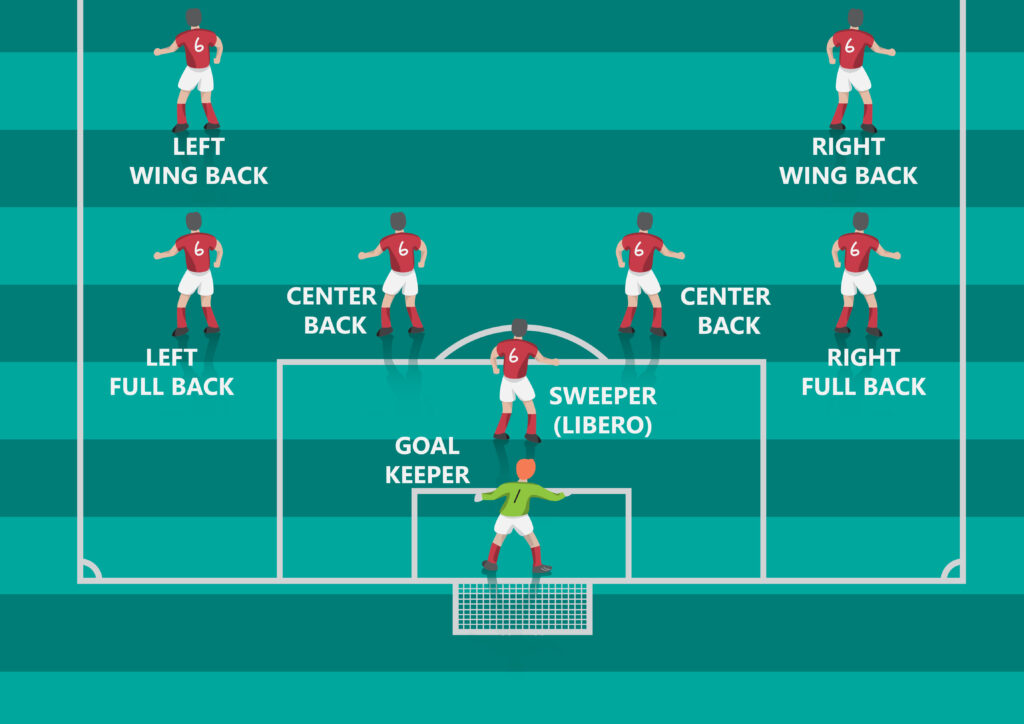
The main backfield roles

  1. Center backs: Play in the middle of the defense, mark strikers, win aerial duels, block shots, and organize the line; they often act as the team’s **organizers** without the ball.  
  2. Fullbacks: Defend the wide channels against wingers, support center backs, and in the modern game, join attacks with overlapping runs and crosses.  
  3. Wingbacks: A hybrid of fullback and winger in systems with three center backs; they patrol the entire flank, defending deep and providing width in attack.  
  4. Sweeper/“libero” (rare now): Sits slightly behind the other defenders, cleaning up through balls and covering mistakes, often with license to bring the ball out. 
  5. Modern goalkeeper (backfield partner): Not technically an outfield position, but key to the backfield unit—sweeping behind the line and helping build play with their feet.
Defenders, backline roles

Physical attributes defenders need

  • Strength and power: Central defenders especially need upper‑body and core strength to hold off forwards, win shoulder‑to‑shoulder duels, and clear the ball under pressure.  
  • Aerial ability: Timing, jumping power, and heading technique are crucial for defending crosses, long balls, and set pieces, as well as attacking corners at the other end.  
  • Acceleration over short distances: Fullbacks and center backs must react quickly to runs in behind or balls played into space, closing attackers down before they can shoot.  
  • Agility and balance: Quick changes of direction help defenders stay with tricky dribblers, adjust body position while jockeying, and recover when they’re wrong‑footed.  
  • Stamina and repeat efforts: Fullbacks and wingbacks in particular cover huge distances, constantly shuttling between deep defensive positions and high attacking zones.  

Virgil van Dijk’s ability to run stride for stride with fast forwards, then stay on his feet and block or intercept without diving in, is a modern template for the physically dominant but controlled center back.  
Core skills and defensive intelligence

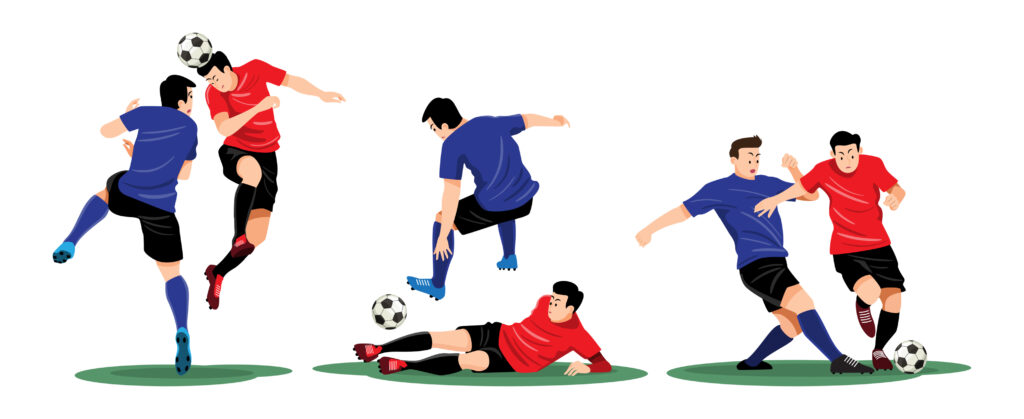
  • 1v1 defending: Good posture, timing of tackles, and the ability to “jockey” attackers by staying between them and the goal, forcing them into less dangerous areas.  
  • Tackling and intercepting: Knowing when to step in for a tackle and when to anticipate a pass and cut it out, rather than diving in and being beaten.  


  • Heading and clearances: Meeting the ball at its highest point, directing headers away from danger, and being decisive when clearing under pressure.  
  • Positioning and line management: Holding a compact shape, stepping up together to play offside, and dropping at the right moments to protect space behind.  
  • Comfort on the ball: Modern defenders must control and pass under pressure, start build‑ups, switch play, and occasionally drive into midfield when space opens.  
  • Reading the game: Anticipating through balls, recognizing when a teammate is out of position and needs cover, and understanding opponents’ patterns of play.

An iconic example of defensive reading of the game is Paolo Maldini’s oft‑quoted career statistic of incredibly few tackles per match—he positioned himself so well that he rarely needed to slide in, embodying the idea that great defenders “arrive first” rather than chase.  

Role‑specific responsibilities and training

Center backs:  

  • Responsibilities: Mark strikers, protect the central channel, win aerial balls, block shots, and organize teammates around them.  
  • Training focus: Aerial duels, 1v1s in central areas, defending crosses, communication and leadership, plus passing drills to play forward through or around the press.  


Fullbacks:  

  • Responsibilities: Defend wide areas, track wingers’ runs, support center backs, and provide width in possession with overlaps and crosses.  
  • Training focus: 1v1 defending on the flank, recovery runs, timing overlaps, delivering crosses on the move, and building combinations with wingers and midfielders.  


Wingbacks:  

  • Responsibilities: Own the entire flank in systems with three center backs, offering width high up the pitch while still recovering to defend deep.  
  • Training focus: High‑end stamina work, repeated sprints up and down the line, crossing and cut‑backs, plus defending both wide 1v1s and far‑post runs.  


Backfield unit work (defenders + keeper):  

  • Responsibilities: Hold and shift the defensive line together, manage offside, coordinate pressing and dropping, and build play from the back as a unit.  
  • Training focus: Back‑four or back‑three shape sessions, defending crosses as a group, line coordination (step/drop calls), and structured build‑up patterns involving the goalkeeper.  


A good visual of the modern fullback is Trent Alexander‑Arnold receiving deep on the right, stepping into a midfield pocket, and whipping a long diagonal pass to switch play—a defender initiating an attacking sequence with playmaker‑level passing.  

Modern demands beyond “just defending”

  • Playing out from the back: Many teams now rely on defenders to break the first line of pressure, using short passes, switches, and carried dribbles to progress the ball.  
  • Pressing and high lines: Center backs and fullbacks must be brave enough to defend high up the pitch, trusting their pace, positioning, and the goalkeeper behind them.  
  • Versatility: Players may be asked to shift between fullback, wingback, and even defensive midfield within the same season or game, depending on the system.  
  • Composure in big moments: Defenders often face last‑ditch situations—1v1s vs fast forwards, goal‑line clearances, crucial blocks—and must stay calm under extreme pressure.  
  • Set‑piece roles: Backfield players are usually primary targets on attacking set pieces and key markers or zonal stoppers on defensive ones, requiring specialized rehearsed movements.  

For a quick at‑a‑glance view of the backfield roles:

Role Primary job Typical traits Extra demands
Center back Protect central goal area Strong, good in air, organizer Build out under pressure, lead line
Fullback Defend wide, support attack Quick, good 1v1, crossing ability Big engine, combine with wingers
Wingback Own entire flank in back three Very fit, up-and-down runner, good crosser Constant transitions, advanced defending
Sweeper/libero Cover behind line, start attacks Excellent reading, composure on ball Flexible positioning, communication
Goalkeeper (with D) Last line, start build-up Shot-stopping, passing, bravery Sweeper actions, organizing defense

Additional Reads