
Blog
Should Club Sports Replace PE? What Ohio’s HB 304 Might Mean for Families
March 26, 20264 min read
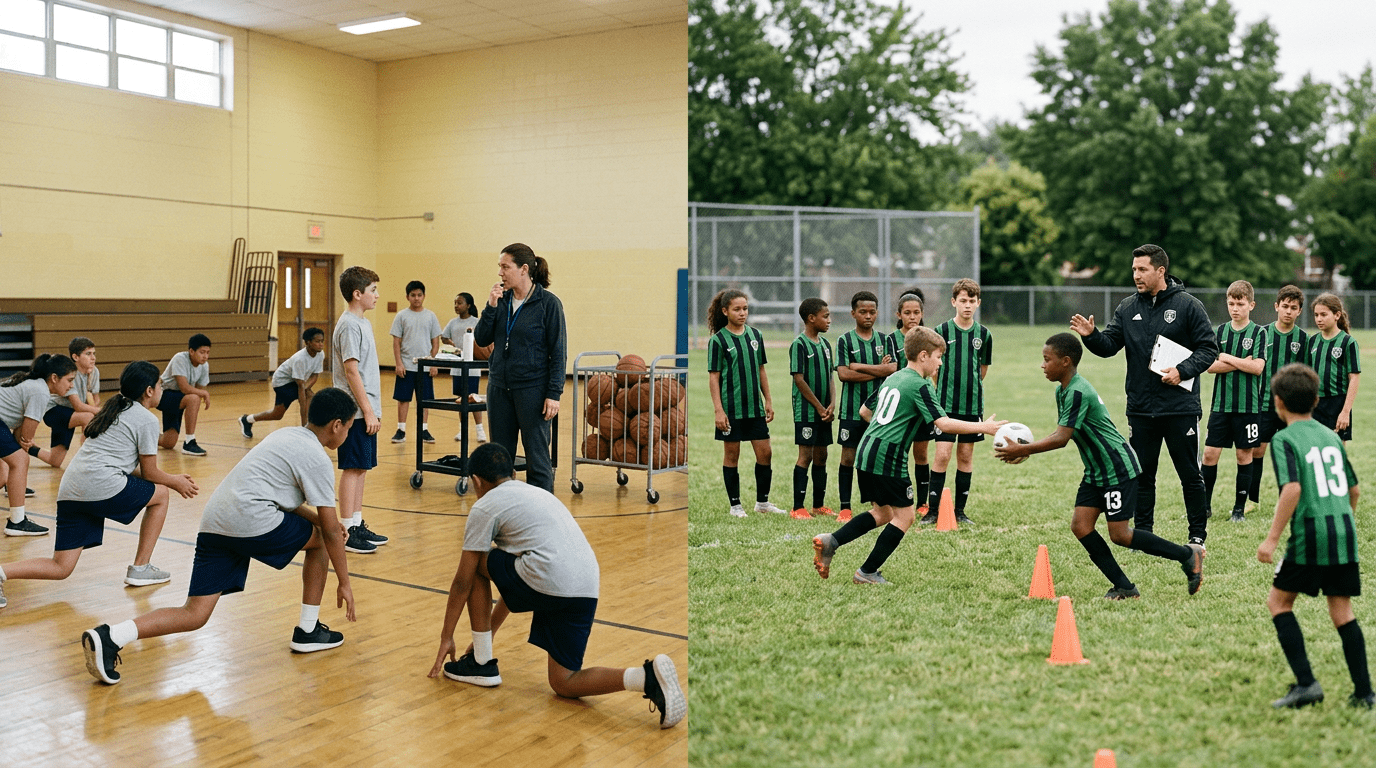
Ohio lawmakers are considering House Bill 304, which would let some students use club and travel sports to waive their physical education requirement. On the surface, this looks like a simple adjustment to match school policy to the reality of modern youth sports. But it also raises important questions about what we want kids to gain from both PE and club athletics.
What Ohio HB 304 Would Change
Under current Ohio law, districts can grant PE waivers for students who participate in certain school-sponsored activities—such as interscholastic sports, marching band, cheer, or JROTC—but not for club or travel teams.
HB 304 would allow club sports, youth sports organizations, and other supervised athletic activities outside school to count toward a PE waiver. It would set minimum participation requirements and require documentation from adults responsible for the activity.
Supporters argue this is about fairness and flexibility. If a student is devoting significant time and effort to a demanding club sport, they ask, why shouldn’t that commitment be recognized in the same way school sports are? From a family perspective, there’s an intuitive appeal: fewer scheduling conflicts, less redundancy, and a sense that a child’s hard work in sport “counts.”
Ohio is not alone in revisiting the relationship between extracurricular sports and PE. Some districts and states have created paths for students to receive PE credit through school sports, marching band, or other structured activities. In certain places, policies have been broadened further to include club sports with specific criteria, such as a minimum number of hours, fitness assessments, or oversight by certified staff. Other legislatures have considered similar proposals but ultimately decided that sports should supplement, not replace, physical education.
There is no single national approach. Some systems lean toward maximum flexibility for families and student-athletes; others emphasize preserving PE as a distinct part of the curriculum. That landscape is still evolving.
What PE Offers That Sport Alone May Not
Supporters of bills like HB 304 often frame PE and organized sports as interchangeable, or at least overlapping enough that doing both is unnecessary. That can be true in some areas, but not always.
In many schools, quality PE programs aim to introduce students to a wide range of activities, not just one sport, teach basic concepts of fitness, anatomy, and how the body responds to exercise and address topics such as nutrition, injury prevention, and overall health habits. The also help students develop a sense of physical literacy and confidence that carries beyond high school.
Club and travel sports, on the other hand, are usually designed around performance in a single sport. They offer higher training loads and more competitive environments, with deeper technical and tactical development within that sport. This often comes with new strong social connections and identity around a team.
Both have value. The key question is whether club sport participation alone can reliably deliver the broader educational aims that PE is designed to cover.
The Youth Soccer Lens: Specialization and Balance
For many families in youth soccer, HB 304 sits on top of a larger issue: early and intensive specialization.
Research over the last decade has highlighted potential downsides when young athletes focus heavily on a single sport year-round, including increased risk of overuse injuries and burnout, and questions about whether early specialization actually improves long-term outcomes for most players. At the same time, many pathways in youth soccer—especially at the “serious” club or travel level—effectively nudge families toward that specialization.
In that context, PE can sometimes serve as a chance to move differently, try other activities, and break repetitive patterns in an environment where performance pressure is lower and the focus is on general health. This serves as a small buffer against an otherwise very sport-specific weekly routine.
If club sports can fully replace PE, one concern is that the system may tilt even further toward singular-sport identities and schedules. On the other hand, for some student-athletes who already have balanced training environments and good support, a waiver could simply reduce time conflicts and stress.
Questions for Parents to Ask
Because each child, school, and club environment is different, there may not be a one-size-fits-all answer to whether using a PE waiver is a “good idea.” For parents, useful questions might include:
- If my child waives PE, where in their week will they learn about general health, fitness, and injury prevention, not just soccer?
- Is our club environment varied enough—physically and socially—to give them a broad base of movement and experiences?
- Will dropping PE free up meaningful time for rest, academics, or family life, or will it simply make room for more of the same training?
- How does our school’s PE curriculum compare to what my child is already getting through sport?
It can also be valuable to ask schools and districts whether there will still be a standalone health education component, regardless of any PE waiver. It would also be good to ascertain how they will ensure that all students, including high-commitment athletes, develop basic physical literacy and health knowledge and how they plan to monitor unintended consequences, such as widening gaps between students who are in organized sports and those who are not.
HB 304 reflects a real tension in youth sports and education: how to respect the time and commitment of serious young athletes while still protecting the broader developmental needs of all kids. Rather than treating this as a simple “yes or no” on PE waivers, families can approach it as an opportunity to take a holistic look at their child’s overall environment—school, sport, rest, and health—and decide what combination truly serves them best.