
Blog
D1 Soccer Scholarships: Why the Odds Are Tougher Now
January 7, 20262 min read
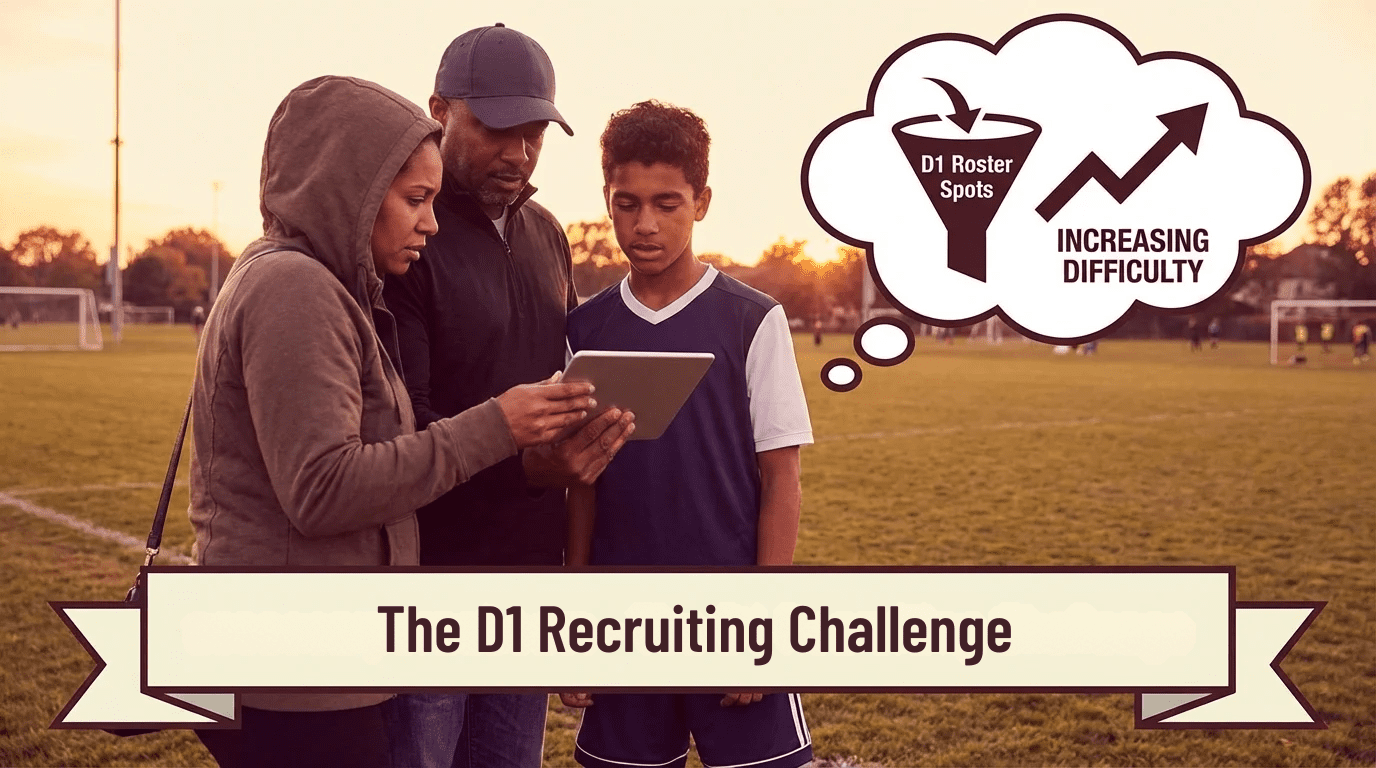
Dreaming of a D1 College Soccer Scholarship? There’s Bad News
Here’s a hard truth many parents suspect: The overall environment has become more difficult for American teenagers – especially boys – to earn Division I soccer scholarships, mainly because competition has globalized and coaches now lean more on older transfers and internationals.
Overall supply vs. demand
The total number of serious teenage prospects in club and high school (ECNL, GA, MLS NEXT, strong regional leagues plus school soccer) keeps growing, but Division I roster spots and scholarship budgets are essentially fixed at each school. Moreover, soccer is an equivalency sport, so even many rostered D1 players receive partial or no athletic aid; this means the odds of both making a roster and getting significant scholarship dollars are substantially lower than the odds of just playing in college at some level.
Globalization and older competition
A rising share of men’s Division I rosters—often 30–40% and sometimes more at top programs—is now filled by international players, many of whom arrive at 19–21 with academy or professional experience; that squeezes spots and money for U.S. teens, regardless of whether they came up through club or high school. Coaches increasingly prefer older, physically mature players (gap‑year grads, junior‑college transfers, foreign pros) over 17–18‑year‑old domestic seniors, so American teens often face a two‑ to four‑year age disadvantage when competing for the same scholarship pool.
Impact of transfers and new rules
The transfer portal has shifted strategy so that many staffs use scholarships first to plug immediate holes with proven college players, then allocate remaining spots to incoming freshmen; this reduces the number of initial‑aid offers available to teens in each class. New roster‑cap frameworks tied to NCAA reforms and the House settlement tend to hard‑limit how many total athletes a program can carry, which tightens competition for both roster places and aid even when nominal scholarship maximums increase on paper.
What a teen now needs to stand out
For American teenagers, the bar has shifted from simply being a standout in high school or on a decent club team to demonstrating impact at a high‑level competitive environment (ECNL/GA/MLS NEXT or equivalent), with strong video, event exposure, and clear physical and tactical readiness for the college game. Strong grades, test scores where used, early relationship building with coaching staffs, and—more often now—a structured extra development year (elite club, USL pathway, gap‑year academy, or similar) are increasingly common features of profiles that win meaningful D1 scholarship offers today.