
Blog
A Welcome Corrective for College Sports’ Professional Drift
April 6, 20264 min read
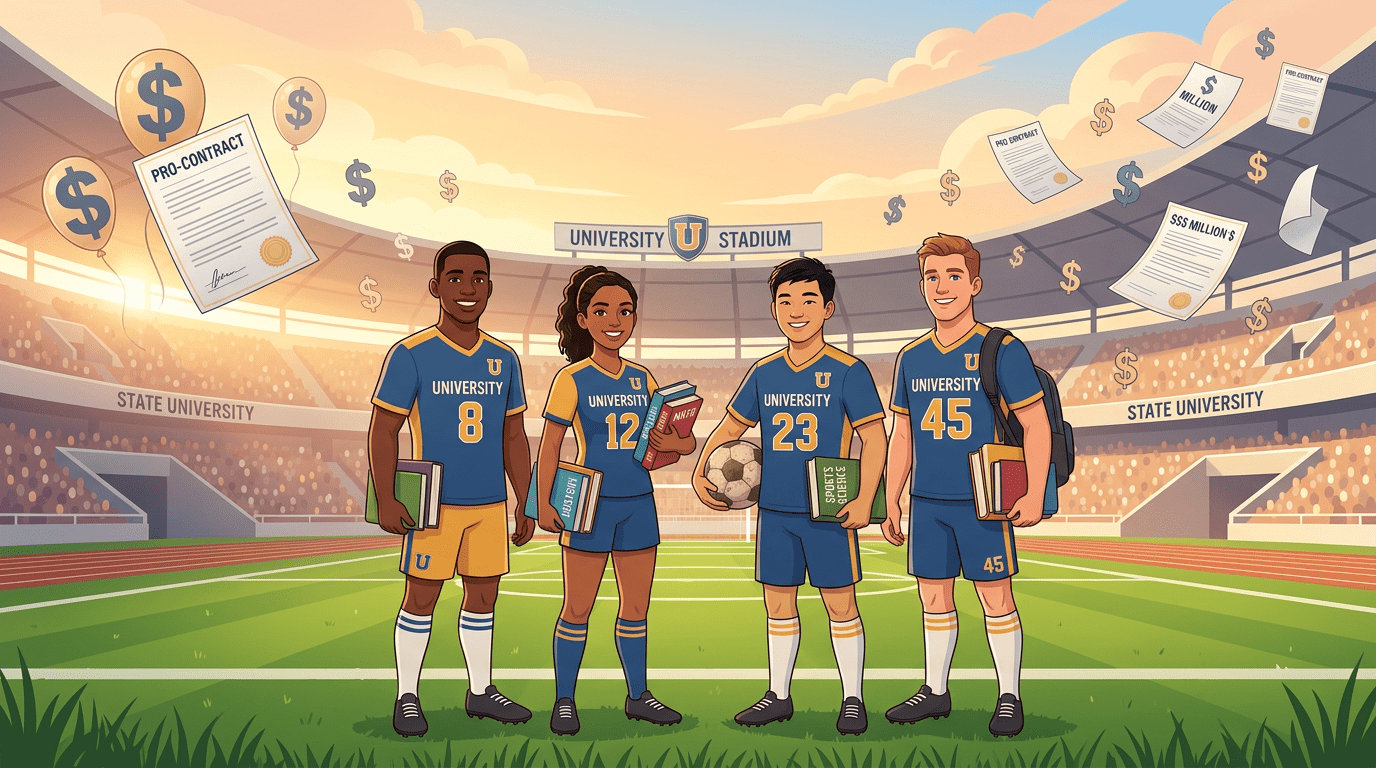
At U.S. Soccer Parent, we naturally focus on the pathways and pressures around youth and college soccer—but many of us are also fans of college football, basketball and the broader college sports ecosystem. Over the last few years, it has felt like that ecosystem has been slipping away from what made it special. Rules got more arcane, the transfer portal turned into a year‑round free‑agency market, and NIL collectives blurred the line between “college athlete” and “entry‑level pro.” Against that backdrop, I see the new White House executive order on college sports as a welcome step back in the right direction.
This isn’t a perfect document, and the rollout will be messy. But directionally, it pushes the model back toward something more stable and recognizable: a firmer eligibility “clock,” a one‑time transfer as the norm instead of constant movement, and clearer boundaries between legitimate NIL and disguised pay‑for‑play. For parents, followers and fans who have been frustrated by the complexity and churn, that’s a meaningful course correction.
The student‑athlete was getting lost
A lot of the early reaction to this order focuses on athlete rights, antitrust law and labor questions—and those are important issues. But from where I sit, the bigger problem over the last few years has been the steady erosion of the student‑athlete idea itself. We were drifting toward a reality where college sports functioned like minor leagues, and the “college” part was almost incidental.
With open‑ended eligibility waivers, constant transfers and increasingly aggressive collective money, it became easy to see players primarily as assets in a labor market rather than students passing through a four‑ or five‑year window. I don’t view that as progress. A core part of the appeal of college sports is precisely that it isn’t a lifetime career track. It’s supposed to be a chapter: you arrive, you grow, you compete, you graduate.
By putting a firmer cap on the eligibility clock and nudging everyone back toward a one‑time transfer norm, this order pushes against the idea of endless, free‑floating athletic careers inside the college system. It doesn’t shut down NIL or mobility, but it does remind everyone that these are still students, not just contract players in different uniforms every year.
Why stability matters for fans and families
There’s also a fan experience piece that often gets overlooked. Whether your main passion is college soccer, football or basketball, part of what draws you in is watching teams grow over time. You remember the freshman who struggled, the sophomore leap, the senior who finally put it all together. You come to associate certain classes and cores of players with an era in your school’s history.
The recent combination of wide‑open transfer rules and aggressive NIL has made that much harder. When rosters are revolving doors, it’s tough to build the same emotional connection. You might get a year with a star transfer, but then they’re gone. You might have no idea who will actually be on the team by the time the season starts. It’s hard to teach kids to care deeply about a program when the players they just learned to love vanish every offseason.
A more defined eligibility window and a one‑free‑transfer framework won’t freeze rosters in place—and they shouldn’t. But they do shift the default back toward staying put. Movement becomes a tool to fix a bad situation, not a routine way of life. For parents and fans, that translates into rosters you can follow over multiple seasons and teams that feel like teams again, not just annual assemblages of talent.
NIL, collectives and the “pro‑lite” problem
On NIL, I don’t have an issue with athletes earning money tied to their actual marketability. If a standout player can legitimately drive jersey sales, help a local business or anchor a social media campaign, there’s nothing wrong with them sharing in that value. The distortion came when NIL was fused with pay‑for‑play, and collectives became shadow payrolls.
That “pro‑lite” model might be exhilarating for a subset of high‑end recruits, but it undermines a lot of what makes college sports, especially non‑pro sports like soccer, worth caring about. It makes every commitment feel conditional and transactional. It encourages roster decisions driven by short‑term money rather than long‑term development, fit and education. And it feeds a cynicism that seeps down into youth sports: if everything at the top is just about the next offer, why should anyone lower down the ladder expect loyalty or patience?
By drawing a clearer line between genuine NIL and disguised salaries, this order aims to pare back the worst of that. Athletes can still sign real endorsement deals, but the most blatant roster‑salary schemes are harder to justify. We’ll see how effectively that line gets enforced, but the intention—tilting away from professionalization and back toward something recognizably collegiate—is one I’m comfortable supporting.
A better direction, even if the road is bumpy
We should be clear‑eyed: none of this snaps into place overnight. Courts will weigh in. The NCAA and conferences will have to translate broad language into actual bylaws. Some schools will move quickly, others will drag their feet, and clever people will look for new loopholes as soon as the old ones close.
But if you zoom out, the big picture looks like this: fewer arcane waivers, less constant roster churn, more guardrails on pay, and a renewed emphasis on the idea that college sports are finite, formative experiences. For those of us who care about both the development path in soccer and the overall health of college sports, that’s a direction worth welcoming.
It won’t take us back to some mythical past, and it shouldn’t. But it does pull us away from a future where college teams are indistinguishable from minor‑league franchises. As a parent, as a supporter of youth athletes, and as a fan, I’m glad to see that.