
Understanding Soccer Surfaces: Natural Grass v. Artificial Turf
Types of Turf and Why it Matters
Pros and cons of natural grass and artificial turf is a core question for anyone making decisions about where their kid plays, how often, and what to expect from the experience. This first article gives you a clear, evergreen framework you can use whether you’re a parent, coach, or club decision-maker.
Part two (in the link below) discusses how to pick the right cleats for your child.
Big picture: why the surface matters
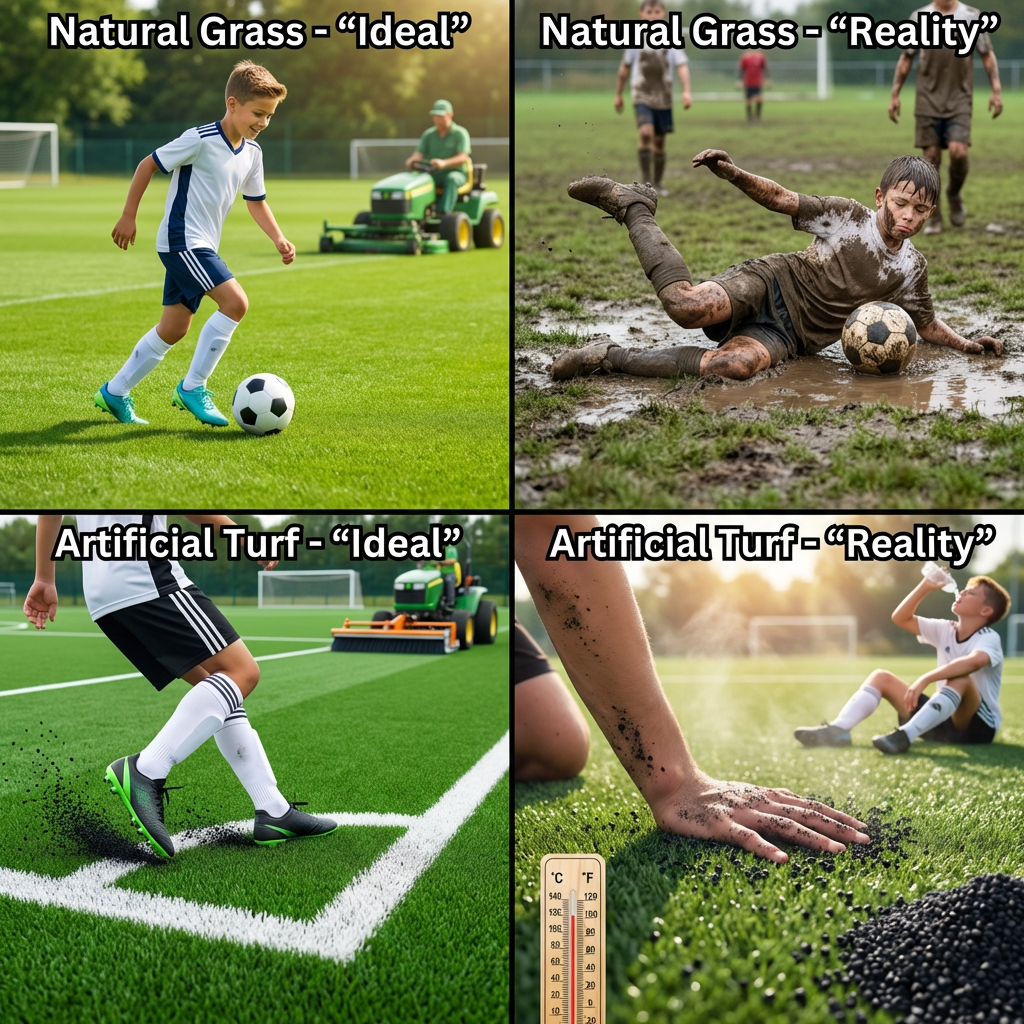
The surface affects how kids move, how the ball behaves, how often they train, and potentially what kinds of injuries they’re exposed to over time. At the professional level, most top European leagues still strongly prefer (and often effectively require) natural grass in their main stadiums, even though modern artificial turf can be certified as safe and “match-quality.” That preference is driven by a mix of performance, culture, and player feedback, not just nostalgia.
For families, fields are rarely perfect: you’ll interact with a mix of well‑kept natural grass, beat‑up grass, older turf, and newer “3G/4G” artificial surfaces. The key is understanding what each does well, where it falls short, and what that means for your player.
This article covers:
- What natural grass offers (and where it struggles)
- What artificial turf offers (and where it struggles)
- How field quality, not just field type, changes the equation
- Practical implications for youth soccer parents
Natural grass: what it does best
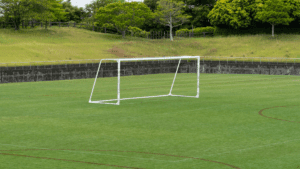
Natural grass is still considered the “gold standard” for elite football when it’s in top condition. Governing bodies like FIFA and UEFA describe high‑quality natural grass as the surface that best supports performance and traditional play characteristics: realistic ball roll and bounce, natural grip, and more forgiving sliding.
Pros of natural grass
- More forgiving on impact (when maintained)
- Grass and soil absorb force when players run, cut, and fall. That can reduce peak loads on joints and help with softer landings on tackles and falls. Many professionals say their bodies “feel better” after matches on good grass versus turf.
- Preferred by most players
- Surveys of professional players in Europe and elsewhere have consistently found a strong preference for natural grass. Player unions have publicly argued that elite matches should be played on grass whenever possible, citing comfort and perceived injury risk. Even in competitions where artificial turf is allowed, players frequently lobby for grass in finals and showcase events.
- Traditional ball behavior
- On a good grass pitch, the ball generally rolls and slows in a way that players at all levels are used to. First touch, passing weight, sliding tackles, and the way the ball checks in wet conditions are all part of the “classic” game feel.
- Cooler under sun and heat
- Grass reflects less heat than plastic turf. On hot days, turf can become significantly hotter than the air temperature, whereas grass stays closer to ambient conditions. For kids playing in midday tournaments or long events, that can make a noticeable comfort difference.
Cons of natural grass
- Quality swings with weather and use
- A great grass field on Saturday morning can turn into a muddy, rutted mess after a weekend of tournaments and rain. Uneven surfaces, divots, and bare patches can increase the risk of rolled ankles and awkward landings. For many youth clubs, the budget and manpower required to keep fields consistently “good” simply isn’t there.
- Seasonal limits and field closures
- In colder or wetter climates, natural grass fields are often closed for long stretches to prevent damage. That means fewer training sessions, more cancellations, and sometimes long drives to find one playable field.
- High maintenance cost at scale
- Elite clubs invest heavily in drainage systems, undersoil heating, grow lights, and hybrid grass technologies. Youth organizations rarely have that. Without those tools, grass can deteriorate quickly under heavy usage (multiple teams per field, year-round play, tournaments).
- Inconsistency between fields
- Parents see this every weekend: Field 1 is lush and flat, Field 2 is a patchwork of crabgrass and dust. Two “grass fields” can play like different sports. The theoretical benefits of grass only show up when the field is properly prepared and rested.
Join U.S. Soccer Parent
Free for every soccer parent.
Save articles, get the free newsletter, and find guidance tuned to your state, your kids' ages, and the pathway your family is on.
Artificial turf: what it does best
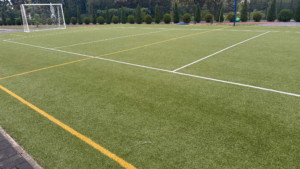
Artificial turf (the modern “3G” and “4G” systems) was developed to provide a consistent, durable surface that can handle heavy use and tough climates. Governing bodies allow its use in professional competitions provided it passes strict testing and certification, and it’s common in colder countries, indoor facilities, and community complexes that host many teams.
Pros of artificial turf
- Durability and availability
- Turf can handle far more playing hours per week than grass without turning into mud or bare dirt. For clubs with many teams, that means more practices and fewer cancellations. Parents see this as “we actually play instead of getting rained out.”
- Consistent, predictable surface (when new and well‑installed)
- No divots, no sudden holes, fewer odd bounces. The ball usually rolls faster and more predictably than on worn grass. That can help technical development if players learn to control a quicker ball and combine at speed.
- All‑weather usability
- Turf drains quickly and can be playable soon after heavy rain. In cold climates, it allows play during periods when grass would be frozen, muddy, or closed to preserve the surface.
- Lower long‑term maintenance labor**
- While installation is expensive, ongoing maintenance is more about brushing, infill redistribution, and periodic top‑ups, not mowing, seeding, fertilizing, and re‑sodding. For municipalities and some clubs, this makes the economics work better over many years of use.
Cons of artificial turf
- Perceived and specific injury concerns
- Overall injury rates in studies comparing elite matches on certified turf versus grass are often similar, but patterns can differ: for example, some research has found higher rates of certain joint sprains on turf. Players frequently report that their joints and backs “feel worse” after playing on turf, especially older or harder fields. Even when data is nuanced, the perception of greater risk is strong among many pros.
- Surface “hardness” and friction
- Turf systems can feel firmer underfoot than a well‑maintained grass pitch, especially as they age or lose infill. This can impact how much force is transmitted up the leg on each step. The friction between the surface and the shoe’s studs is also different, which some players associate with more “stickiness” in the foot–ground interaction during abrupt cuts.
- Heat build‑up
- On a sunny summer day, turf can become dramatically hotter than natural grass. This can affect player comfort, hydration needs, and in extreme cases, safety—especially for younger kids playing on midday tournament schedules.
- Burns and abrasions
- Sliding on turf tends to produce more abrasions (“turf burns”), especially on older surfaces. While often minor, these can be uncomfortable, slow healing, and increase reluctance to slide or tackle.
- Aging and degradation
- Turf does not age gracefully. As infill compacts and fibers break down, fields can become harder, slicker, and less shock‑absorbing. For parents, “this is a turf field” can mean very different things depending on whether it’s a new installation or a 10‑year‑old surface due for replacement.
What pro leagues can (and can’t) tell parents
At the top of the sport, most major European leagues and UEFA’s flagship competitions show a strong preference for natural grass in their main stadiums. Some competitions allow certified artificial surfaces, but finals and marquee events are typically required to be on grass. Player unions and many high‑level professionals argue publicly that natural grass should be the standard for elite football.
However, the professional context is very different from youth soccer:
- Elite clubs can afford hybrid grass systems, heating, grow lights, and full‑time grounds staff.
- Stadium grass fields are used far less often than youth community fields that host practices, matches, and tournaments back‑to‑back.
- Players at the top level have more influence and bargaining power over surface choices than most families or youth coaches.
For parents, the takeaway is not “grass always good, turf always bad.” It’s that when both are at their best, the professional game still prefers top‑quality natural grass for performance and tradition. But at the youth level, the choice you actually face is often “average grass vs. decent turf” or “no play vs. turf play,” which is a different, more practical equation.
Field quality matters more than the label
A key concept for parents: the quality of the specific field in front of you often matters more than whether it is technically “grass” or “turf.”
High‑quality grass vs. low‑quality grass
- A well‑maintained grass field: stable footing, good drainage, even surface, healthy turf density.
- A neglected grass field: holes, ruts, bare dirt, standing water, and unpredictable bounces.
The second can be more injurious and frustrating than playing on a modern turf pitch.
Newer turf vs. aging turf
- A newer, well‑installed turf system: good shock absorption, consistent infill, predictable traction.
- An older turf field with compacted infill: harder landings, more heat, less forgiving on joints, and possibly more “grabby” on pivots and cuts.
Two turf fields can feel like completely different sports. When evaluating leagues or clubs, it’s worth asking:
- How old are the turf fields?
- How often are they maintained (brushed, infill checked)?
- Are there plans for resurfacing?
Importance of Picking the Right Footwear
The choice of cleats is closely tied to surface type and quality. Certain stud patterns are designed specifically for firm natural ground, others for artificial grass, and some are hybrids. Wearing the wrong type can increase discomfort and may influence injury risk.
Read our article on how to make smart, surface‑specific cleat choices.
Conclusion: Balance ideal vs. practical
In a perfect world, kids would train and play most matches on well‑maintained natural grass. In reality, many regions and clubs depend on turf to provide enough playing hours. Your role is to understand the tradeoffs, monitor how your child responds, and advocate for reasonable field quality and maintenance.