
Blog
Girls’ Soccer Teams Should Have Women on Staff
March 23, 20264 min read
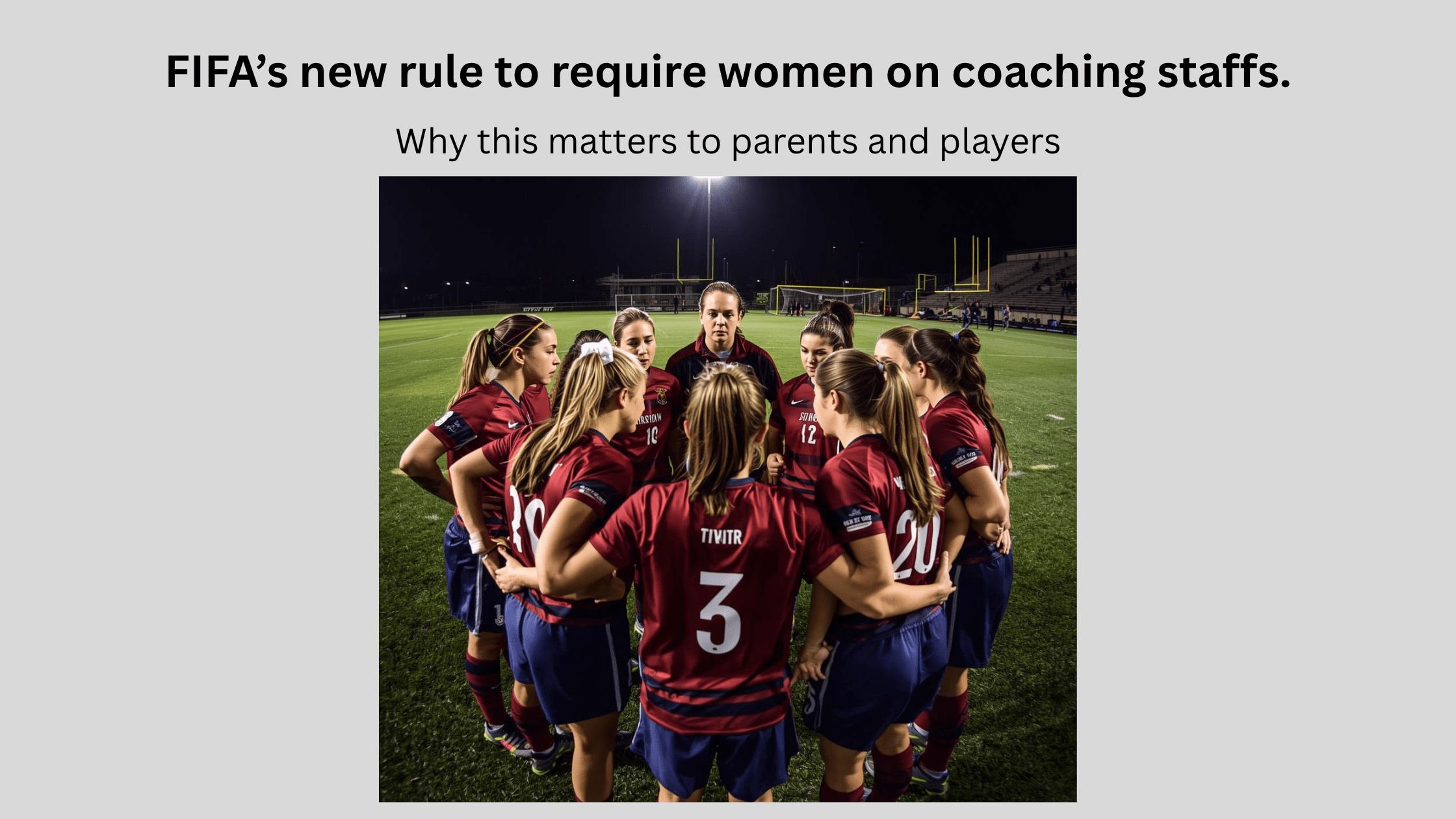
FIFA’s new rule to require women on coaching staffs at women’s tournaments is a big shift in how the global game is run, and for parents of girls it sends a clear message: your daughters should see women in the leadership around their teams. It is a step in the right direction, even if the quota mechanism itself is an imperfect tool and needs to be implemented thoughtfully.
What FIFA just decided
FIFA has approved new regulations for all of its women’s competitions that say every team must have at least one woman as either the head coach or an assistant coach. In addition, each team has to have at least two women on the bench staff, with one of those being that head‑or‑assistant coach role.
This will apply across FIFA’s women’s tournaments: youth and senior, national teams and clubs, from the U‑17 and U‑20 Women’s World Cups up through the Women’s World Cup and other top events. The stated goal is to increase the presence of women in meaningful coaching positions because, even as the women’s game has exploded, the number of women in technical roles has lagged far behind the number of girls and women playing.
From a parent’s point of view, this is not some abstract governance tweak. It’s a signal that in the environments that matter most at the top of the pyramid, women must be in the room and on the sideline when decisions are made.
Why this matters to parents and players
If you’ve spent much time around girls’ teams, you know how important it is for players to have staff and leadership they can genuinely relate to. A coach is not just drawing up training plans; they become a key adult voice around confidence, identity, and how a player handles pressure and setbacks. For a 14‑year‑old girl, that can land very differently depending on who is delivering the message and how they understand her world.
When there are no women in those roles, certain conversations simply don’t happen, or they happen much later than they should. Girls may hesitate to raise issues around body image, nutrition, mental health, or even how team rules and travel arrangements affect them, because they are not sure anyone on staff truly “gets it.” A woman in a real coaching or support role can be that bridge—the person a player seeks out when something is off, or when she needs an advocate who sees the situation through a similar lived experience.
Beyond that, representation matters in a very practical way. When a girl sees a woman running training, managing a World Cup match, or leading a staff, she sees a broader set of possibilities for herself—whether she dreams of staying in the game as a coach, or just wants to know that leadership spaces are open to her in any field.
Quotas?
Where this becomes more nuanced is how we feel about doing it through a quota. A rule that says “you must have at least one woman in this role and at least two women on staff” can raise fair questions about whether people are being hired to fill a number rather than purely on merit. That’s especially true in the early years, when the pool of women with top‑level licenses and experience is still growing.
From my vantage point, this is where it helps to keep the skepticism light and constructive. The underlying problem is real: left to its own devices, the system has not produced enough women in coaching roles, especially at the elite level. The new requirement forces federations and clubs to start solving that problem with intent—by identifying promising women, supporting them through licensing and mentorship, and giving them real responsibility. The rule should be seen as a starting line, not a finish line.
The key is that implementation has to respect both representation and competence. We want girls to see women in leadership, but we also want those women to be set up to succeed, not positioned as tokens. That means pairing the regulation with serious investment in coach education, clear pathways from playing to coaching, and ongoing support once women step into these jobs.
What this could mean further down the pyramid
Even though this policy is written for FIFA competitions, its logic will – and should – filter downward into national federations, professional clubs, and eventually ambitious youth programs. If the expectation at the top is that women’s teams have women in core staff roles, organizations that aspire to that level will increasingly prioritize hiring and developing women.
For parents, that likely translates into more chances for your daughter to work with female coaches and staff, more former players being encouraged to stay in the game as coaches, and a stronger cultural signal that this isn’t just “men running women’s soccer.” Ideally, over time, the conversation shifts from “we need a rule to force this” to “of course there are multiple highly qualified women in every hiring process.”
As a U.S. Soccer parent, I think it’s fair to welcome the intent behind FIFA’s move and the practical benefits it can bring for girls, while also keeping an eye on how it’s executed and whether it truly builds the deep bench of female leaders our daughters deserve.