Blog
From Colorado to Valencia: What Spanish Soccer Methodology Really Teaches Young Players
By Jose Antonio Camacho, Founder & CEO, Futedu Academy | Head Coach & Director of Methodology October 20, 20268 min read
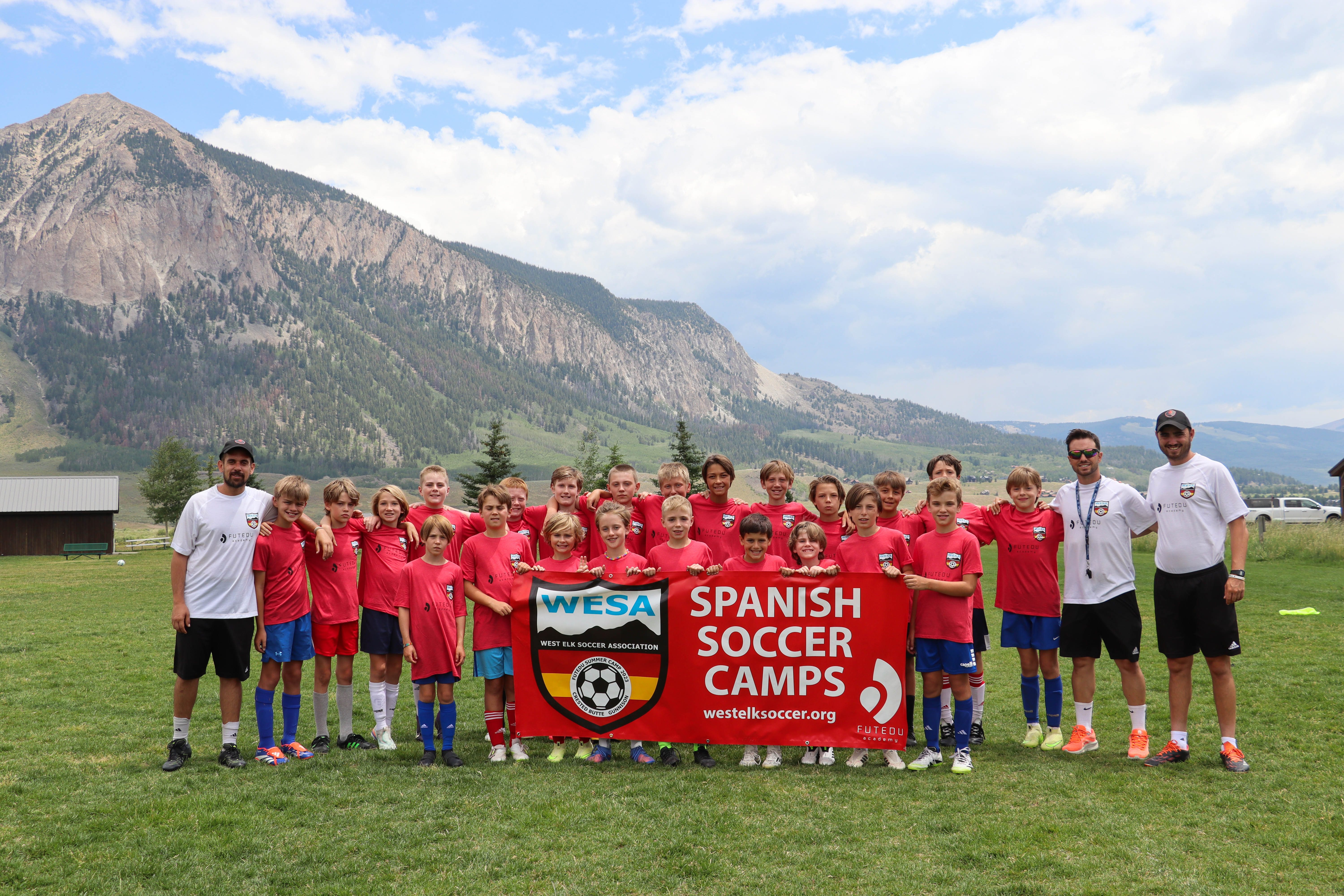
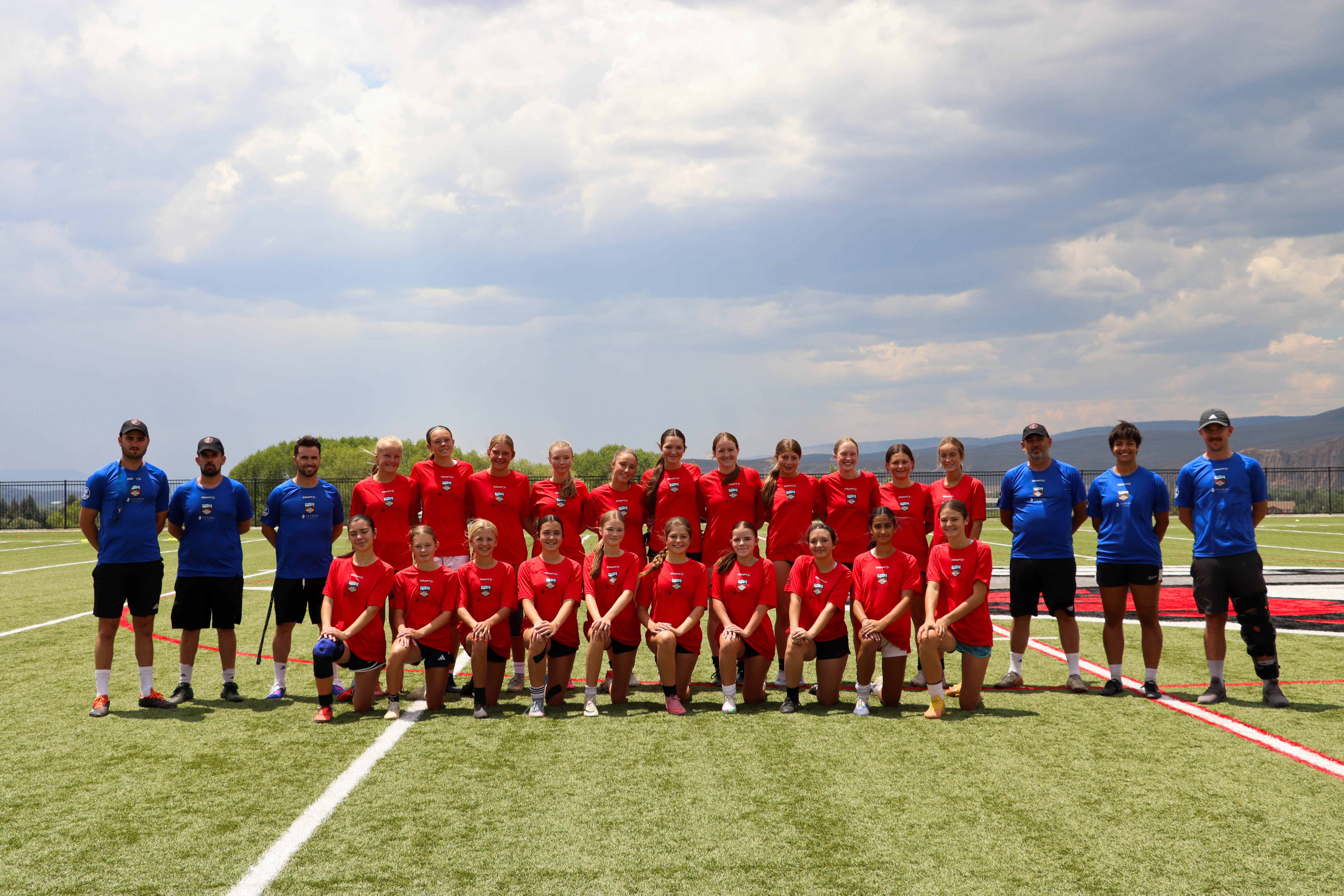
This summer, we had the chance to bring a small piece of Spanish soccer to Colorado.
During our summer camp, we worked with young American players using the same methodology we apply every day at FUTEDU Academy in Valencia, Spain.
For us, the goal was never just to run a week of training sessions. We wanted players to experience, even if only for a few days, how soccer is trained and understood in Spain.
Because when we talk about Spanish methodology, we're not just talking about different drills. We're talking about a way of developing players.
It's an approach in which technique, tactics, physical preparation and decision-making are all connected, and in which every session is designed to help the player understand the game a little better.
The Colorado camp was a brief introduction. Living and training in Spain turns those concepts into part of a player's everyday life.
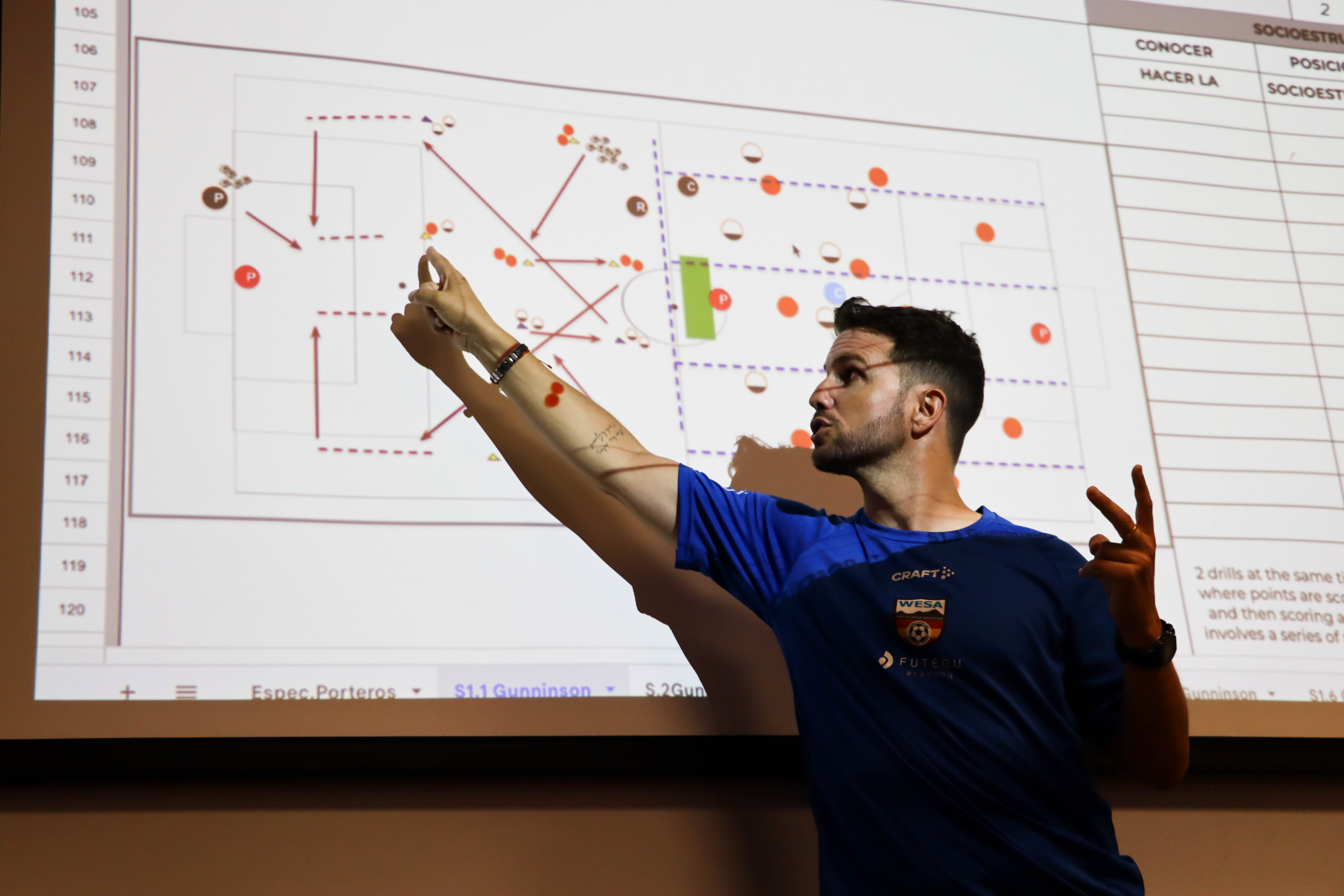
It's Not Just About Executing. It's About Understanding
A player can have good technique and still struggle to compete once the game gets faster.
Why?
Because in soccer, knowing how to perform an action isn't enough. You have to know when to do it, where to do it and why.
Before receiving the ball, a player should already be gathering information.
Where is the pressure? Where are my teammates? Where is the space? Can I turn? Do I need to play it first time? What happens after my pass?
That's why concepts such as scanning, body orientation, receiving on the correct foot, numerical superiority, the third-man run, support angles, runs in behind and occupying space come up constantly in our work.
We don't want to create players who know how to complete a drill. We want to develop players who can read a game.
Decision-Making Can Be Trained, Too
During the Colorado camp, many of our activities presented players with a problem to solve. There wasn't always a predetermined answer. The player had to observe, interpret and decide.
We changed the size of the space. We created overloads and underloads. We reduced the time available. We introduced different cues. We built real game situations.
Because decision-making shouldn't be trained separately from soccer. It is part of soccer.
This type of activity forces players to think constantly while performing technical actions (controlling, passing, dribbling, taking players on and finishing), always with information all around them.
The process can be summed up in four steps: perceive → interpret → decide → execute.
The faster and better a player can complete that process, the more tools they will have to compete at higher levels.
Colorado Was a Sample. Spain Is the Full Environment
A camp lets us introduce this methodology. But a player's development requires continuity.
That's where one of the biggest advantages of a soccer experience in Spain comes in.
When a player arrives at FUTEDU Academy, these concepts stop being part of a few one-off sessions and become part of their routine.
They train every week. They compete. They analyze their matches. They work on their physical development. They receive feedback. They make mistakes. They try again.
Little by little, they begin to understand situations they couldn't recognize before. That cumulative learning is one of the most important parts of development.
Join U.S. Soccer Parent
Free for every soccer parent.
Save articles, get the free newsletter, and find guidance tuned to your state, your kids' ages, and the pathway your family is on.
What Is It Really Like to Train at FUTEDU Academy?
Now imagine that a player who was with us in Colorado arrives in Valencia.
The main difference is that their development no longer depends only on what happens during a session on the field. At FUTEDU, we approach player development across several areas. On-field training is essential, but it's connected to everything else.
Technical and Tactical Training
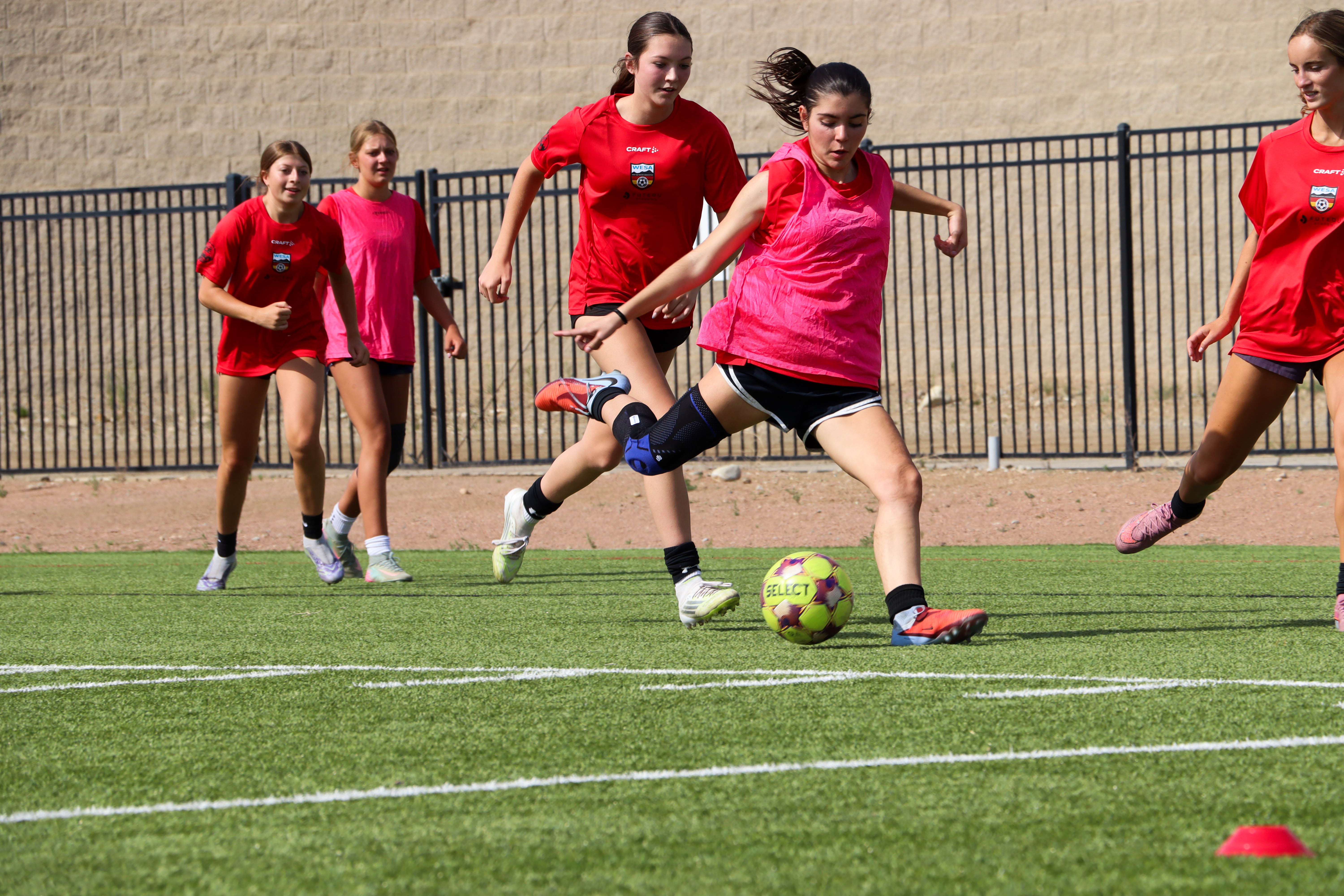
On the field, we work to improve the player's technical ability within real game situations.
The goal isn't only to perfect passing, first touch, dribbling or finishing. We want those technical tools to show up with a tactical purpose. Every activity should force the player to observe, decide and solve.
Players also begin to understand their position in much greater depth: where they need to show up, which spaces they should occupy, how to connect with their teammates, how to behave with and without the ball, and how their decisions affect the rest of the team.
Physical Development and Gym Work
The modern game demands players who can repeat high-intensity actions: accelerating, braking, changing direction, jumping, competing in duels and sustaining effort for a full match.
That's why physical and gym work is part of the development process.
It isn't simply about making the player stronger. It's about developing the physical qualities they need for their position, and doing it progressively and under control. The goal is for physical development to go hand in hand with soccer development.
Video Analysis: Studying the Game to Understand It Better
Video is one of the most important tools for building an understanding of the game.
There are situations a player can't fully see while competing. But when they can watch them again, pause them and analyze them, they start to understand them differently.
Why did I have space behind me? Why should I have taken my first touch in the other direction? Where was the open player? Could I have attacked a different space? Was my defensive position correct?
Video turns situations that happen in seconds into learning opportunities. Over time, it helps players recognize those same situations when they appear again on the field.
Strength and Conditioning, Nutrition and Recovery
An athlete's development doesn't end when they leave the field. Their body is their most important tool.
That's why strength and conditioning, nutrition, recovery and injury prevention are all part of a player's education.
Learning to eat properly, understanding what the body needs before and after competing, knowing the importance of rest, building good habits and being able to tell the difference between fatigue and injury are lessons that will stay with a player throughout their playing career, whatever level they ultimately reach.
Physical Therapy and Return-to-Play
Over the course of a season, players deal with aches, overload and, sometimes, injuries. Learning to manage them properly is also part of high-performance sport.
Physical therapy and rehabilitation work allows us to monitor each player and help them return to training gradually after an injury.
But development also means teaching players to take care of their bodies and to understand the importance of prevention.
Mental Development Is Part of Soccer, Too
Talent doesn't eliminate difficult moments.
A player will have bad games. There will be days when they don't start. They will make mistakes. They will face competition for their spot. They will receive criticism. They may go through periods of low confidence.
If they want to keep moving forward, they will have to learn to handle all of it.
That's why we see mental development as another part of an athlete's education. The ability to manage frustration, stay focused, compete, take responsibility and respond positively to mistakes can be just as decisive as any technical skill.
Learning by Competing Against Spanish Soccer
Probably one of the biggest differences between attending a camp in the United States and spending a season in Spain is the competition.
Training provides the tools. Competition puts those tools to the test.
In Spain, players constantly face opponents and teams who have grown up in a culture deeply connected to soccer. That creates new problems every week: teams that press high, teams that sit deep, matches with very little space, technically skilled opponents, highly competitive players, and different systems, tempos and contexts.
Every match provides information. And every week, the player has to return to training, analyze what happened and try to find better answers.
That's where development becomes continuous.
Learning a Position, Not Just Filling It
A forward isn't only a player who scores goals. A midfielder isn't only someone who passes the ball. A fullback isn't simply a defender who plays out wide.
Every position involves a huge number of behaviors and decisions.
When to pin a defender. When to attack a space. When to check in to receive. How to create a numerical advantage. How to direct the press. How to connect with nearby teammates.
In Spain, much of tactical development is about helping players understand all of those small decisions. The goal is for them to return to the United States, or move on to a higher level, as a player who understands far better what their position truly requires.
An Environment That Demands Adaptation
There's another part of development that's hard to train through drills: adaptation.
An international player who arrives in Spain has to adapt to new coaches, teammates, playing styles, cultures and even languages.
They have to learn to communicate. To be independent. To get organized. To solve problems. To compete for a spot. To accept decisions. To step outside their comfort zone.
All of this also shapes the player we see on the field. For us, developing players and developing people are two processes that are directly connected.
More Opportunities? First, Better Preparation
Many American players come to Spain dreaming of playing professionally.
And Spain offers something very valuable: an enormous soccer ecosystem made up of clubs, academies, competitions and different levels of play.
Being physically inside that environment lets players experience other levels of competition, play against new opponents and get closer to a different soccer reality.
But there's something even more important. Before creating opportunities, you have to prepare the player to take advantage of them.
There's no point putting a player in front of a great opportunity if they don't yet have the tools to compete in it.
That's why our work starts with development: a better player, a deeper understanding of the game, better habits, greater physical capacity, more tactical tools and more independence.
Then the opportunities can follow.
Not Every Path Ends in Professional Soccer
Success shouldn't be measured only by landing a professional contract.
A player can spend a season in Spain and return to the United States much better prepared to compete in high school, academy or college soccer.
They may understand their position better. Make decisions faster. Be more tactically intelligent. Have developed professional habits. Be more independent.
Or they may simply have discovered their true level and what they need to do to keep improving.
All of that is also part of a successful international experience.
From Colorado to Valencia
At the Colorado camp, we wanted players to feel a small part of this whole process.
We worked with the ball. We made decisions. We created game situations. We corrected details. We talked about space. About positions. About how to scan before receiving.
But a few days can only open the door. Training for months in Spain lets you walk through it.
Because the real difference isn't doing a Spanish drill. It's living every day inside an environment that pushes you to think, compete, adapt and learn.
That's what we want to offer at FUTEDU Academy: not just the chance to play soccer in Spain, but the opportunity to develop as a soccer player in Spain.
And that difference can completely change the way a young player understands the game.
Partner content from FUTEDU Academy, a U.S. Soccer Parent sponsor based in Valencia, Spain.
Written by Jose Antonio Camacho, Founder & CEO, Futedu Academy | Head Coach & Director of Methodology